
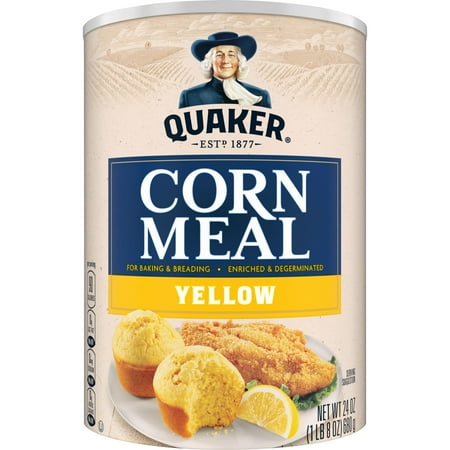


Quaker Yellow Cornmeal 24 Ounce Paper Canister
Summary
This product is minimally processed and primarily composed of degerminated yellow corn meal, which is a simple and clean ingredient. The addition of essential vitamins like niacin, thiamin, riboflavin, and folic acid enhances its nutritional profile without introducing any harmful additives. Its low processing level and absence of artificial ingredients or seed oils contribute to a high rating.
At a glance
Key ingredients 6
Degerminated yellow corn mealNeutral
Degerminated yellow corn meal is a staple ingredient in many diets, providing carbohydrates and some fiber. The degermination process removes the germ and bran, reducing nutrient content but extending shelf life. It is a minimally processed ingredient with no significant additives.
Benefits
Provides a source of carbohydrates and some dietary fiber, contributing to energy intake.
NiacinNeutral
Niacin, also known as vitamin B3, is added to fortify the cornmeal and support metabolic health. It is a water-soluble vitamin that plays a role in energy production and DNA repair. Fortification helps prevent deficiencies in populations with limited dietary diversity.
Benefits
Supports energy metabolism and helps maintain healthy skin and nerves.
Reduced ironNeutral
Reduced iron is added to fortify the cornmeal, enhancing its nutritional profile by providing essential iron. Iron is crucial for oxygen transport in the blood and preventing anemia. Fortification is important in preventing iron deficiency, especially in plant-based diets.
Risks
Excessive iron intake can lead to toxicity, but this is unlikely from fortified foods alone.
Benefits
Helps prevent iron deficiency anemia and supports healthy blood function.
Thiamin mononitrateNeutral
Thiamin mononitrate is a synthetic form of vitamin B1 used to fortify foods and prevent deficiencies. It is essential for carbohydrate metabolism and nerve function. Fortification ensures adequate intake in populations with limited access to diverse foods.
Benefits
Supports energy metabolism and proper nerve function.
RiboflavinNeutral
Riboflavin, or vitamin B2, is added to enhance the nutritional value of the cornmeal. It plays a key role in energy production and the metabolism of fats, drugs, and steroids. Fortification helps prevent riboflavin deficiency, which can lead to skin disorders and anemia.
Benefits
Essential for energy production and maintaining healthy skin and eyes.
Folic acidNeutral
Folic acid is a synthetic form of vitamin B9 used to fortify foods and prevent neural tube defects in developing fetuses. It is crucial for DNA synthesis and repair. Fortification is particularly important for women of childbearing age to prevent birth defects.
Risks
Excessive intake can mask vitamin B12 deficiency, but this is rare from fortified foods alone.
Benefits
Supports DNA synthesis and is vital for fetal development during pregnancy.
Processing
Unprocessed or Minimally Processed Foods
Get the full breakdown in the Scout app
Scan any product to see lab results, healthy alternatives, and your personalized analysis.
Download on theApp Store