
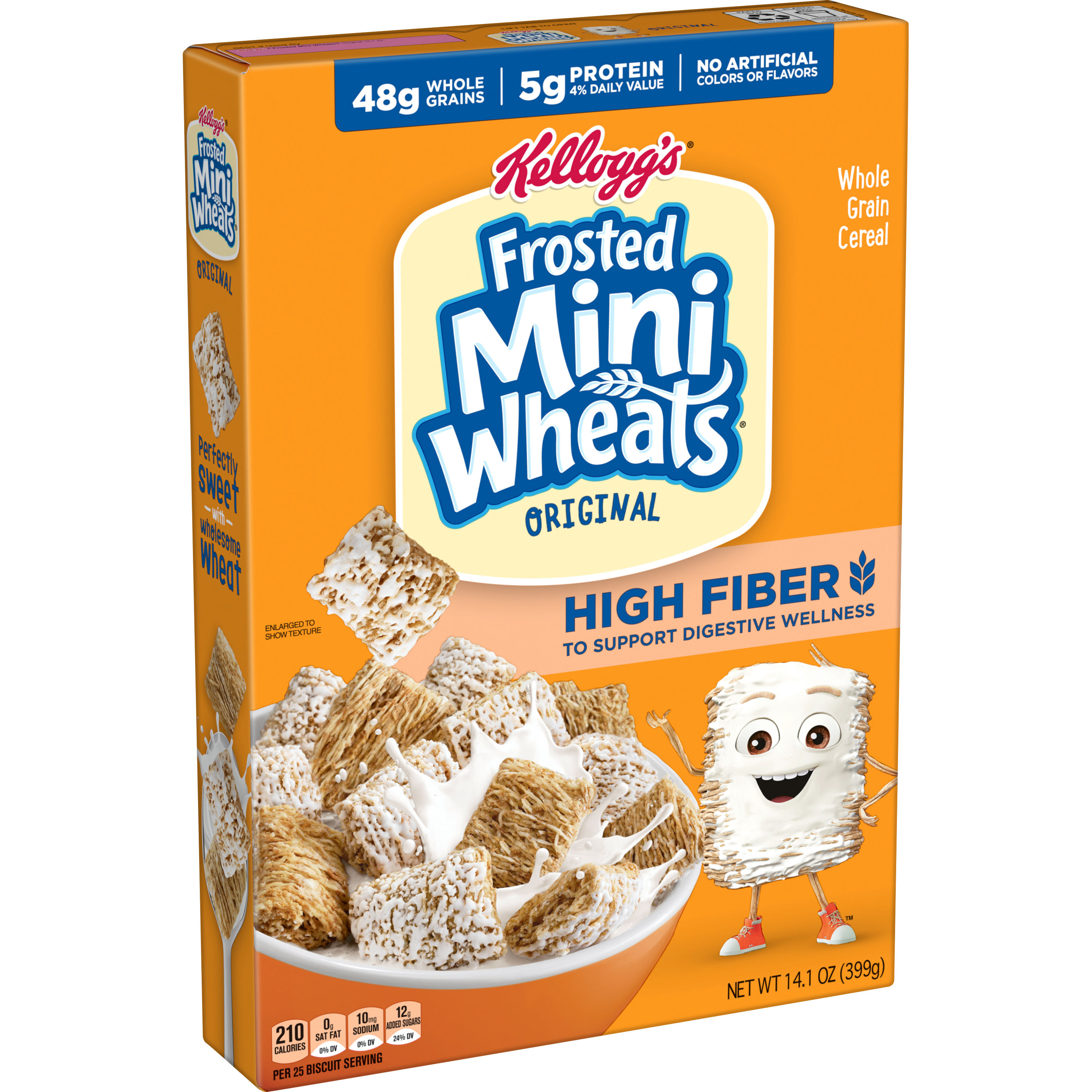

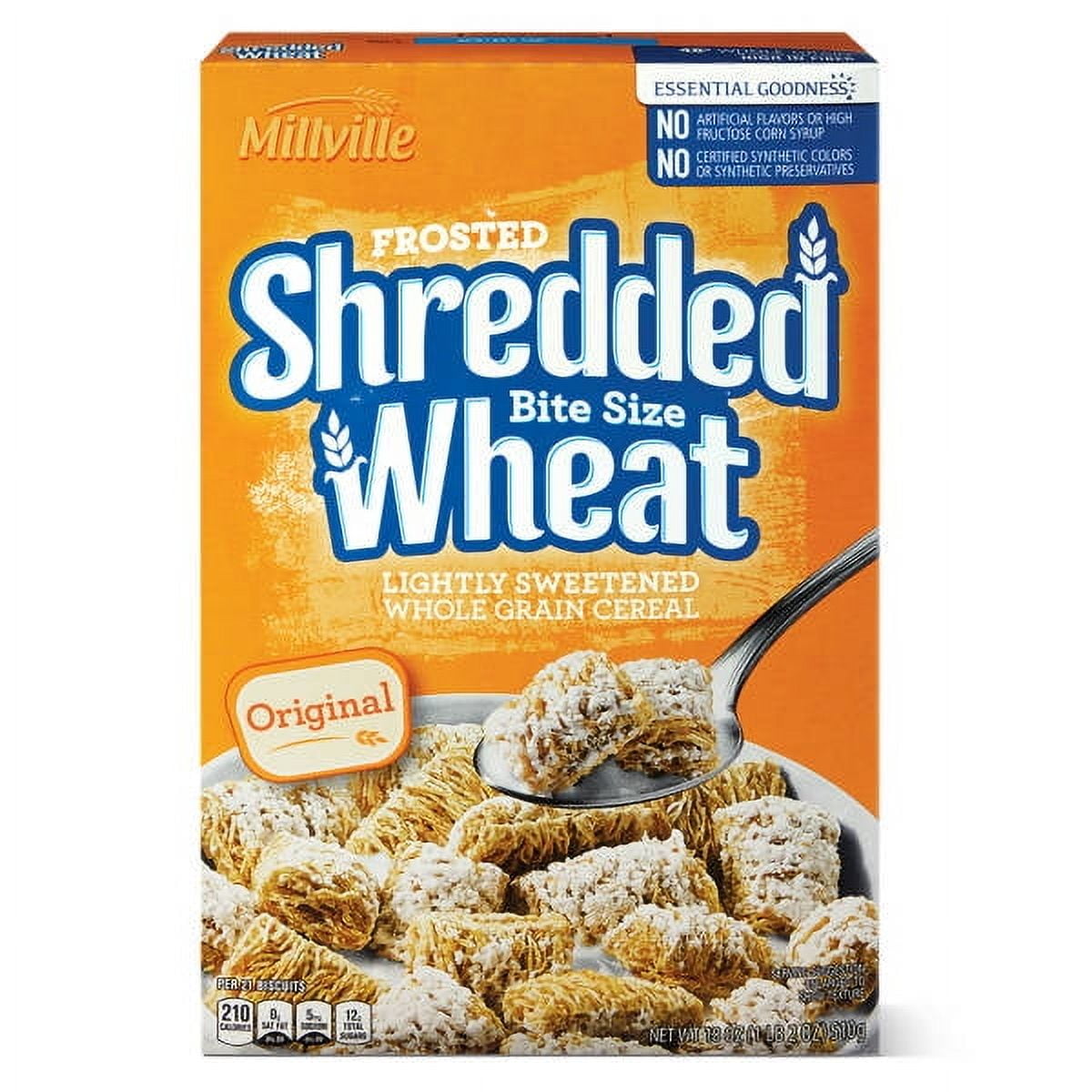


Kellogg's Mini-Wheats Cereal Bite Size Frosted 1oz
Summary
This cereal is primarily made from whole grain wheat, which is beneficial due to its fiber content and minimal processing. However, it contains a significant amount of added sugar, which is highly processed and can contribute to health issues when consumed in excess. The product is also classified as highly processed, which limits its overall health rating despite the presence of whole grains.
At a glance
Key ingredients 7
Whole grain wheatGood
Whole grain wheat is a source of dietary fiber and essential nutrients. It is minimally processed, retaining its bran and germ, which contribute to its nutritional profile. Compared to refined grains, whole grains offer more health benefits.
Risks
May cause digestive issues for individuals with gluten intolerance or celiac disease.
Benefits
Rich in dietary fiber, which supports digestive health and may help in maintaining healthy blood sugar levels.
SugarBad
Refined sugar is associated with increased calorie intake without providing essential nutrients. It is highly processed and can contribute to various health issues when consumed in excess. Compared to natural sweeteners, refined sugar offers no additional health benefits.
Risks
Excessive consumption can lead to obesity, type 2 diabetes, and dental cavities.
Brown rice syrupNeutral
Brown rice syrup is a sweetener derived from brown rice. It is less processed than refined sugar but still contributes to calorie intake. It has a lower glycemic index compared to some other sweeteners.
Risks
May contribute to increased blood sugar levels if consumed in large amounts.
Benefits
Provides a source of energy and has a lower glycemic index than some other sweeteners.
GelatinNeutral
Gelatin is a protein derived from animal collagen, used as a gelling agent. It is minimally processed and can provide some amino acids. However, it is not a complete protein source.
Benefits
May support joint health and improve skin elasticity due to its collagen content.
Reduced ironNeutral
Reduced iron is a form of iron used to fortify foods, enhancing their nutritional value. It is added to improve iron intake, especially in populations at risk of deficiency. However, it is not as easily absorbed as heme iron from animal sources.
Risks
Excessive iron intake can lead to toxicity, especially in individuals with hemochromatosis.
Benefits
Helps prevent iron deficiency anemia and supports oxygen transport in the body.
Folic acidNeutral
Folic acid is a synthetic form of folate, a B-vitamin essential for DNA synthesis and cell division. It is added to foods to prevent neural tube defects in developing fetuses. While beneficial, natural folate from whole foods is generally preferred.
Risks
Excessive intake may mask vitamin B12 deficiency symptoms.
Benefits
Essential for DNA synthesis and preventing neural tube defects during pregnancy.
En:e428Neutral
En:e428 is an additive used in food processing. It is generally recognized as safe when used within regulatory limits. Its role is primarily functional, contributing to the texture or stability of the product.
Processing
Ultra-Processed Foods
Get the full breakdown in the Scout app
Scan any product to see lab results, healthy alternatives, and your personalized analysis.
Download on theApp Store