
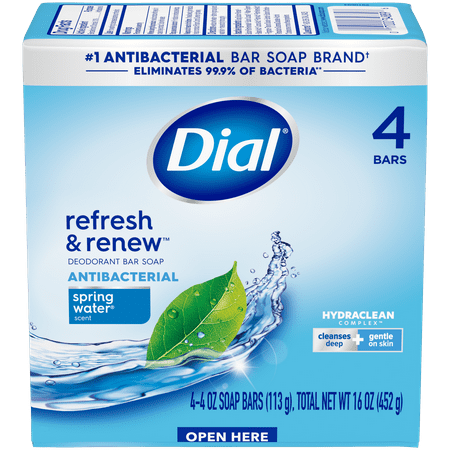
Dial Antibacterial Bar Soap Refresh & Renew Spring Water 4 oz 4 Bars
Analysis updated August 2026 · How Scout scores
At a glance
Summary
This soap contains a simple and recognizable ingredient list, primarily composed of natural oils and acids derived from coconut and palm. The inclusion of glycerin is beneficial for skin hydration. The absence of harsh surfactants, synthetic fragrances, and other potentially harmful chemicals contributes to its favorable rating.
Key ingredients 9
GlycerinGood
Glycerin is a humectant that attracts moisture to the skin, helping to keep it hydrated. It is widely used in skincare products for its moisturizing properties. It is generally considered safe and beneficial for all skin types.
Risks
There are minimal risks associated with glycerin, though it can be sticky in high concentrations.
Benefits
It helps to hydrate and maintain moisture in the skin.
SoapNeutral
Soap is a general term for a cleansing agent made from natural fats and oils. It is effective in removing dirt and oils from the skin. However, it can sometimes be drying to the skin if not formulated with moisturizing agents.
Risks
Soap can be drying to the skin, especially if used frequently or on sensitive skin.
Benefits
It effectively cleanses the skin by removing dirt and oils.
Sodium PalmateNeutral
Sodium Palmate is a sodium salt of palm oil fatty acids used as a surfactant and cleansing agent. It is commonly used in soap making for its ability to create a hard bar with good lather. While generally considered safe, it is derived from palm oil, which has environmental concerns.
Risks
The use of palm oil can contribute to deforestation and habitat destruction.
Benefits
It provides a good lather and cleansing properties in soap formulations.
Sodium Palm KernelateNeutral
Sodium Palm Kernelate is a sodium salt of palm kernel oil fatty acids, used as a surfactant and cleansing agent. It helps in creating a rich lather and is commonly used in soap formulations. Like Sodium Palmate, it is derived from palm oil, raising similar environmental concerns.
Risks
The production of palm kernel oil can lead to environmental issues such as deforestation.
Benefits
It contributes to the soap's lathering and cleansing abilities.
Sodium CocoateNeutral
Sodium Cocoate is a sodium salt of coconut oil fatty acids, used as a surfactant and cleansing agent. It is known for its ability to produce a creamy lather and is a common ingredient in soap making. It is generally considered safe and effective for cleansing.
Risks
There are minimal risks associated with Sodium Cocoate, though it can be drying for some skin types.
Benefits
It provides a creamy lather and effective cleansing properties.
WaterNeutral
Water is used as a solvent in cosmetic formulations, helping to dissolve other ingredients and form emulsions. It is a fundamental component in many personal care products. It is generally safe and non-irritating.
Risks
There are no significant risks associated with water in cosmetic formulations.
Benefits
It acts as a solvent and helps in forming emulsions in formulations.
Stearic AcidNeutral
Stearic Acid is a fatty acid used as an emulsifier and thickener in cosmetic formulations. It helps to stabilize products and improve texture. It is generally considered safe and non-irritating.
Risks
There are minimal risks associated with stearic acid in cosmetic formulations.
Benefits
It helps to stabilize and thicken formulations, improving texture.
Coconut AcidNeutral
Coconut Acid is derived from coconut oil and used as a surfactant and cleansing agent. It helps to create a rich lather and is commonly used in soap formulations. It is generally considered safe and effective for cleansing.
Risks
There are minimal risks associated with coconut acid, though it can be drying for some skin types.
Benefits
It contributes to the soap's lathering and cleansing abilities.
Palm AcidNeutral
Palm Acid is derived from palm oil and used as a surfactant and cleansing agent. It helps to create a rich lather and is commonly used in soap formulations. Like other palm-derived ingredients, it raises environmental concerns.
Risks
The production of palm oil can lead to environmental issues such as deforestation.
Benefits
It contributes to the soap's lathering and cleansing abilities.
Processing
Unprocessed or Minimally Processed Foods
Get the full breakdown in the Scout appTake Scout shopping
Scan any product to see lab results, healthy alternatives, and your personalized analysis.
Download on theApp Store GET IT ONGoogle PlayAmazon pricing & content
Amazon price as of . Product prices and availability are accurate as of the date/time indicated and are subject to change. Any price and availability information displayed on Amazon.com at the time of purchase will apply to the purchase of this product.
CERTAIN CONTENT THAT APPEARS ON THIS SITE COMES FROM AMAZON. THIS CONTENT IS PROVIDED “AS IS” AND IS SUBJECT TO CHANGE OR REMOVAL AT ANY TIME.