
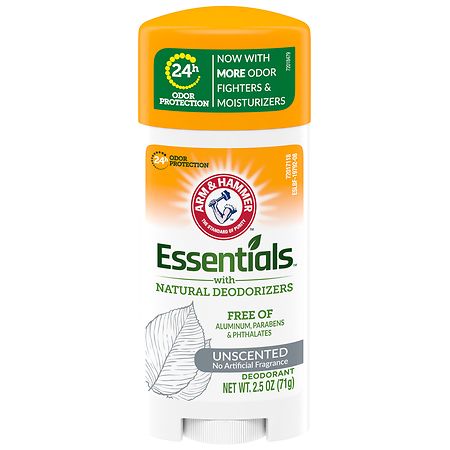
ARM & HAMMER Essentials Deodorant- Unscented- Solid Oval- 2.5oz- Made with Natural Deodorizers- Free From Aluminum Parabens & Phthalates
Analysis updated July 2026 · How Scout scores
At a glance
Summary
This deodorant is free from aluminum, parabens, and phthalates, which are commonly criticized for their potential health risks. It includes natural deodorizers like sodium bicarbonate and essential oils, which are beneficial. However, the presence of propylene glycol and synthetic compounds like tetrasodium EDTA and ethylene brassylate slightly detracts from its overall ingredient safety profile.
Key ingredients 12
Sodium BicarbonateGood
Sodium bicarbonate, or baking soda, is a natural odor neutralizer commonly used in deodorants. It effectively absorbs odors and is considered safe for most users. It is a popular alternative to synthetic deodorizing agents.
Risks
It may cause irritation or rash in individuals with sensitive skin.
Benefits
It effectively neutralizes odors and is a natural alternative to synthetic deodorants.
Bulnesia Sarmientoi (Guaiacwood) Wood OilGood
Guaiacwood oil is a natural essential oil used for its fragrance and potential antimicrobial properties. It is derived from the wood of the Bulnesia sarmientoi tree. It is considered a natural and beneficial ingredient in deodorants.
Risks
There is a potential for allergic reactions in sensitive individuals.
Benefits
It provides a natural fragrance and may have antimicrobial properties.
Juniperus Virginiana (Cedarwood) OilGood
Cedarwood oil is a natural essential oil known for its pleasant scent and potential antimicrobial properties. It is derived from the wood of the Juniperus virginiana tree. It is considered a beneficial ingredient in natural deodorants.
Risks
There is a potential for skin irritation or allergic reactions in sensitive individuals.
Benefits
It provides a natural fragrance and may have antimicrobial properties.
AllantoinGood
Allantoin is a compound known for its skin-soothing and healing properties. It is often used in cosmetics to promote skin health and reduce irritation. It is considered a beneficial ingredient in personal care products.
Risks
There are minimal risks associated with allantoin in cosmetic formulations.
Benefits
It soothes and heals the skin, reducing irritation and promoting skin health.
Dipropylene GlycolNeutral
Dipropylene glycol is a common solvent used in cosmetics to help dissolve other ingredients. It is generally considered safe for use in personal care products. However, it is derived from petroleum, which may concern some consumers.
Risks
There is a potential for skin irritation in sensitive individuals.
Benefits
It helps to evenly distribute other ingredients in the formulation.
WaterNeutral
Water is used as a solvent in many cosmetic products. It helps to dissolve other ingredients and provides a base for the formulation. It is generally considered safe and non-irritating.
Risks
There are no significant risks associated with water in cosmetic formulations.
Benefits
Water hydrates the skin and helps to maintain the product's consistency.
Sodium StearateNeutral
Sodium stearate is a common soap ingredient that acts as a thickener and stabilizer in deodorants. It is generally considered safe and effective for these purposes. It is derived from stearic acid, a fatty acid found in animal and vegetable fats.
Risks
There are minimal risks associated with sodium stearate in cosmetic formulations.
Benefits
It helps to stabilize the product and improve its texture.
Ethylene BrassylateNeutral
Ethylene brassylate is a synthetic fragrance ingredient used to impart a pleasant scent. It is generally considered safe for use in cosmetics. However, it is a synthetic compound, which may concern some consumers.
Risks
There is a potential for allergic reactions in sensitive individuals.
Benefits
It provides a pleasant scent to the product.
EthylhexylglycerinNeutral
Ethylhexylglycerin is a synthetic compound used as a preservative and skin conditioning agent. It is generally considered safe and effective for these purposes. It is often used as an alternative to parabens.
Risks
There is a potential for skin irritation in sensitive individuals.
Benefits
It helps to preserve the product and condition the skin.
Octenidine HclNeutral
Octenidine Hcl is an antimicrobial agent used to prevent bacterial growth. It is considered effective and safe for use in personal care products. It is often used as an alternative to triclosan.
Risks
There is a potential for skin irritation in sensitive individuals.
Benefits
It helps to prevent bacterial growth and maintain product freshness.
Tetrasodium EDTANeutral
Tetrasodium EDTA is a chelating agent used to improve the stability and efficacy of cosmetic formulations. It binds to metal ions, preventing them from affecting the product. It is generally considered safe for use in cosmetics.
Risks
There is a potential for skin irritation in sensitive individuals.
Benefits
It improves the stability and efficacy of the product.
Propylene GlycolBad
Propylene glycol is a synthetic compound used to improve texture and moisture retention. It is derived from petroleum and can cause skin irritation in some individuals. Its use is controversial due to its synthetic origin.
Risks
It may cause skin irritation and allergic reactions in sensitive individuals.
Benefits
It helps to retain moisture and improve the texture of the product.
Get the full breakdown in the Scout appTake Scout shopping
Scan any product to see lab results, healthy alternatives, and your personalized analysis.
Download on theApp Store GET IT ONGoogle PlayAmazon pricing & content
Amazon price as of . Product prices and availability are accurate as of the date/time indicated and are subject to change. Any price and availability information displayed on Amazon.com at the time of purchase will apply to the purchase of this product.
CERTAIN CONTENT THAT APPEARS ON THIS SITE COMES FROM AMAZON. THIS CONTENT IS PROVIDED “AS IS” AND IS SUBJECT TO CHANGE OR REMOVAL AT ANY TIME.