
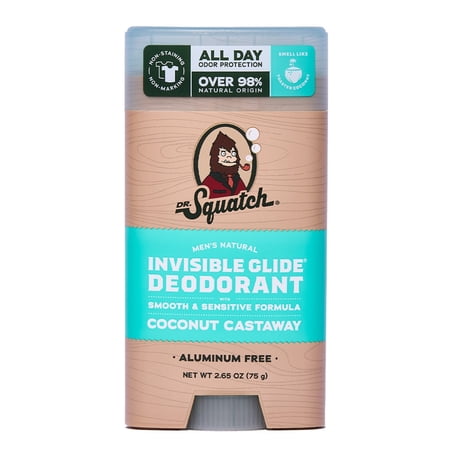
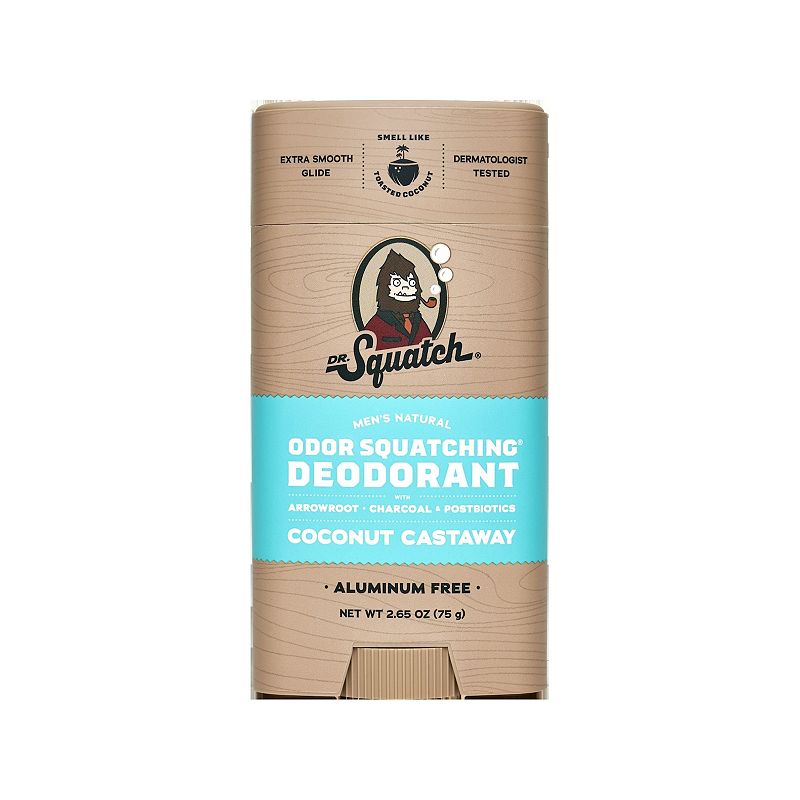
Dr. Squatch Mens Invisible Glide Deodorant - Smooth Glide Deodorant for Men Coconut Castaway 2.65 Oz
Analysis updated August 2026 · How Scout scores
At a glance
Summary
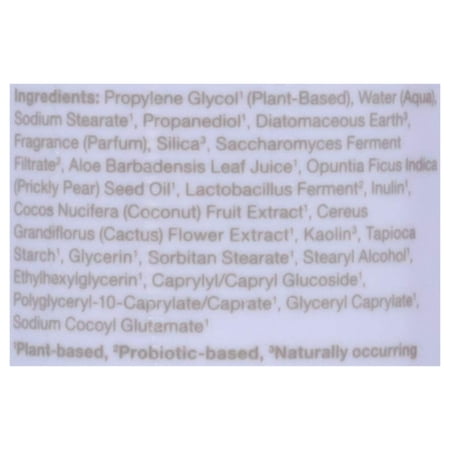
This deodorant is aluminum-free and contains beneficial natural ingredients like magnesium hydroxide, arrowroot powder, and shea butter, which contribute to effective odor control and skin conditioning. However, the presence of propylene glycol, a synthetic ingredient that can cause skin irritation, slightly lowers its score. The product is processed, which also impacts its overall rating.
Key ingredients 17
Magnesium HydroxideVery Good
Magnesium Hydroxide is a natural mineral used as an odor neutralizer. It helps to raise the pH of the skin, reducing the growth of odor-causing bacteria. It is considered safe and non-irritating.
Risks
There are minimal risks associated with magnesium hydroxide, though it may cause mild irritation in rare cases.
Benefits
It effectively neutralizes odor without irritating the skin.
Lactobacillus FermentGood
Lactobacillus Ferment is a probiotic ingredient that can help balance the skin's microbiome. It is derived from the fermentation of Lactobacillus bacteria. It is known for its antimicrobial properties.
Risks
There are minimal risks associated with this ingredient, though it may not be suitable for individuals with specific allergies.
Benefits
It helps to reduce odor by inhibiting the growth of odor-causing bacteria.
Caprylic/Capric TriglycerideGood
Caprylic/Capric Triglyceride is derived from coconut oil and glycerin. It is used as an emollient and helps to improve the spreadability of the product. It is known for its skin-conditioning properties.
Risks
There are minimal risks associated with this ingredient, though it may cause mild irritation in sensitive individuals.
Benefits
It helps to moisturize and condition the skin.
Manihot Esculenta (Arrowroot) PowderGood
Arrowroot powder is a natural starch used for its moisture-absorbing properties. It helps to keep the skin dry and reduce odor. It is considered safe and non-irritating.
Risks
There are minimal risks associated with arrowroot powder, though it may cause mild irritation in rare cases.
Benefits
It helps to absorb moisture and keep the skin dry.
BeeswaxGood
Beeswax is a natural wax produced by honeybees. It is used as an emollient and thickener in cosmetics. It helps to lock in moisture and protect the skin.
Risks
There are minimal risks associated with beeswax, though it may cause allergic reactions in individuals with bee allergies.
Benefits
It helps to moisturize and protect the skin.
Butyrospermum Parkii (Shea) ButterGood
Shea Butter is a natural fat extracted from the nuts of the shea tree. It is used as an emollient and moisturizer in cosmetics. It is known for its nourishing and skin-conditioning properties.
Risks
There are minimal risks associated with shea butter, though it may cause allergic reactions in individuals with nut allergies.
Benefits
It helps to moisturize and nourish the skin.
Coconut OilGood
Coconut oil is a natural oil extracted from the meat of coconuts. It is used as an emollient and moisturizer in cosmetics. It is known for its nourishing and antimicrobial properties.
Risks
There are minimal risks associated with coconut oil, though it may cause allergic reactions in individuals with coconut allergies.
Benefits
It helps to moisturize and protect the skin.
Jojoba OilGood
Jojoba oil is a natural oil extracted from the seeds of the jojoba plant. It is used as an emollient and moisturizer in cosmetics. It is known for its skin-conditioning and balancing properties.
Risks
There are minimal risks associated with jojoba oil, though it may cause mild irritation in sensitive individuals.
Benefits
It helps to moisturize and balance the skin's natural oils.
Glyceryl LaurateNeutral
Glyceryl Laurate is an emulsifier and surfactant that helps blend ingredients together. It is derived from lauric acid and glycerin. It is generally considered safe for use in cosmetics.
Risks
There are minimal risks associated with Glyceryl Laurate, though some individuals may experience mild irritation.
Benefits
It helps improve the texture and stability of the product.
Hydrated SilicaNeutral
Hydrated Silica is used as an absorbent and anti-caking agent in cosmetics. It is a form of silicon dioxide and is considered safe for topical use. It helps to improve the texture and feel of the product.
Risks
Inhalation of silica dust can be harmful, but this risk is minimal in cosmetic applications.
Benefits
It helps to absorb moisture and improve the product's application.
Naturally Derived FragranceNeutral
Naturally derived fragrances are made from natural sources and are used to impart scent to products. They are generally considered safer than synthetic fragrances. However, the exact composition can vary.
Risks
Some individuals may experience allergic reactions or sensitivities to certain natural fragrance components.
Benefits
They provide a pleasant scent without the use of synthetic chemicals.
Polyglyceryl-4 CaprateNeutral
Polyglyceryl-4 Caprate is an emulsifier and surfactant derived from natural sources. It helps to blend oil and water-based ingredients. It is considered safe for use in cosmetics.
Risks
There are minimal risks associated with this ingredient, though it may cause mild irritation in sensitive individuals.
Benefits
It improves the texture and stability of the product.
Water (Aqua)Neutral
Water is used as a solvent in many cosmetic products. It helps to dissolve other ingredients and provides a base for the formulation. It is essential for the product's consistency.
Risks
There are no significant risks associated with water in cosmetic formulations.
Benefits
It acts as a solvent and helps to hydrate the skin.
Sodium StearateNeutral
Sodium Stearate is a salt of stearic acid used as a thickener and emulsifier. It helps to stabilize and thicken formulations. It is generally considered safe for use in cosmetics.
Risks
There are minimal risks associated with Sodium Stearate, though it may cause mild irritation in some individuals.
Benefits
It helps to stabilize and thicken the product.
Stearyl AlcoholNeutral
Stearyl Alcohol is a fatty alcohol used as an emollient and thickener. It helps to stabilize and thicken formulations. It is generally considered safe for use in cosmetics.
Risks
There are minimal risks associated with Stearyl Alcohol, though it may cause mild irritation in some individuals.
Benefits
It helps to stabilize and thicken the product.
CharcoalNeutral
Charcoal is used for its absorbent properties in cosmetics. It helps to draw out impurities and absorb moisture. It is generally considered safe for topical use.
Risks
There are minimal risks associated with charcoal, though it may cause mild irritation in sensitive individuals.
Benefits
It helps to absorb moisture and impurities from the skin.
Propylene GlycolBad
Propylene Glycol is a petroleum-derived humectant used to retain moisture. It is commonly used in cosmetics but can be an irritant for some people. It is known to cause skin irritation in sensitive individuals.
Risks
It can cause skin irritation and allergic reactions, especially in sensitive individuals.
Benefits
It helps to keep the skin hydrated by attracting moisture.
Processing
Processed Foods
Get the full breakdown in the Scout appTake Scout shopping
Scan any product to see lab results, healthy alternatives, and your personalized analysis.
Download on theApp Store GET IT ONGoogle PlayAmazon pricing & content
Amazon price as of . Product prices and availability are accurate as of the date/time indicated and are subject to change. Any price and availability information displayed on Amazon.com at the time of purchase will apply to the purchase of this product.
CERTAIN CONTENT THAT APPEARS ON THIS SITE COMES FROM AMAZON. THIS CONTENT IS PROVIDED “AS IS” AND IS SUBJECT TO CHANGE OR REMOVAL AT ANY TIME.