
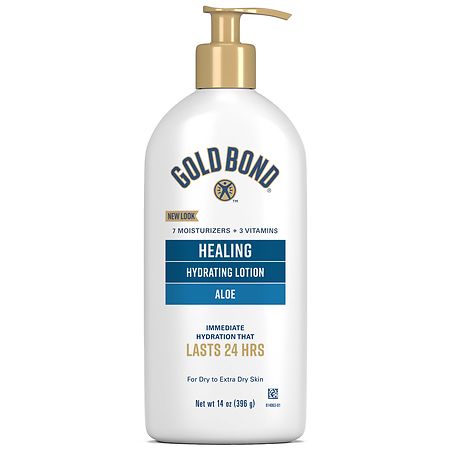

Gold Bond Healing Hydrating Lotion 14 oz. Body Lotion With Aloe Moisturizes Immediate 24-Hour Hydration
Summary
This body lotion contains several beneficial ingredients such as glycerin, jojoba esters, coconut oil, and vitamins A, C, and E, which are known for their moisturizing and skin-rejuvenating properties. However, the presence of petrolatum, a heavily processed ingredient with potential contamination risks, lowers the overall safety profile. The product's processing level and inclusion of petrolatum prevent it from achieving a higher score despite its beneficial components.
At a glance
Key ingredients 10
WaterNeutral
Water is a common solvent used in cosmetics to dissolve other ingredients. It helps in the application and absorption of the product. It does not provide direct benefits or risks.
Risks
There are no significant risks associated with water in cosmetics.
Benefits
Water aids in the hydration and application of the lotion.
GlycerinVery Good
Glycerin is a humectant that attracts moisture to the skin, helping to keep it hydrated. It is widely used in skincare for its moisturizing properties. It is considered safe and beneficial for most skin types.
Risks
There are minimal risks associated with glycerin, though it may cause irritation in very sensitive skin.
Benefits
Glycerin helps maintain skin hydration and improves skin barrier function.
PetrolatumVery Bad
Petrolatum is a petroleum-derived occlusive agent that forms a barrier on the skin to prevent moisture loss. While effective in preventing dehydration, it is heavily processed and can be contaminated with harmful substances. It is not environmentally friendly.
Risks
Potential contamination with polycyclic aromatic hydrocarbons (PAHs) and environmental concerns.
Benefits
Petrolatum is effective in preventing moisture loss and protecting the skin barrier.
Jojoba EstersVery Good
Jojoba esters are derived from jojoba oil and are used for their emollient properties. They help to soften and condition the skin without leaving a greasy residue. Jojoba esters are similar to the skin's natural oils, making them highly compatible with skin.
Risks
There are minimal risks associated with jojoba esters.
Benefits
Jojoba esters provide excellent skin conditioning and moisturizing benefits.
Cocos Nucifera (Coconut) OilVery Good
Coconut oil is a natural emollient that helps to moisturize and soften the skin. It contains fatty acids that nourish and protect the skin barrier. It is well-tolerated by most skin types and has antimicrobial properties.
Risks
May cause breakouts in acne-prone skin due to its comedogenic nature.
Benefits
Coconut oil deeply moisturizes and nourishes the skin, providing a protective barrier.
Cetyl AlcoholGood
Cetyl alcohol is a fatty alcohol used as an emollient and thickening agent in cosmetics. It helps to stabilize formulations and improve texture. It is considered safe and non-irritating for most skin types.
Risks
Rarely, it may cause irritation in very sensitive skin.
Benefits
Cetyl alcohol helps to soften and smooth the skin while enhancing product texture.
NiacinamideVery Good
Niacinamide is a form of vitamin B3 that offers multiple skin benefits, including improving skin barrier function, reducing inflammation, and brightening skin tone. It is well-tolerated by most skin types and is a popular ingredient in skincare.
Risks
Minimal risks, though high concentrations may cause mild irritation.
Benefits
Niacinamide improves skin texture, reduces redness, and enhances skin barrier function.
Vitamin EVery Good
Vitamin E is a powerful antioxidant that helps protect the skin from free radical damage. It also has moisturizing and anti-inflammatory properties. It is widely used in skincare for its protective and healing benefits.
Risks
Rarely, it may cause irritation or allergic reactions in sensitive individuals.
Benefits
Vitamin E protects the skin from oxidative stress and supports skin healing.
Vitamin CVery Good
Vitamin C is a potent antioxidant that helps to brighten the skin and reduce signs of aging. It supports collagen production and protects against environmental damage. It is a highly valued ingredient in skincare for its rejuvenating effects.
Risks
May cause irritation in sensitive skin, especially in high concentrations.
Benefits
Vitamin C brightens the skin, reduces wrinkles, and protects against environmental damage.
Vitamin AVery Good
Vitamin A is a skin-active ingredient known for its anti-aging and skin-renewing properties. It helps to improve skin texture and reduce the appearance of fine lines. It is effective in promoting cell turnover and enhancing skin radiance.
Risks
Can cause irritation and sensitivity, especially in high concentrations or with initial use.
Benefits
Vitamin A improves skin texture, reduces wrinkles, and promotes healthy skin renewal.
Processing
Processed Foods
Get the full breakdown in the Scout app
Scan any product to see lab results, healthy alternatives, and your personalized analysis.
Download on theApp Store