
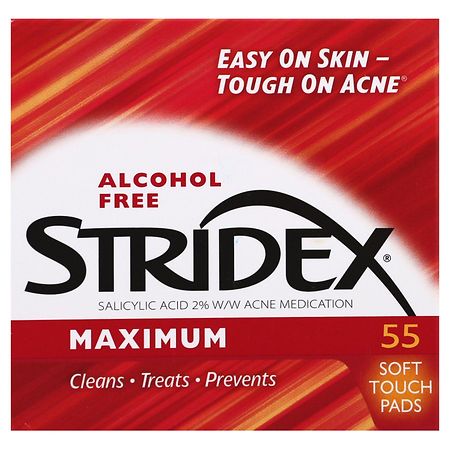
Stridex Maximum Strength Acne Control Soft Touch Pads Alcohol-Free 55ct
Summary
This product is alcohol-free, which is beneficial for avoiding dry mouth, but it contains salicylic acid, which can be an irritant for some users. The formula is processed and includes synthetic ingredients, which may raise concerns for those seeking more natural options. However, the absence of alcohol and other harsh chemicals like SLS or triclosan is a positive aspect.
At a glance
Key ingredients 12
Salicylic AcidNeutral
Salicylic acid is a beta hydroxy acid commonly used for its exfoliating properties. It helps to unclog pores and reduce acne by promoting the shedding of dead skin cells. In oral care, it is not typically used, so its benefits are not directly applicable.
Risks
There is a risk of skin irritation and dryness with excessive use.
Benefits
It can help reduce acne and improve skin texture when used appropriately.
Ammonium Lauryl Sulfate
Ammonium Lauryl Sulfate is a surfactant used for its foaming properties. It can be harsh on mucosal tissues, similar to Sodium Lauryl Sulfate. In oral care, it may cause irritation and discomfort.
Risks
Potential risks include mucosal irritation and the development of mouth ulcers.
Benefits
It effectively cleans by removing oils and debris from surfaces.
Ammonium XylenesulfonateNeutral
Ammonium Xylenesulfonate is used as a surfactant and emulsifier. It helps to stabilize formulations and improve the solubility of other ingredients. Its role in oral care is limited and not well-defined.
Risks
There is a potential for irritation if used in high concentrations.
Benefits
It aids in the even distribution of ingredients in a product.
Citric AcidNeutral
Citric acid is used to adjust pH levels and as a preservative. It can help maintain the stability and effectiveness of a product. In oral care, it may contribute to enamel erosion if used excessively.
Risks
Excessive use can lead to enamel erosion and increased tooth sensitivity.
Benefits
It helps maintain product stability and can enhance the effectiveness of preservatives.
EthylhexylglycerinNeutral
Ethylhexylglycerin is used as a skin conditioning agent and preservative enhancer. It helps to improve the efficacy of preservatives in formulations. Its role in oral care is not significant.
Risks
There is a low risk of skin irritation in sensitive individuals.
Benefits
It enhances the effectiveness of preservatives, extending product shelf life.
Fragrance
Fragrance is added to products to provide a pleasant scent. However, synthetic fragrances can contain a mix of chemicals that may cause irritation or allergic reactions. In oral care, it is not necessary and can be a source of unwanted chemicals.
Risks
Potential risks include allergic reactions and irritation.
Benefits
It provides a pleasant scent to products, enhancing user experience.
MentholNeutral
Menthol is used for its cooling and soothing properties. It provides a refreshing sensation and can help relieve minor irritation. In oral care, it is often used for its flavor and cooling effect.
Risks
Overuse can lead to irritation or a burning sensation.
Benefits
It provides a cooling sensation and can help soothe minor irritations.
PhenoxyethanolNeutral
Phenoxyethanol is a preservative used to prevent microbial growth. It is effective in extending the shelf life of products. In oral care, its role is primarily as a preservative.
Risks
There is a potential for skin irritation and allergic reactions in sensitive individuals.
Benefits
It effectively preserves products by preventing microbial contamination.
Purified WaterNeutral
Purified water is used as a solvent and carrier for other ingredients. It helps to dissolve and distribute active ingredients evenly. In oral care, it is a neutral component that aids in formulation stability.
Risks
There are no significant risks associated with purified water.
Benefits
It acts as a solvent and helps maintain the consistency of the product.
SimethiconeNeutral
Simethicone is used as an anti-foaming agent. It helps to reduce surface tension and prevent excessive foaming. In oral care, its role is limited and not directly beneficial.
Risks
There are no significant risks associated with simethicone in topical applications.
Benefits
It helps control foaming, improving product texture and application.
Sodium BorateNeutral
Sodium Borate is used as a buffering agent and preservative. It helps to maintain the pH balance and stability of formulations. In oral care, its use is limited and not directly beneficial.
Risks
Excessive exposure can lead to irritation and toxicity concerns.
Benefits
It helps stabilize formulations by maintaining pH balance.
Edetate SodiumNeutral
Edetate Sodium is used as a chelating agent to bind metal ions. It helps to improve the stability and efficacy of formulations. In oral care, its role is primarily to enhance product stability.
Risks
There is a low risk of irritation with prolonged exposure.
Benefits
It enhances product stability by binding metal ions that could cause degradation.
Processing
Processed Foods
Get the full breakdown in the Scout app
Scan any product to see lab results, healthy alternatives, and your personalized analysis.
Download on theApp Store