


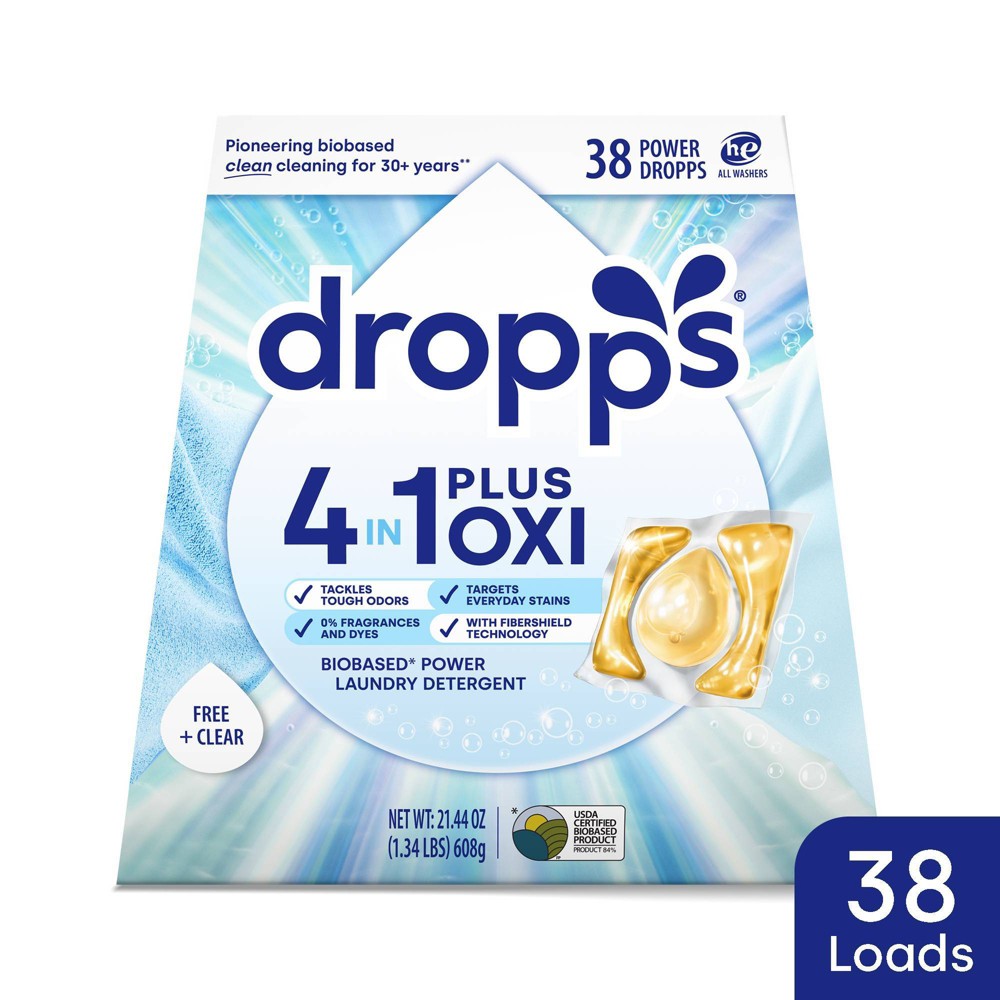
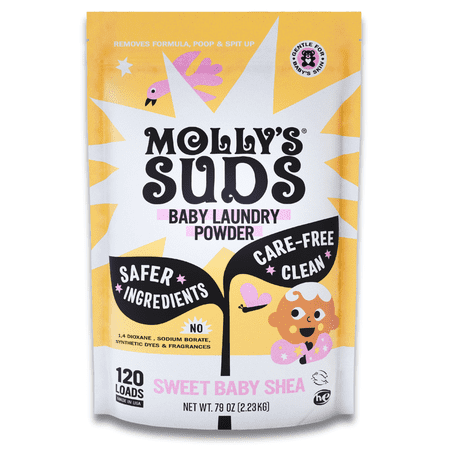

Dropps Baby Laundry Detergent Pacs, 2 Count
Summary
This laundry detergent is primarily plant-based and biodegradable, which is beneficial for both indoor safety and environmental impact. However, it contains some synthetic ingredients that slightly reduce its overall rating. The product avoids harsh chemicals like SLS and synthetic fragrances, which are common in many cleaning products, contributing to a more favorable score.
At a glance
Key ingredients 7
Alcohol Ethoxylates (C12-13)
Alcohol ethoxylates are nonionic surfactants used for their cleaning and emulsifying properties. They help to break down and remove dirt and grease from fabrics. They are generally considered effective but can be irritating to the skin in high concentrations.
Risks
Potential skin irritation and environmental concerns due to aquatic toxicity.
Benefits
Effective in removing oily stains and enhancing the cleaning power of detergents.
Sodium Laureth Sulfate
Sodium laureth sulfate is a surfactant used to create lather and remove dirt and oil. It is milder than sodium lauryl sulfate but still poses some risks. It is often used in cleaning products for its effectiveness in breaking down grease.
Risks
Potential skin irritation and contamination with 1,4-dioxane, a possible carcinogen.
Benefits
Effective in cleaning and foaming, enhancing the removal of dirt and oils.
Glycerin
Glycerin is a humectant that helps to retain moisture and prevent drying. It is often used in formulations to improve texture and reduce harshness. In cleaning products, it can help to soften fabrics.
Risks
Generally considered safe with minimal risks.
Benefits
Helps to maintain moisture and softness in fabrics, reducing potential irritation.
Propylene Glycol
Propylene glycol is used as a solvent and humectant in cleaning products. It helps to dissolve other ingredients and maintain moisture. It is generally recognized as safe in small amounts.
Risks
Potential skin irritation and allergic reactions in sensitive individuals.
Benefits
Improves the stability and effectiveness of the cleaning formulation.
Water
Water is used as a solvent and carrier for other ingredients in cleaning products. It helps to dissolve and distribute active ingredients evenly. It is essential for the formulation of liquid detergents.
Benefits
Acts as a universal solvent, aiding in the distribution and effectiveness of cleaning agents.
PVA (Polyvinyl Acetate)
PVA is a synthetic polymer used as a film-forming agent in cleaning products. It helps to encapsulate and release active ingredients during the wash cycle. It is generally considered safe for use in cleaning applications.
Risks
Potential environmental concerns due to its synthetic nature and persistence.
Benefits
Enhances the delivery and performance of cleaning agents in detergent formulations.
Biodegradable Plant-Based Surfactants (Anionic and Nonionic)
These surfactants are derived from plant sources and are used for their cleaning and foaming properties. They are considered more environmentally friendly compared to synthetic surfactants. They help to reduce the environmental impact of cleaning products.
Risks
Generally low risk, but potential for mild skin irritation in sensitive individuals.
Benefits
Biodegradable and effective in cleaning, reducing environmental impact and promoting sustainability.
Processing
Processed Foods
Get the full breakdown in the Scout app
Scan any product to see lab results, healthy alternatives, and your personalized analysis.
Download on theApp Store