
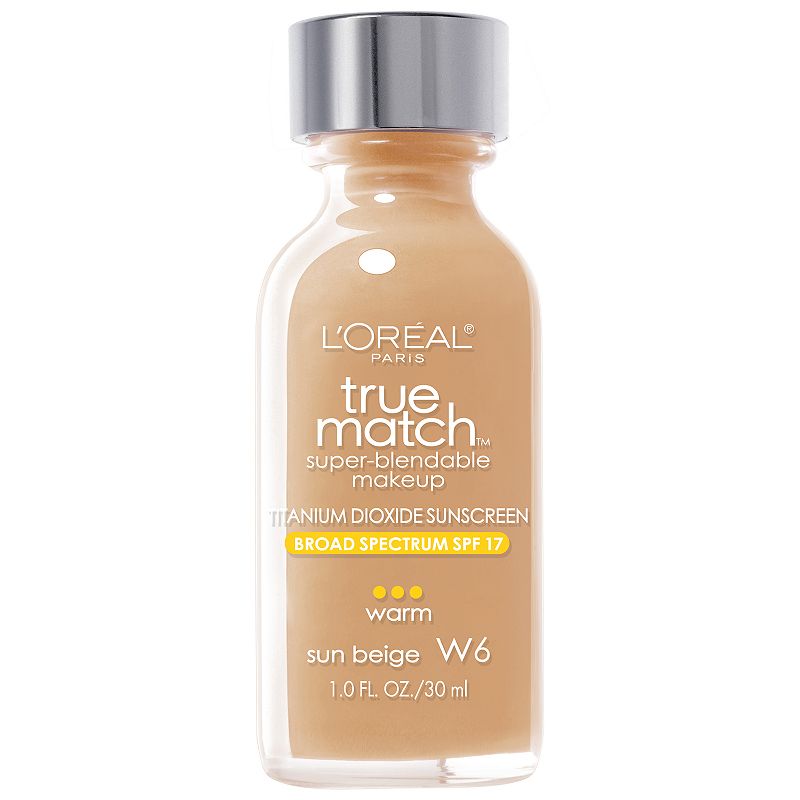


L Oreal Paris True Match Liquid Foundation Makeup Natural Finish W6 Sun Beige 1 fl oz - Old Version
Analysis updated August 2026 · How Scout scores
At a glance
Summary
This foundation contains beneficial ingredients like glycerin, tocopherol, panthenol, aloe vera, and sodium hyaluronate, which provide hydration and antioxidant benefits. However, it also includes phenoxyethanol, a preservative that can cause irritation in some individuals. The presence of synthetic ingredients and colorants, along with a moderate level of processing, affects its overall safety profile.
Key ingredients 40
TocopherolVery Good
Tocopherol, also known as Vitamin E, is an antioxidant that helps to protect the skin from free radical damage. It is widely used in skincare for its moisturizing and protective properties. It is considered safe and beneficial for most skin types.
Risks
Rarely, it may cause irritation in very sensitive skin.
Benefits
Protects the skin from oxidative stress and improves skin health.
PanthenolVery Good
Panthenol, also known as Provitamin B5, is a humectant that attracts moisture to the skin. It helps to improve skin hydration and barrier function. It is considered safe and beneficial for most skin types.
Risks
Rarely, it may cause irritation in very sensitive skin.
Benefits
Enhances skin hydration and improves skin barrier function.
Aloe Barbadensis Leaf Juice PowderVery Good
Aloe Barbadensis Leaf Juice Powder is derived from aloe vera and is known for its soothing and moisturizing properties. It helps to calm irritated skin and improve hydration. It is considered safe and beneficial for most skin types.
Risks
Rarely, it may cause irritation in very sensitive skin.
Benefits
Soothes and hydrates the skin, providing a calming effect.
GlycerinGood
Glycerin is a humectant that attracts moisture to the skin, helping to keep it hydrated. It is widely used in skincare for its moisturizing properties. It is considered safe and beneficial for most skin types.
Risks
Rarely, it may cause irritation in very sensitive skin.
Benefits
Helps to maintain skin hydration and improve skin barrier function.
Sodium HyaluronateGood
Sodium Hyaluronate is a form of hyaluronic acid that helps to attract and retain moisture in the skin. It is widely used in skincare for its hydrating and plumping effects. It is considered safe and beneficial for most skin types.
Risks
Rarely, it may cause irritation in very sensitive skin.
Benefits
Enhances skin hydration and plumps the skin, reducing the appearance of fine lines.
CI 77491, CI 77492, CI 77499/Iron OxidesGood
Beneficial ingredient — whole-food or functional value in this product class.
Risks
There are minimal risks associated with these ingredients.
Benefits
Provide color and coverage in cosmetic products.
MicaGood
Beneficial ingredient — whole-food or functional value in this product class.
Risks
There are minimal risks associated with this ingredient.
Benefits
Adds shimmer and improves product texture.
WaterNeutral
Water is a common solvent used in cosmetics to dissolve other ingredients. It helps in the application and spreadability of the product. It does not provide any direct benefits or risks.
Risks
There are no significant risks associated with water in cosmetics.
Benefits
Water helps in the even application of the product.
IsododecaneNeutral
Isododecane is a hydrocarbon used as an emollient and solvent in cosmetics. It helps to create a lightweight, non-greasy feel. It evaporates quickly, leaving a smooth finish.
Risks
There are minimal risks associated with isododecane in cosmetics.
Benefits
Contributes to a lightweight, non-greasy texture.
CyclohexasiloxaneNeutral
Cyclohexasiloxane is a type of silicone used to improve the spreadability of products. It provides a silky, smooth feel. It is considered safe for use in cosmetics.
Risks
May cause irritation in sensitive individuals.
Benefits
Enhances the spreadability and feel of the product.
PEG-10 DimethiconeNeutral
PEG-10 Dimethicone is a silicone-based polymer used as an emulsifier and conditioning agent. It helps to improve the texture and spreadability of the product. It is generally considered safe for use in cosmetics.
Risks
May cause irritation in sensitive skin types.
Benefits
Improves product texture and application.
Methyl Methacrylate CrosspolymerNeutral
Methyl Methacrylate Crosspolymer is used as a film-forming agent to provide a smooth finish. It helps in improving the wear time of the product. It is considered safe for use in cosmetics.
Risks
There are minimal risks associated with this ingredient.
Benefits
Enhances the longevity and finish of the product.
Butylene GlycolNeutral
Butylene Glycol is a common solvent and conditioning agent in cosmetics. It helps to improve the texture and spreadability of the product. It is generally considered safe for use in cosmetics.
Risks
May cause irritation in sensitive individuals.
Benefits
Improves product texture and helps in moisture retention.
Pentylene GlycolNeutral
Pentylene Glycol is used as a solvent and skin-conditioning agent. It helps to improve the texture and moisture retention of the product. It is considered safe for use in cosmetics.
Risks
May cause irritation in sensitive skin types.
Benefits
Enhances moisture retention and product texture.
Synthetic FluorphlogopiteNeutral
Synthetic Fluorphlogopite is a synthetic mica used to add shimmer and improve the texture of cosmetics. It provides a smooth, silky feel. It is considered safe for use in cosmetics.
Risks
There are minimal risks associated with this ingredient.
Benefits
Adds shimmer and improves product texture.
Disteardimonium HectoriteNeutral
Disteardimonium Hectorite is used as a thickening agent to stabilize emulsions. It helps to improve the texture and consistency of the product. It is considered safe for use in cosmetics.
Risks
There are minimal risks associated with this ingredient.
Benefits
Improves product stability and texture.
Hydroxyethylpiperazine Ethane Sulfonic AcidNeutral
Hydroxyethylpiperazine Ethane Sulfonic Acid is used as a buffering agent to maintain the pH balance of the product. It helps to stabilize the formulation. It is considered safe for use in cosmetics.
Risks
There are minimal risks associated with this ingredient.
Benefits
Helps maintain product stability and pH balance.
Cetyl PEG/PPG-10/1 DimethiconeNeutral
Cetyl PEG/PPG-10/1 Dimethicone is used as an emulsifier and conditioning agent. It helps to improve the texture and spreadability of the product. It is generally considered safe for use in cosmetics.
Risks
May cause irritation in sensitive skin types.
Benefits
Improves product texture and application.
Sodium ChlorideNeutral
Sodium Chloride is used as a thickening agent in cosmetics. It helps to improve the texture and consistency of the product. It is considered safe for use in cosmetics.
Risks
There are minimal risks associated with this ingredient.
Benefits
Improves product texture and consistency.
Polyglyceryl-4 IsostearateNeutral
Polyglyceryl-4 Isostearate is used as an emulsifier to stabilize formulations. It helps to improve the texture and spreadability of the product. It is considered safe for use in cosmetics.
Risks
There are minimal risks associated with this ingredient.
Benefits
Improves product stability and texture.
Hexyl LaurateNeutral
Hexyl Laurate is used as an emollient to provide a smooth feel. It helps to improve the texture and spreadability of the product. It is considered safe for use in cosmetics.
Risks
There are minimal risks associated with this ingredient.
Benefits
Enhances product texture and feel.
Caprylyl GlycolNeutral
Caprylyl Glycol is used as a skin-conditioning agent and preservative. It helps to improve the texture and moisture retention of the product. It is considered safe for use in cosmetics.
Risks
May cause irritation in sensitive skin types.
Benefits
Enhances moisture retention and product texture.
Disodium Stearoyl GlutamateNeutral
Disodium Stearoyl Glutamate is used as an emulsifier to stabilize formulations. It helps to improve the texture and spreadability of the product. It is considered safe for use in cosmetics.
Risks
There are minimal risks associated with this ingredient.
Benefits
Improves product stability and texture.
SilicaNeutral
Silica is used as an absorbent and anti-caking agent in cosmetics. It helps to improve the texture and mattify the skin. It is considered safe for use in cosmetics.
Risks
There are minimal risks associated with this ingredient.
Benefits
Improves product texture and provides a matte finish.
Aluminum HydroxideNeutral
Aluminum Hydroxide is used as an opacifying agent and skin protectant. It helps to improve the texture and appearance of the product. It is considered safe for use in cosmetics.
Risks
There are minimal risks associated with this ingredient.
Benefits
Improves product texture and provides skin protection.
Hydroxyethyl UreaNeutral
Hydroxyethyl Urea is used as a humectant to attract moisture to the skin. It helps to improve skin hydration and texture. It is considered safe for use in cosmetics.
Risks
There are minimal risks associated with this ingredient.
Benefits
Enhances skin hydration and improves texture.
Tin OxideNeutral
Tin Oxide is used as an opacifying agent and colorant in cosmetics. It helps to improve the appearance and texture of the product. It is considered safe for use in cosmetics.
Risks
There are minimal risks associated with this ingredient.
Benefits
Improves product appearance and texture.
Hydrated SilicaNeutral
Hydrated Silica is used as an absorbent and anti-caking agent in cosmetics. It helps to improve the texture and mattify the skin. It is considered safe for use in cosmetics.
Risks
There are minimal risks associated with this ingredient.
Benefits
Improves product texture and provides a matte finish.
MethiconeNeutral
Methicone is a type of silicone used to improve the spreadability of products. It provides a silky, smooth feel. It is considered safe for use in cosmetics.
Risks
May cause irritation in sensitive individuals.
Benefits
Enhances the spreadability and feel of the product.
Pentaerythrityl Tetra-Di-T-Butyl HydroxyhydrocinnamateNeutral
Pentaerythrityl Tetra-Di-T-Butyl Hydroxyhydrocinnamate is used as an antioxidant to prevent product degradation. It helps to extend the shelf life of the product. It is considered safe for use in cosmetics.
Risks
There are minimal risks associated with this ingredient.
Benefits
Prevents product degradation and extends shelf life.
CI 77891/Titanium DioxideNeutral
Titanium Dioxide is used as a pigment and UV filter in cosmetics. It helps to provide coverage and sun protection. It is considered safe for use in cosmetics.
Risks
There are minimal risks associated with this ingredient.
Benefits
Provides coverage and sun protection.
CI 77007/UltramarinesNeutral
Ultramarines are used as pigments to provide color in cosmetics. They are stable and non-reactive. They are considered safe for use in cosmetics.
Risks
There are minimal risks associated with this ingredient.
Benefits
Provide color and coverage in cosmetic products.
CI 77288/Chromium Oxide GreensNeutral
Chromium Oxide Greens are used as pigments to provide color in cosmetics. They are stable and non-reactive. They are considered safe for use in cosmetics.
Risks
There are minimal risks associated with this ingredient.
Benefits
Provide color and coverage in cosmetic products.
CI 77510/Ferric Ammonium FerrocyanideNeutral
Ferric Ammonium Ferrocyanide is used as a pigment to provide color in cosmetics. It is stable and non-reactive. It is considered safe for use in cosmetics.
Risks
There are minimal risks associated with this ingredient.
Benefits
Provides color and coverage in cosmetic products.
CI 15985/Yellow 6 LakeNeutral
Yellow 6 Lake is used as a pigment to provide color in cosmetics. It is stable and non-reactive. It is considered safe for use in cosmetics.
Risks
There are minimal risks associated with this ingredient.
Benefits
Provides color and coverage in cosmetic products.
CI 42090/Blue 1 LakeNeutral
Blue 1 Lake is used as a pigment to provide color in cosmetics. It is stable and non-reactive. It is considered safe for use in cosmetics.
Risks
There are minimal risks associated with this ingredient.
Benefits
Provides color and coverage in cosmetic products.
CI 45410/Red 28 LakeNeutral
Red 28 Lake is used as a pigment to provide color in cosmetics. It is stable and non-reactive. It is considered safe for use in cosmetics.
Risks
There are minimal risks associated with this ingredient.
Benefits
Provides color and coverage in cosmetic products.
CI 15850/Red 7Neutral
Red 7 is used as a pigment to provide color in cosmetics. It is stable and non-reactive. It is considered safe for use in cosmetics.
Risks
There are minimal risks associated with this ingredient.
Benefits
Provides color and coverage in cosmetic products.
DimethiconeBad
Occlusive silicone film-former — flagged under clean-beauty doctrine.
Risks
May cause breakouts in some individuals with sensitive skin.
Benefits
Provides a smooth, silky feel and helps to fill in fine lines and wrinkles.
PhenoxyethanolBad
Phenoxyethanol is used as a preservative to prevent microbial growth. It is effective in low concentrations but can cause irritation in some individuals. It is considered safe in concentrations up to 1% in cosmetics.
Risks
May cause skin irritation and allergic reactions in sensitive individuals.
Benefits
Prevents microbial growth and extends product shelf life.
Get the full breakdown in the Scout appTake Scout shopping
Scan any product to see lab results, healthy alternatives, and your personalized analysis.
Download on theApp Store GET IT ONGoogle PlayAmazon pricing & content
Amazon price as of . Product prices and availability are accurate as of the date/time indicated and are subject to change. Any price and availability information displayed on Amazon.com at the time of purchase will apply to the purchase of this product.
CERTAIN CONTENT THAT APPEARS ON THIS SITE COMES FROM AMAZON. THIS CONTENT IS PROVIDED “AS IS” AND IS SUBJECT TO CHANGE OR REMOVAL AT ANY TIME.