
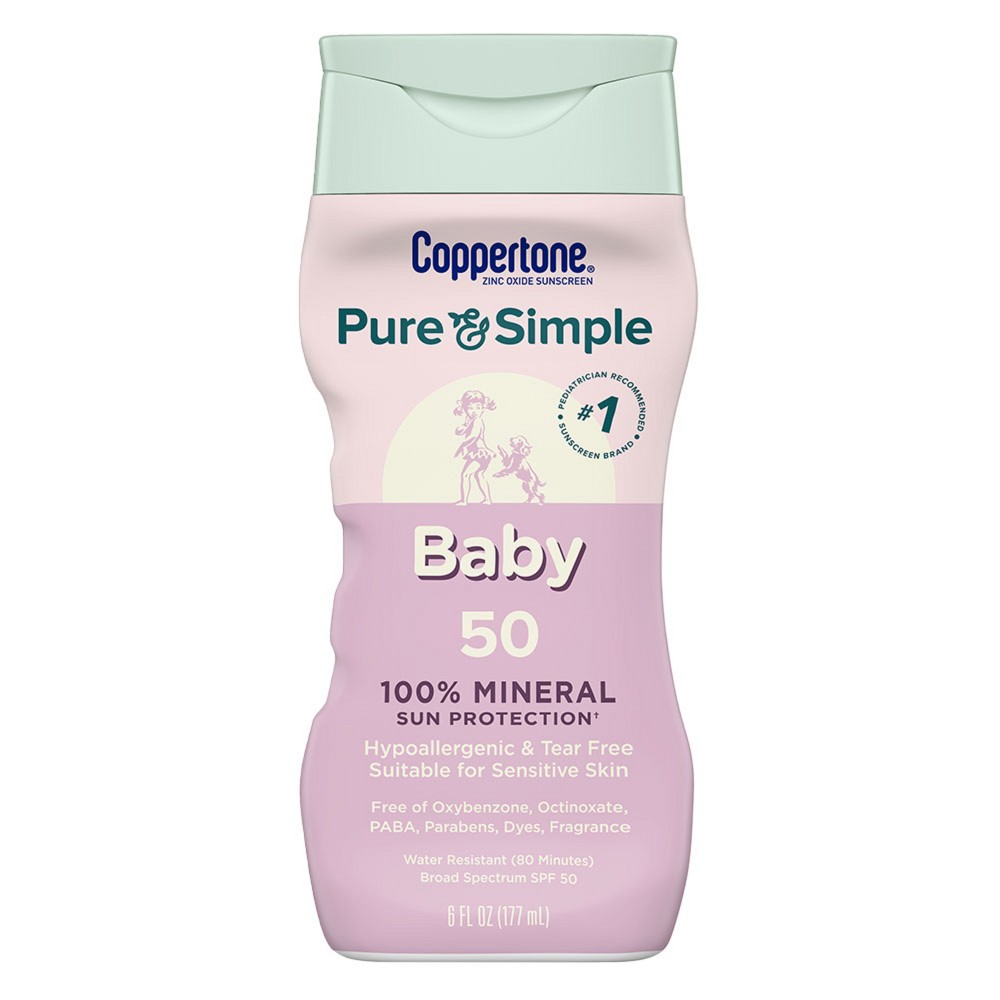

Coppertone Pure & Simple Baby Mineral Sunscreen - SPF 50 - 6 fl oz: Unscented Paraben-Free Lotion with Zinc Oxide
Analysis updated September 2026 · How Scout scores
At a glance
Summary
This sunscreen features zinc oxide as its active ingredient, providing effective mineral UV protection without the risks associated with chemical filters. The formulation includes beneficial ingredients like glycerin and tocopherol, which offer moisturizing and antioxidant benefits. While phenoxyethanol is present as a preservative, its inclusion is balanced by the overall clean and minimal ingredient list, making it suitable for sensitive skin.
Key ingredients 13
Zinc OxideGood
Zinc Oxide is a mineral sunscreen agent that provides broad-spectrum UV protection. It is considered safe and effective for sensitive skin, including babies. It is non-comedogenic and does not penetrate the skin, making it a preferred choice for physical sunblock.
Risks
There are minimal risks associated with Zinc Oxide, primarily related to potential white cast on the skin.
Benefits
Zinc Oxide offers excellent protection against both UVA and UVB rays and is gentle on sensitive skin.
Caprylic/Capric TriglycerideGood
Caprylic/Capric Triglyceride is derived from coconut oil and glycerin. It is used as an emollient and helps to improve the spreadability of the product. It is considered safe and beneficial for the skin.
Risks
There are minimal risks associated with this ingredient, primarily related to potential skin irritation in very sensitive individuals.
Benefits
It helps to moisturize and soften the skin without leaving a greasy residue.
GlycerinGood
Glycerin is a humectant that attracts moisture to the skin, helping to keep it hydrated. It is widely used in skincare products for its moisturizing properties. It is considered safe and effective for all skin types.
Risks
There are minimal risks associated with glycerin, primarily related to potential stickiness if used in high concentrations.
Benefits
Glycerin helps to maintain the skin's moisture balance and improve its overall texture.
TocopherolGood
Tocopherol, also known as Vitamin E, is an antioxidant that helps to protect the skin from free radical damage. It is widely used in skincare products for its protective and moisturizing properties. It is considered safe and beneficial for the skin.
Risks
There are minimal risks associated with tocopherol, primarily related to potential skin irritation in very sensitive individuals.
Benefits
It helps to nourish and protect the skin, improving its overall health and appearance.
WaterNeutral
Water is commonly used as a solvent in cosmetic formulations. It helps to dissolve other ingredients and provides a base for the product. It is generally considered safe and non-irritating.
Risks
There are no significant risks associated with water in cosmetic formulations.
Benefits
Water helps to hydrate the skin and acts as a carrier for other beneficial ingredients.
C12-15 Alkyl BenzoateNeutral
C12-15 Alkyl Benzoate is an emollient that helps to improve the texture and spreadability of the product. It is commonly used in sunscreens and moisturizers. It is considered safe for use in cosmetics.
Risks
There are minimal risks associated with this ingredient, primarily related to potential skin irritation in sensitive individuals.
Benefits
It provides a silky feel to the skin and helps to enhance the product's application.
Cetearyl AlcoholNeutral
Cetearyl Alcohol is a fatty alcohol used as an emollient and thickening agent in cosmetics. It helps to stabilize and improve the texture of the product. It is considered safe for use in skincare products.
Risks
There are minimal risks associated with this ingredient, primarily related to potential skin irritation in sensitive individuals.
Benefits
It helps to soften and smooth the skin, enhancing the product's feel.
Cetearyl GlucosideNeutral
Cetearyl Glucoside is an emulsifier that helps to blend oil and water components in formulations. It is derived from natural sources and is considered safe for use in cosmetics. It is non-irritating and suitable for sensitive skin.
Risks
There are minimal risks associated with this ingredient, primarily related to potential skin irritation in very sensitive individuals.
Benefits
It helps to stabilize emulsions and improve the product's texture.
Sodium ChlorideNeutral
Sodium Chloride, commonly known as salt, is used as a thickening agent in cosmetics. It helps to improve the texture and stability of the product. It is considered safe for use in skincare formulations.
Risks
There are minimal risks associated with sodium chloride, primarily related to potential skin irritation in very sensitive individuals.
Benefits
It helps to enhance the product's texture and consistency.
EthylhexylglycerinNeutral
Ethylhexylglycerin is a conditioning agent and preservative enhancer used in cosmetics. It helps to improve the efficacy of other preservatives and provides a mild conditioning effect. It is considered safe for use in skincare products.
Risks
There are minimal risks associated with ethylhexylglycerin, primarily related to potential skin irritation in very sensitive individuals.
Benefits
It helps to enhance the preservation of the product and provides a mild moisturizing effect.
Sodium Stearoyl LactylateBad
Processed additive flagged under Scout's ingredient doctrine.
Risks
There are minimal risks associated with this ingredient, primarily related to potential skin irritation in sensitive individuals.
Benefits
It helps to enhance the product's spreadability and skin feel.
Potassium SorbateBad
Synthetic preservative — flagged in daily-use products.
Risks
There are minimal risks associated with potassium sorbate, primarily related to potential skin irritation in very sensitive individuals.
Benefits
It helps to extend the shelf life of the product by preventing microbial growth.
PhenoxyethanolBad
Phenoxyethanol is a preservative used to prevent microbial growth in cosmetics. It is effective but can be irritating to the skin and eyes, especially in high concentrations. It is considered a potential allergen and should be used with caution.
Risks
Phenoxyethanol can cause skin irritation and allergic reactions in sensitive individuals.
Benefits
It helps to preserve the product and prevent contamination by bacteria and fungi.
Processing
Processed Foods
Get the full breakdown in the Scout appTake Scout shopping
Scan any product to see lab results, healthy alternatives, and your personalized analysis.
Download on theApp Store GET IT ONGoogle PlayAmazon pricing & content
Amazon price as of . Product prices and availability are accurate as of the date/time indicated and are subject to change. Any price and availability information displayed on Amazon.com at the time of purchase will apply to the purchase of this product.
CERTAIN CONTENT THAT APPEARS ON THIS SITE COMES FROM AMAZON. THIS CONTENT IS PROVIDED “AS IS” AND IS SUBJECT TO CHANGE OR REMOVAL AT ANY TIME.