
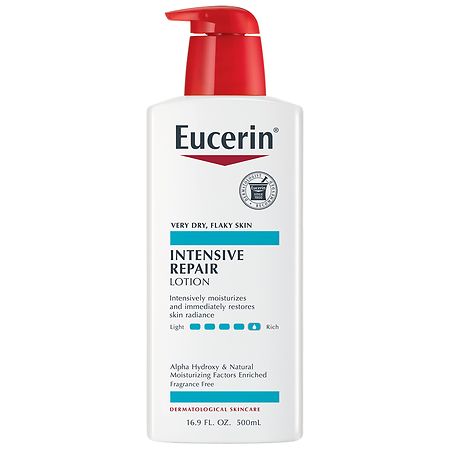
Eucerin Intensive Repair Body Lotion for Very Dry Flaky Skin Mothers Day Gifts 16.9 fl oz
Summary
This body lotion contains beneficial ingredients like Caprylic/Capric Triglyceride, Sodium Lactate, Urea, Glycerin, and Lactic Acid, which are known for their moisturizing and skin-replenishing properties. However, the presence of Benzyl Alcohol, which can cause skin irritation, and the use of multiple synthetic ingredients such as PEG compounds and mineral oil, contribute to a moderate processing level. These factors, along with the inclusion of potentially irritating preservatives, impact the overall score.
At a glance
Key ingredients 19
WaterNeutral
Water is a neutral base ingredient commonly used in lotions to provide hydration. It is typically purified to remove impurities and serves as a solvent for other ingredients. No significant interactions or concerns are associated with its use in this product.
Benefits
Water helps to hydrate the skin and acts as a carrier for other beneficial ingredients.
Mineral OilNeutral
Mineral oil is a neutral emollient that helps to lock moisture into the skin. It is a byproduct of petroleum distillation and is highly refined for cosmetic use. While it forms a barrier on the skin, it does not provide additional nutrients.
Risks
Some concerns exist about its occlusive nature potentially clogging pores.
Benefits
Mineral oil is effective in preventing moisture loss from the skin.
OctyldodecanolNeutral
Octyldodecanol is a fatty alcohol used as an emollient and emulsifier in lotions. It is derived from natural fats and oils and is considered safe for use in cosmetics. It helps improve the texture and spreadability of the product.
Benefits
It provides a smooth application and helps maintain skin softness.
Caprylic/Capric TriglycerideGood
Caprylic/Capric Triglyceride is a good emollient derived from coconut oil and glycerin. It is known for its skin-replenishing properties and is lightweight and non-greasy. This ingredient is often used to enhance the absorption of other beneficial ingredients.
Benefits
It helps to moisturize and soften the skin without leaving a heavy residue.
Isopropyl PalmitateNeutral
Isopropyl Palmitate is a neutral emollient that helps to improve the texture of lotions. It is synthesized from isopropyl alcohol and palmitic acid, a fatty acid found in plants and animals. It can enhance the spreadability of the product.
Risks
Potential to cause skin irritation in sensitive individuals.
Benefits
It provides a silky feel and helps to lock in moisture.
Sodium LactateGood
Sodium Lactate is a good humectant that helps to attract moisture to the skin. It is derived from the fermentation of sugars and is a natural component of the skin's natural moisturizing factor. It helps to maintain skin hydration and pH balance.
Benefits
It enhances skin hydration and supports the skin's natural barrier function.
UreaGood
Urea is a good humectant and keratolytic agent that helps to retain moisture and exfoliate the skin. It is naturally found in the skin and is synthesized for cosmetic use. Urea is effective in treating dry and flaky skin conditions.
Benefits
It improves skin hydration and smoothness by promoting exfoliation.
GlycerinGood
Glycerin is a good humectant that draws moisture into the skin. It is a natural compound derived from plant oils or synthesized and is widely used in skincare for its moisturizing properties. Glycerin helps to maintain skin hydration and improve barrier function.
Benefits
It enhances skin hydration and supports the skin's natural barrier.
PEG-7 Hydrogenated Castor OilNeutral
PEG-7 Hydrogenated Castor Oil is a neutral surfactant and emulsifier used to stabilize formulations. It is derived from castor oil and ethylene oxide, providing solubility for oil-based ingredients. While effective, it is a synthetic compound.
Risks
Potential concerns about PEG compounds include skin irritation and contamination with impurities.
Benefits
It helps to blend oil and water components in the lotion.
Benzyl AlcoholBad
Benzyl Alcohol is a bad preservative and solvent used in cosmetics. It is naturally occurring in some essential oils but is often synthesized for use in products. It can cause skin irritation and allergic reactions in sensitive individuals.
Risks
Potential for skin irritation and allergic reactions, especially in sensitive skin.
Benefits
It acts as a preservative to extend the shelf life of the product.
DimethiconeNeutral
Dimethicone is a neutral silicone-based polymer used as an emollient and skin protectant. It forms a barrier on the skin to prevent moisture loss and improve texture. While effective, it is a synthetic ingredient.
Benefits
It provides a smooth application and helps to lock in moisture.
Methoxy PEG-22/Dodecyl Glycol CopolymerNeutral
Methoxy PEG-22/Dodecyl Glycol Copolymer is a neutral surfactant used to stabilize emulsions. It is a synthetic compound derived from ethylene oxide and glycol. It helps to improve the texture and consistency of the lotion.
Risks
Potential concerns about PEG compounds include skin irritation and contamination with impurities.
Benefits
It aids in the even distribution of ingredients within the product.
PEG-45/Dodecyl Glycol CopolymerNeutral
PEG-45/Dodecyl Glycol Copolymer is a neutral surfactant and emulsifier used in cosmetic formulations. It is synthesized from ethylene oxide and glycol, providing stability to the product. It helps to blend oil and water components effectively.
Risks
Potential concerns about PEG compounds include skin irritation and contamination with impurities.
Benefits
It enhances the texture and stability of the lotion.
Magnesium SulfateNeutral
Magnesium Sulfate is a neutral ingredient used as a thickening agent and to improve texture. It is a naturally occurring mineral salt known as Epsom salt. It helps to stabilize formulations and enhance product consistency.
Benefits
It contributes to the overall texture and stability of the product.
Lactic AcidGood
Lactic Acid is a good alpha hydroxy acid (AHA) used for exfoliation and hydration. It is derived from milk or synthesized and helps to remove dead skin cells and improve skin texture. Lactic acid also supports skin hydration by enhancing moisture retention.
Risks
Potential for skin irritation if used in high concentrations.
Benefits
It promotes smoother skin and enhances moisture retention.
OzokeriteNeutral
Ozokerite is a neutral wax used as a thickening agent in lotions. It is a naturally occurring mineral wax that helps to stabilize formulations and improve texture. While effective, it does not provide additional skin benefits.
Benefits
It contributes to the product's consistency and stability.
PEG-2 Hydrogenated Castor OilNeutral
PEG-2 Hydrogenated Castor Oil is a neutral surfactant and emulsifier used in cosmetic formulations. It is derived from castor oil and ethylene oxide, providing solubility for oil-based ingredients. It helps to stabilize and blend the product.
Risks
Potential concerns about PEG compounds include skin irritation and contamination with impurities.
Benefits
It aids in the even distribution of ingredients within the lotion.
Sorbitan IsostearateNeutral
Sorbitan Isostearate is a neutral emulsifier used to stabilize formulations. It is derived from sorbitol and stearic acid, providing a smooth texture to the product. It helps to blend oil and water components effectively.
Benefits
It enhances the texture and stability of the lotion.
Hydrogenated Castor OilNeutral
Hydrogenated Castor Oil is a neutral emollient used to improve the texture of lotions. It is derived from castor oil through hydrogenation, providing a stable and smooth consistency. It helps to enhance the spreadability of the product.
Benefits
It provides a smooth application and helps to lock in moisture.
Processing
Processed Foods
Get the full breakdown in the Scout app
Scan any product to see lab results, healthy alternatives, and your personalized analysis.
Download on theApp Store