
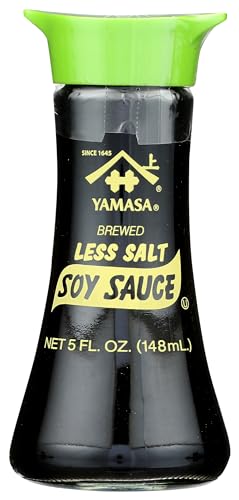


Yamasa Soy Sauce
Analysis updated July 2026 · How Scout scores
At a glance
Summary
This soy sauce is a processed food with a relatively simple ingredient list, including water, wheat, soybeans, and salt. It contains a small amount of alcohol and vinegar for preservation, which are common in soy sauce production. The presence of lactic acid as an additive is minimal, and there are no harmful seed oils or artificial additives, making it a moderately healthy choice within its category.
Key ingredients 7
WaterNeutral
Water is a neutral ingredient used as a solvent and base in many food products. It does not contribute any calories or nutrients. Its primary role is to dissolve other ingredients and provide the desired consistency.
See more about Water →WheatNeutral
Wheat is used in soy sauce fermentation, providing carbohydrates that are broken down during the process. It is a common allergen and may cause reactions in sensitive individuals. The fermentation process alters its nutritional profile, reducing gluten content.
Risks
May cause allergic reactions in individuals with wheat or gluten sensitivities.
SoybeansNeutral
Soybeans are a key ingredient in soy sauce, providing protein and flavor through fermentation. They are a common allergen and may cause reactions in sensitive individuals. Fermentation enhances umami flavor but alters the original nutritional profile.
Risks
May cause allergic reactions in individuals with soy sensitivities.
SaltNeutral
Salt is used to enhance flavor and preserve the soy sauce. It is a refined ingredient without trace minerals. High sodium intake can contribute to hypertension and cardiovascular issues.
Risks
Excessive consumption may lead to high blood pressure and cardiovascular problems.
AlcoholNeutral
Alcohol is used in soy sauce to retain freshness and prevent spoilage. It is present in small amounts and evaporates during cooking. Its role is primarily functional rather than nutritional.
See more about Alcohol →VinegarNeutral
Vinegar is used in soy sauce for flavor enhancement and preservation. It is a fermented product that adds acidity and complexity to the taste. The acetic acid content is beneficial for preservation but offers minimal nutritional value.
See more about Vinegar →Lactic AcidNeutral
Lactic acid is used as a preservative and flavor enhancer in soy sauce. It is naturally occurring and contributes to the tangy flavor profile. Its presence is primarily functional, with minimal nutritional impact.
See more about Lactic Acid →Processing
Processed Foods
Get the full breakdown in the Scout appTake Scout shopping
Scan any product to see lab results, healthy alternatives, and your personalized analysis.
Download on theApp Store GET IT ONGoogle PlayAmazon pricing & content
Amazon price as of . Product prices and availability are accurate as of the date/time indicated and are subject to change. Any price and availability information displayed on Amazon.com at the time of purchase will apply to the purchase of this product.
CERTAIN CONTENT THAT APPEARS ON THIS SITE COMES FROM AMAZON. THIS CONTENT IS PROVIDED “AS IS” AND IS SUBJECT TO CHANGE OR REMOVAL AT ANY TIME.