
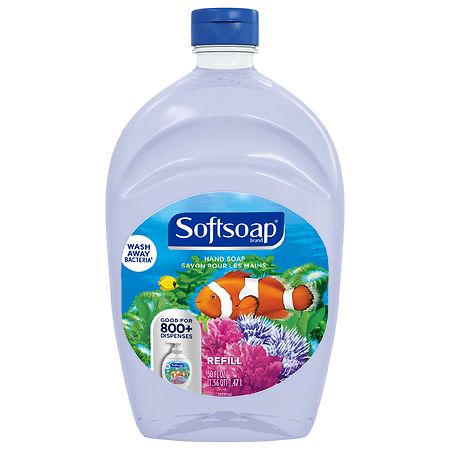
Softsoap Aquarium Liquid Hand Soap with New Easy Pour Spout 50 fl oz Refill
Summary
This hand soap contains sodium laureth sulfate, which can strip natural oils from the skin and may be contaminated with 1,4-dioxane, a potential carcinogen. While it is milder than sodium lauryl sulfate, its presence still poses some risks. The product lacks beneficial natural oils or botanicals that could enhance its safety profile, and the inclusion of synthetic surfactants contributes to a moderate processing level.
At a glance
Key ingredients 7
Water/EauNeutral
Water is a common solvent used in many cosmetic and personal care products. It acts as a base for the formulation, helping to dissolve other ingredients. It does not have any direct benefits or risks in this context.
Risks
There are no significant risks associated with water in this formulation.
Benefits
Water helps to dissolve and distribute other ingredients evenly throughout the product.
Sodium C12-13 Alketh SulfateNeutral
Sodium C12-13 Alketh Sulfate is a surfactant used for its cleansing and foaming properties. It is less harsh than sodium lauryl sulfate but can still cause irritation in sensitive individuals. It is commonly used in personal care products for its effective cleaning ability.
Risks
Potential skin irritation, especially for sensitive skin types.
Benefits
Provides effective cleansing and foaming action in the product.
Sodium Laureth SulfateBad
Sodium Laureth Sulfate is a surfactant known for its ability to create a rich lather. However, it can strip natural oils from the skin and may be contaminated with 1,4-dioxane, a potential carcinogen. It is milder than sodium lauryl sulfate but still poses some risks.
Risks
Can cause skin irritation and dryness; potential contamination with 1,4-dioxane.
Benefits
Provides effective foaming and cleansing properties.
Cocamidopropyl BetaineNeutral
Cocamidopropyl Betaine is a mild surfactant derived from coconut oil, often used to reduce irritation caused by other surfactants. It helps to create a rich lather and improve the texture of the product. It is generally considered safe but can cause allergic reactions in some individuals.
Risks
Potential for allergic reactions in sensitive individuals.
Benefits
Enhances foaming and reduces irritation from harsher surfactants.
Citric AcidNeutral
Citric Acid is used to adjust the pH of cosmetic products to match the natural pH of the skin. It can also act as a mild preservative and antioxidant. While generally safe, it can cause irritation in high concentrations.
Risks
May cause skin irritation if used in high concentrations.
Benefits
Helps maintain the product's pH balance and acts as a mild preservative.
Sodium ChlorideNeutral
Sodium Chloride, or table salt, is used to thicken the aqueous portion of the product. It can also help to stabilize the formulation. It is generally safe but can cause dryness if used in high concentrations.
Risks
May contribute to skin dryness in high concentrations.
Benefits
Acts as a thickening agent and stabilizes the product formulation.
Sodium BenzoateNeutral
Sodium Benzoate is a preservative used to prevent microbial growth in cosmetic products. It is effective in low concentrations and is generally recognized as safe. However, it can form benzene, a carcinogen, under certain conditions, though this is rare in cosmetic formulations.
Risks
Potential formation of benzene under certain conditions, though unlikely in this context.
Benefits
Prevents microbial growth, extending the shelf life of the product.
Processing
Processed Foods
Get the full breakdown in the Scout app
Scan any product to see lab results, healthy alternatives, and your personalized analysis.
Download on theApp Store