
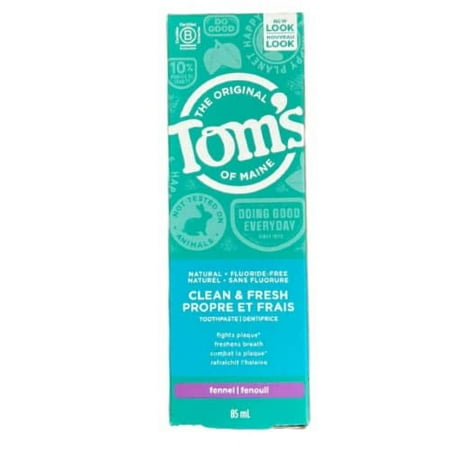

Tom s Of Maine Clean Fresh Fluoride-Free Toothpaste - Fennel Flavour 85 ml
Summary
This toothpaste contains beneficial ingredients like xylitol, which helps reduce cavity-causing bacteria, and sodium bicarbonate, known for its gentle abrasive properties. However, the presence of sodium lauryl sulfate, a known mucosal irritant, is a significant concern, as it can cause mouth ulcers and damage oral tissue. The combination of beneficial and harmful ingredients results in a mixed evaluation.
At a glance
Key ingredients 10
Calcium CarbonateNeutral
Calcium carbonate is commonly used as a mild abrasive in toothpaste to help remove plaque and surface stains. It is a naturally occurring mineral that is generally considered safe for oral care. However, it does not provide any significant antimicrobial benefits.
Risks
There are minimal risks associated with calcium carbonate, though excessive use could potentially lead to enamel wear.
Benefits
It helps in cleaning teeth by acting as a gentle abrasive.
GlycerinNeutral
Glycerin is used in toothpaste to maintain moisture and prevent the product from drying out. It also provides a sweet taste without promoting tooth decay. However, it does not contribute to oral health directly.
Risks
Glycerin is generally safe, but excessive use might leave a residue that could potentially interfere with remineralization.
Benefits
It helps in keeping the toothpaste moist and palatable.
WaterNeutral
Water is used as a solvent in toothpaste to dissolve other ingredients and provide the desired consistency. It is an essential component but does not directly contribute to oral health.
Risks
There are no significant risks associated with water in toothpaste.
Benefits
It acts as a solvent and helps in mixing other ingredients.
XylitolVery Good
Xylitol is a natural sweetener that helps reduce cavity-causing bacteria in the mouth. It is known to promote oral health by inhibiting the growth of Streptococcus mutans, the bacteria responsible for tooth decay. Its inclusion in toothpaste is highly beneficial for maintaining dental health.
Risks
Xylitol is generally safe, but excessive consumption can cause digestive issues.
Benefits
It reduces the risk of cavities by inhibiting harmful bacteria.
Hydrated SilicaNeutral
Hydrated silica is used as an abrasive agent in toothpaste to help remove plaque and stains. It is effective in cleaning teeth but does not provide any antimicrobial benefits. Its abrasiveness is generally considered safe for enamel when used appropriately.
Risks
Overuse of hydrated silica can potentially lead to enamel wear if the abrasive level is too high.
Benefits
It aids in cleaning teeth by removing surface stains.
Zinc CitrateNeutral
Zinc citrate is included in toothpaste for its potential to reduce plaque and control tartar formation. It has mild antimicrobial properties that can contribute to oral health. However, its effectiveness can vary depending on the formulation.
Risks
Zinc citrate is generally safe, but excessive ingestion can lead to zinc toxicity.
Benefits
It helps in reducing plaque and controlling tartar.
Sodium Lauryl SulfateVery Bad
Sodium lauryl sulfate (SLS) is a surfactant used to create foam in toothpaste, but it is a known mucosal irritant. It has been linked to mouth ulcers and can damage oral epithelial tissue. Its presence in oral care products is often criticized due to these potential adverse effects.
Risks
SLS can cause irritation and mouth ulcers, especially in sensitive individuals.
Benefits
It helps in foaming, which can aid in the distribution of toothpaste.
CarrageenanNeutral
Carrageenan is used as a thickening agent in toothpaste to provide the desired texture. It is derived from seaweed and is generally considered safe for use in oral care products. However, it does not contribute to oral health directly.
Risks
There are concerns about carrageenan causing inflammation, but these are primarily associated with its degraded form, which is not used in toothpaste.
Benefits
It helps in maintaining the consistency of the toothpaste.
Sodium BicarbonateGood
Sodium bicarbonate, or baking soda, is used in toothpaste for its gentle abrasive properties and ability to neutralize acids. It helps in cleaning teeth and maintaining a balanced pH in the mouth. Its inclusion is beneficial for oral health due to these properties.
Risks
Sodium bicarbonate is generally safe, but excessive use can lead to enamel wear.
Benefits
It acts as a gentle abrasive and helps neutralize acids in the mouth.
Natural FlavorNeutral
Natural flavor is added to toothpaste to improve taste and make the product more palatable. It does not contribute to oral health but enhances user experience. The specific benefits or risks depend on the source of the flavoring.
Risks
There are minimal risks associated with natural flavors, though allergic reactions are possible in sensitive individuals.
Benefits
It improves the taste of the toothpaste, encouraging regular use.
Get the full breakdown in the Scout app
Scan any product to see lab results, healthy alternatives, and your personalized analysis.
Download on theApp Store