
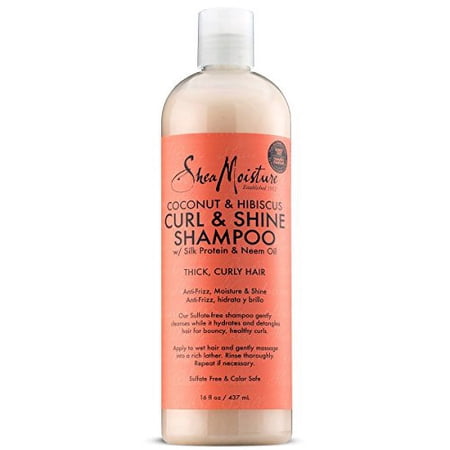

Shea Moisture Curly Hair Products Coconut & Hibiscus Curl & Shine Shampoo Shea
Analysis updated June 2026 · How Scout scores
At a glance
Summary
This shampoo features a range of beneficial ingredients such as coconut oil, shea butter, and aloe vera, which are known for their moisturizing and nourishing properties. It avoids harsh sulfates and silicones, but the presence of synthetic fragrance is a minor concern due to potential irritation. Overall, the product is well-formulated with mostly natural ingredients, contributing to a healthy hair care option.
Key ingredients 27
Cocos Nucifera (Coconut) OilVery Good
Coconut oil is a natural emollient that helps to moisturize and condition the hair. It penetrates the hair shaft to reduce protein loss and improve hair strength. It is rich in fatty acids that nourish the scalp and hair.
Risks
Overuse can lead to buildup, making hair greasy or heavy.
Benefits
It deeply conditions and adds shine to the hair.
Butyrospermum Parkii (Shea Butter)Very Good
Shea butter is a natural fat extracted from the nuts of the shea tree. It is known for its moisturizing and anti-inflammatory properties. It helps to soften and smooth the hair, reducing frizz and enhancing shine.
Risks
There are minimal risks, though it may cause buildup if not rinsed properly.
Benefits
It provides deep hydration and improves hair manageability.
Simmondsia Chinensis (Jojoba) Seed OilVery Good
Jojoba oil is a natural emollient that closely resembles the natural oils of the scalp. It helps to moisturize and condition the hair without leaving a greasy residue. It also helps to balance oil production on the scalp.
Risks
There are minimal risks associated with jojoba oil.
Benefits
Moisturizes and conditions the hair, balancing scalp oil.
Decyl GlucosideGood
Decyl glucoside is a mild, non-ionic surfactant derived from glucose and coconut oil. It is known for its gentle cleansing properties, making it suitable for sensitive skin and hair. It helps to cleanse the hair without stripping natural oils.
Risks
There are minimal risks associated with decyl glucoside, though some individuals may experience mild irritation.
Benefits
It provides gentle cleansing and is biodegradable, making it environmentally friendly.
Aloe Vera Leaf JuiceGood
Aloe vera leaf juice is known for its soothing and hydrating properties. It helps to condition the hair and scalp, reducing dryness and irritation. It contains vitamins and minerals that promote healthy hair growth.
Risks
Rarely, it may cause allergic reactions in sensitive individuals.
Benefits
It hydrates and soothes the scalp, promoting a healthy environment for hair growth.
Vitamin EGood
Vitamin E is an antioxidant that helps to protect the hair from environmental damage. It supports scalp health and improves hair elasticity. It can also enhance shine and smoothness.
Risks
Excessive use may lead to scalp irritation.
Benefits
It protects hair from oxidative stress and enhances shine.
Melia Azadirachta (Neem) Seed OilGood
Neem seed oil is known for its antimicrobial and anti-inflammatory properties. It helps to maintain scalp health and reduce dandruff. It also conditions the hair, making it smoother and more manageable.
Risks
May cause irritation if used in high concentrations.
Benefits
It promotes a healthy scalp and reduces dandruff.
Mangifera Indica (Mango) Seed ButterGood
Mango seed butter is a rich emollient that provides deep hydration to the hair. It helps to soften and smooth the hair, reducing frizz and enhancing shine. It is rich in vitamins A and E, which support hair health.
Risks
Overuse can lead to buildup, making hair feel heavy.
Benefits
It deeply moisturizes and adds shine to the hair.
Caprylic/Capric TriglycerideGood
Caprylic/capric triglyceride is derived from coconut oil and glycerin. It is used as an emollient and helps to improve the spreadability of the product. It provides a lightweight moisturizing effect without leaving a greasy residue.
Risks
There are minimal risks associated with this ingredient.
Benefits
It moisturizes the hair and enhances product application.
Hydrolyzed Vegetable Protein PG-Propyl SilanetriolGood
This ingredient is a protein derivative that helps to strengthen and protect the hair. It forms a protective barrier on the hair shaft, reducing breakage and improving elasticity. It is beneficial for damaged or chemically treated hair.
Risks
There are minimal risks associated with this ingredient.
Benefits
Strengthens and protects the hair, reducing breakage.
Hibiscus Rosa-Sinensis Flower ExtractGood
Hibiscus extract is known for its conditioning and moisturizing properties. It helps to improve hair elasticity and reduce breakage. It also adds shine and softness to the hair.
Risks
There are minimal risks associated with hibiscus extract.
Benefits
Conditions and moisturizes the hair, adding shine.
Brassica Campestris (Rapeseed) Seed OilGood
Rapeseed oil is a lightweight oil that provides conditioning and moisturizing benefits. It helps to smooth the hair cuticle and reduce frizz. It is rich in essential fatty acids that nourish the hair.
Risks
There are minimal risks associated with rapeseed oil.
Benefits
Conditions and smooths the hair, reducing frizz.
PanthenolGood
Panthenol, also known as provitamin B5, is a humectant that helps to retain moisture in the hair. It improves hair elasticity and reduces breakage. It also adds shine and smoothness to the hair.
Risks
There are minimal risks associated with panthenol.
Benefits
Retains moisture and improves hair elasticity.
Sodium Lauroyl Hydrolyzed SilkGood
This ingredient is a silk protein derivative that helps to strengthen and protect the hair. It forms a protective barrier on the hair shaft, reducing breakage and improving elasticity. It is beneficial for damaged or chemically treated hair.
Risks
There are minimal risks associated with this ingredient.
Benefits
Strengthens and protects the hair, reducing breakage.
TocopherolGood
Tocopherol, or vitamin E, is an antioxidant that helps to protect the hair from environmental damage. It supports scalp health and improves hair elasticity. It can also enhance shine and smoothness.
Risks
Excessive use may lead to scalp irritation.
Benefits
Protects hair from oxidative stress and enhances shine.
Glycerin (Vegetable)Good
Glycerin is a humectant that helps to attract and retain moisture in the hair. It improves hair hydration and reduces dryness. It is derived from vegetable sources, making it a natural and safe ingredient.
Risks
There are minimal risks associated with glycerin.
Benefits
Hydrates the hair and reduces dryness.
Glycine Soja (Soybean) OilGood
Soybean oil is a lightweight oil that provides conditioning and moisturizing benefits. It helps to smooth the hair cuticle and reduce frizz. It is rich in essential fatty acids that nourish the hair.
Risks
There are minimal risks associated with soybean oil.
Benefits
Conditions and smooths the hair, reducing frizz.
Deionized WaterNeutral
Deionized water is used as a solvent to dissolve other ingredients and ensure even distribution. It is free from impurities that could interfere with the product's performance. It does not provide direct benefits or risks to hair health.
Risks
There are no known risks associated with deionized water in hair care products.
Benefits
It helps in the even distribution of active ingredients across the hair.
Cetearyl AlcoholNeutral
Standard formulation ingredient — neither beneficial nor harmful at typical use.
Risks
There are minimal risks associated with cetearyl alcohol.
Benefits
It conditions the hair and improves product texture.
Cetyl AlcoholNeutral
Standard formulation ingredient — neither beneficial nor harmful at typical use.
Risks
There are minimal risks associated with cetyl alcohol.
Benefits
It conditions the hair and improves product texture.
Stearyl AlcoholNeutral
Standard formulation ingredient — neither beneficial nor harmful at typical use.
Risks
There are minimal risks associated with stearyl alcohol.
Benefits
It conditions the hair and improves product texture.
Behentrimonium ChlorideNeutral
Behentrimonium chloride is a conditioning agent that helps to detangle and smooth the hair. It is effective in reducing static and frizz. It is commonly used in hair care products for its conditioning properties.
Risks
May cause irritation if used in high concentrations.
Benefits
It detangles and smooths the hair, reducing frizz.
HydroxyethylcelluloseNeutral
Hydroxyethylcellulose is a thickening agent used to improve the texture and consistency of the product. It helps to stabilize the formula and ensure even distribution of ingredients. It does not provide direct benefits or risks to hair health.
Risks
There are no known risks associated with hydroxyethylcellulose.
Benefits
Improves product texture and consistency.
Triethyl CitrateNeutral
Triethyl citrate is used as a fragrance fixative and stabilizer in cosmetic formulations. It helps to enhance the longevity of the product's scent. It does not provide direct benefits or risks to hair health.
Risks
There are no known risks associated with triethyl citrate.
Benefits
Enhances the longevity of the product's scent.
Caprylyl GlycolNeutral
Caprylyl glycol is used as a skin conditioning agent and preservative. It helps to improve the texture and feel of the product. It does not provide direct benefits or risks to hair health.
Risks
There are no known risks associated with caprylyl glycol.
Benefits
Improves product texture and acts as a preservative.
Benzoic AcidNeutral
Benzoic acid is used as a preservative to prevent microbial growth in cosmetic products. It helps to extend the shelf life of the product. It does not provide direct benefits or risks to hair health.
Risks
There are no known risks associated with benzoic acid.
Benefits
Acts as a preservative to extend product shelf life.
FragranceVery Bad
Fragrance is used to impart a pleasant scent to the product. However, it often contains synthetic compounds that can cause irritation or allergic reactions. The exact composition is usually undisclosed, making it difficult to assess safety.
Risks
Potential for skin irritation and allergic reactions.
Benefits
Provides a pleasant scent to the product.
Processing
Processed Foods
Get the full breakdown in the Scout appTake Scout shopping
Scan any product to see lab results, healthy alternatives, and your personalized analysis.
Download on theApp Store GET IT ONGoogle PlayAmazon pricing & content
Amazon price as of . Product prices and availability are accurate as of the date/time indicated and are subject to change. Any price and availability information displayed on Amazon.com at the time of purchase will apply to the purchase of this product.
CERTAIN CONTENT THAT APPEARS ON THIS SITE COMES FROM AMAZON. THIS CONTENT IS PROVIDED “AS IS” AND IS SUBJECT TO CHANGE OR REMOVAL AT ANY TIME.