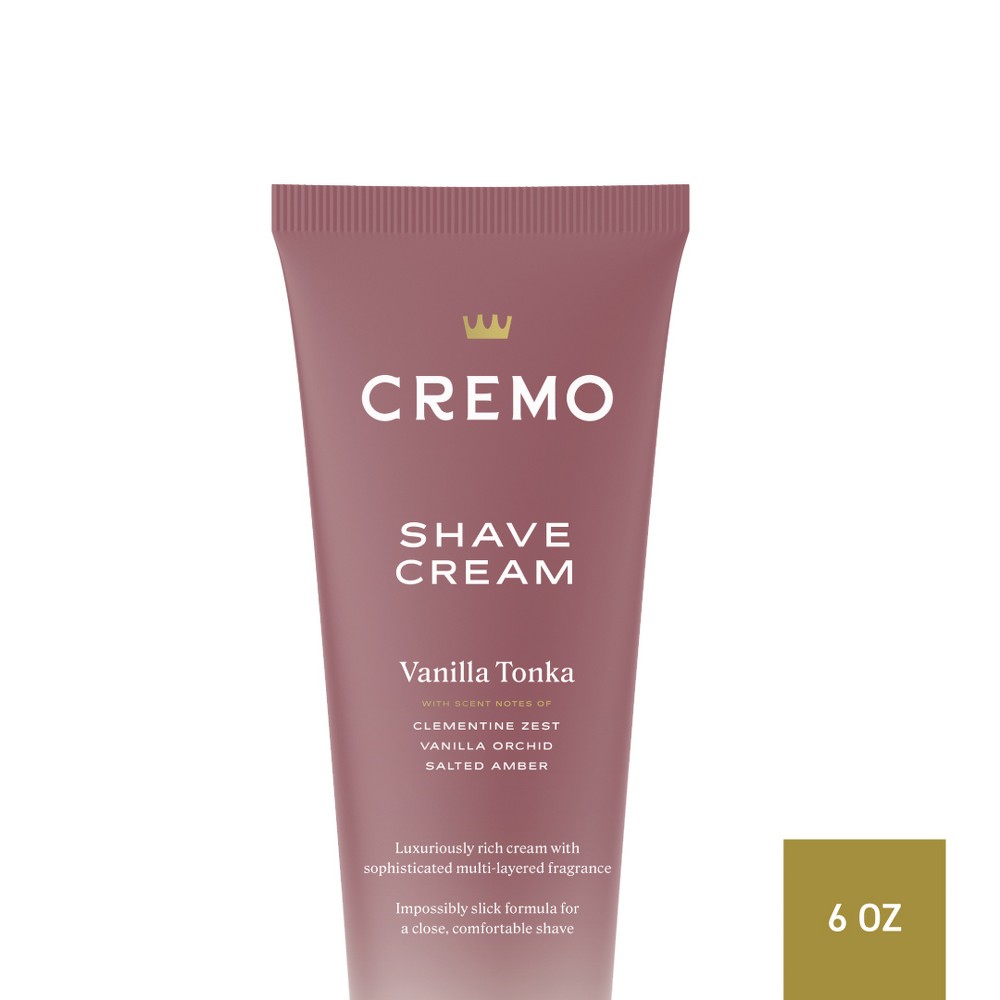
Cremo Shave Cream - Vanilla Tonka - 6 fl oz: Whole Body, All Hair Types, All Skin Types
At a glance
Summary
This shave cream contains beneficial ingredients like sodium cocoyl isethionate and macadamia seed oil, which are gentle and nourishing for the skin. However, the presence of synthetic fragrance and phenoxyethanol, which can cause irritation and have potential toxicity concerns, slightly detracts from its overall safety profile. Additionally, sodium chloride is used as a thickener, which may contribute to dryness, especially in hair care applications. Its plastic packaging can shed microplastics into the product and lowers its score.
Key ingredients 28
Sodium Cocoyl IsethionateVery Good
Sodium Cocoyl Isethionate is a gentle surfactant derived from coconut oil. It is known for its mildness and ability to cleanse without stripping natural oils. It is favored for sensitive skin and hair care products.
Risks
There are minimal risks associated with this ingredient; it is generally well-tolerated.
Benefits
It provides gentle cleansing and is suitable for sensitive skin.
Coconut AcidVery Good
Coconut Acid is derived from coconut oil and used as a surfactant and conditioning agent. It is known for its moisturizing and cleansing properties. It is beneficial for maintaining skin and hair hydration.
Risks
There are minimal risks associated with coconut acid; it is generally well-tolerated.
Benefits
It provides moisturizing and cleansing benefits.
Macadamia Ternifolia Seed OilVery Good
Macadamia Ternifolia Seed Oil is a nourishing oil rich in fatty acids. It is known for its moisturizing and conditioning properties. It is beneficial for improving skin and hair health.
Risks
There are minimal risks associated with macadamia oil; it is generally well-tolerated.
Benefits
It provides deep hydration and nourishment.
Aloe Barbadensis Leaf JuiceGood
Aloe Barbadensis Leaf Juice is known for its soothing and hydrating properties. It is beneficial for calming irritated skin and providing moisture. It is a popular ingredient in skincare and haircare for its healing effects.
Risks
There are minimal risks associated with aloe vera; it is generally well-tolerated.
Benefits
It soothes and hydrates the skin and hair.
Olea Europaea (Olive) Leaf ExtractGood
Olive Leaf Extract is rich in antioxidants and has moisturizing properties. It is beneficial for protecting and nourishing the skin and hair. It is valued for its anti-inflammatory effects.
Risks
There are minimal risks associated with olive leaf extract; it is generally well-tolerated.
Benefits
It provides antioxidant protection and hydration.
Oryza Sativa (Rice) Bran ExtractGood
Rice Bran Extract is known for its antioxidant and moisturizing properties. It helps to improve skin and hair texture and provides nourishment. It is beneficial for its anti-aging effects.
Risks
There are minimal risks associated with rice bran extract; it is generally well-tolerated.
Benefits
It provides nourishment and antioxidant protection.
Helianthus Annuus (Sunflower) ExtractGood
Sunflower Extract is rich in vitamins and fatty acids, providing moisturizing and protective benefits. It is beneficial for maintaining skin and hair health. It is valued for its soothing properties.
Risks
There are minimal risks associated with sunflower extract; it is generally well-tolerated.
Benefits
It provides hydration and protection.
AllantoinGood
Allantoin is known for its soothing and healing properties. It helps to calm irritated skin and promote cell regeneration. It is beneficial for sensitive and damaged skin.
Risks
There are minimal risks associated with allantoin; it is generally well-tolerated.
Benefits
It soothes and promotes healing of the skin.
Rosmarinus Officinalis (Rosemary) Leaf ExtractGood
Rosemary Leaf Extract is an antioxidant-rich ingredient with antimicrobial properties. It helps to protect the skin and hair from environmental damage. It is beneficial for its stimulating and refreshing effects.
Risks
There is a potential for irritation in sensitive individuals.
Benefits
It provides antioxidant protection and antimicrobial benefits.
Calendula Officinalis Flower ExtractGood
Calendula Flower Extract is known for its soothing and anti-inflammatory properties. It is beneficial for calming irritated skin and promoting healing. It is valued for its gentle nature.
Risks
There are minimal risks associated with calendula extract; it is generally well-tolerated.
Benefits
It soothes and promotes healing of the skin.
TocopherolGood
Tocopherol, also known as Vitamin E, is an antioxidant that helps to protect the skin and hair from damage. It is beneficial for its moisturizing and healing properties. It is valued for its ability to improve skin and hair health.
Risks
There are minimal risks associated with tocopherol; it is generally well-tolerated.
Benefits
It provides antioxidant protection and moisturization.
WaterNeutral
Water is a common solvent used in cosmetic formulations. It helps dissolve other ingredients and provides a base for the product. It does not have any direct benefits or risks in this context.
Risks
There are no significant risks associated with water in cosmetic products.
Benefits
Water helps in the application and spreadability of the product.
Palmitic AcidNeutral
Palmitic Acid is a fatty acid used as an emollient and thickening agent. It helps to improve the texture and consistency of the product. It does not have significant direct benefits or risks.
Risks
There are no significant risks associated with palmitic acid in cosmetic use.
Benefits
It helps to stabilize and thicken formulations.
Stearic AcidNeutral
Stearic Acid is a fatty acid used as an emulsifier and thickener. It helps to stabilize formulations and improve texture. It does not have significant direct benefits or risks.
Risks
There are no significant risks associated with stearic acid in cosmetic use.
Benefits
It aids in the stability and consistency of the product.
Cetearyl AlcoholNeutral
Standard formulation ingredient — neither beneficial nor harmful at typical use.
Risks
There are minimal risks associated with cetearyl alcohol; it is generally well-tolerated.
Benefits
It provides conditioning and softening effects.
Glycol DistearateNeutral
Glycol Distearate is used as a pearlizing agent and thickener in cosmetic formulations. It gives products a pearlescent appearance and improves texture. It does not have significant direct benefits or risks.
Risks
There are no significant risks associated with glycol distearate in cosmetic use.
Benefits
It enhances the visual appeal and texture of the product.
Sodium IsethionateNeutral
Sodium Isethionate is a surfactant used for its cleansing properties. It helps to remove dirt and oil from the skin and hair. It does not have significant direct benefits or risks.
Risks
There are no significant risks associated with sodium isethionate in cosmetic use.
Benefits
It aids in effective cleansing.
Citrus Limon (Lemon) Fruit ExtractNeutral
Citrus Limon Fruit Extract is used for its antioxidant properties and refreshing scent. It can help to brighten the skin and hair. It does not have significant direct benefits or risks.
Risks
There is a potential for photosensitivity with citrus extracts.
Benefits
It provides antioxidant benefits and a refreshing scent.
Carica Papaya (Papaya) Fruit ExtractNeutral
Papaya Fruit Extract is used for its exfoliating and antioxidant properties. It can help to improve skin texture and tone. It does not have significant direct benefits or risks.
Risks
There is a potential for irritation in sensitive individuals.
Benefits
It provides gentle exfoliation and antioxidant benefits.
Hydroxypropyl Guar Hydroxypropyltrimonium ChlorideNeutral
This ingredient is used as a conditioning agent and thickener in hair care products. It helps to improve the texture and manageability of hair. It does not have significant direct benefits or risks.
Risks
There are no significant risks associated with this ingredient in cosmetic use.
Benefits
It improves hair texture and manageability.
PEG/PPG-120/10 Trimethylolpropane TrioleateNeutral
This ingredient is used as an emulsifier and thickener in cosmetic formulations. It helps to stabilize and improve the texture of products. It does not have significant direct benefits or risks.
Risks
There are no significant risks associated with this ingredient in cosmetic use.
Benefits
It aids in the stability and consistency of the product.
Laureth-2Neutral
Laureth-2 is used as an emulsifier and surfactant in cosmetic products. It helps to blend ingredients and improve texture. It does not have significant direct benefits or risks.
Risks
There are no significant risks associated with laureth-2 in cosmetic use.
Benefits
It aids in emulsification and texture improvement.
EthylhexylglycerinNeutral
Ethylhexylglycerin is used as a preservative and skin conditioning agent. It helps to enhance the efficacy of other preservatives. It does not have significant direct benefits or risks.
Risks
There are no significant risks associated with ethylhexylglycerin in cosmetic use.
Benefits
It enhances preservation and provides skin conditioning.
Citric AcidNeutral
Citric Acid is used to adjust the pH of cosmetic products. It helps to maintain stability and improve product performance. It does not have significant direct benefits or risks.
Risks
There is a potential for irritation in sensitive individuals.
Benefits
It helps to maintain product stability and performance.
Sodium ChlorideNeutral
Standard formulation ingredient — neither beneficial nor harmful at typical use.
Risks
Sodium Chloride can cause dryness and irritation, especially in sensitive individuals.
Benefits
It helps to thicken and stabilize formulations.
XylitolNeutral
Xylitol is used as a humectant and conditioning agent in cosmetic products. It helps to retain moisture and improve texture. It does not have significant direct benefits or risks.
Risks
There are no significant risks associated with xylitol in cosmetic use.
Benefits
It helps to retain moisture and improve texture.
PhenoxyethanolBad
Phenoxyethanol is a preservative used to prevent microbial growth in cosmetics. It is often criticized for potential skin irritation and toxicity concerns. It is restricted in some regions for use in baby products.
Risks
Phenoxyethanol can cause skin irritation and allergic reactions in sensitive individuals.
Benefits
It helps to preserve the product and extend its shelf life.
FragranceVery Bad
Fragrance in cosmetics can be a mixture of various chemicals, some of which may cause irritation or allergic reactions. It is often criticized for its lack of transparency. It can pose risks for sensitive individuals.
Risks
Fragrance can cause skin irritation and allergic reactions in sensitive individuals.
Benefits
It provides a pleasant scent to the product.
Processing
Processed Foods
Get the full breakdown in the Scout appTake Scout shopping
Scan any product to see lab results, healthy alternatives, and your personalized analysis.
Are you Cremo? Fix an error Get the badge Get tested
Amazon pricing & content
Amazon price as of . Product prices and availability are accurate as of the date/time indicated and are subject to change. Any price and availability information displayed on Amazon.com at the time of purchase will apply to the purchase of this product.
CERTAIN CONTENT THAT APPEARS ON THIS SITE COMES FROM AMAZON. THIS CONTENT IS PROVIDED “AS IS” AND IS SUBJECT TO CHANGE OR REMOVAL AT ANY TIME.