
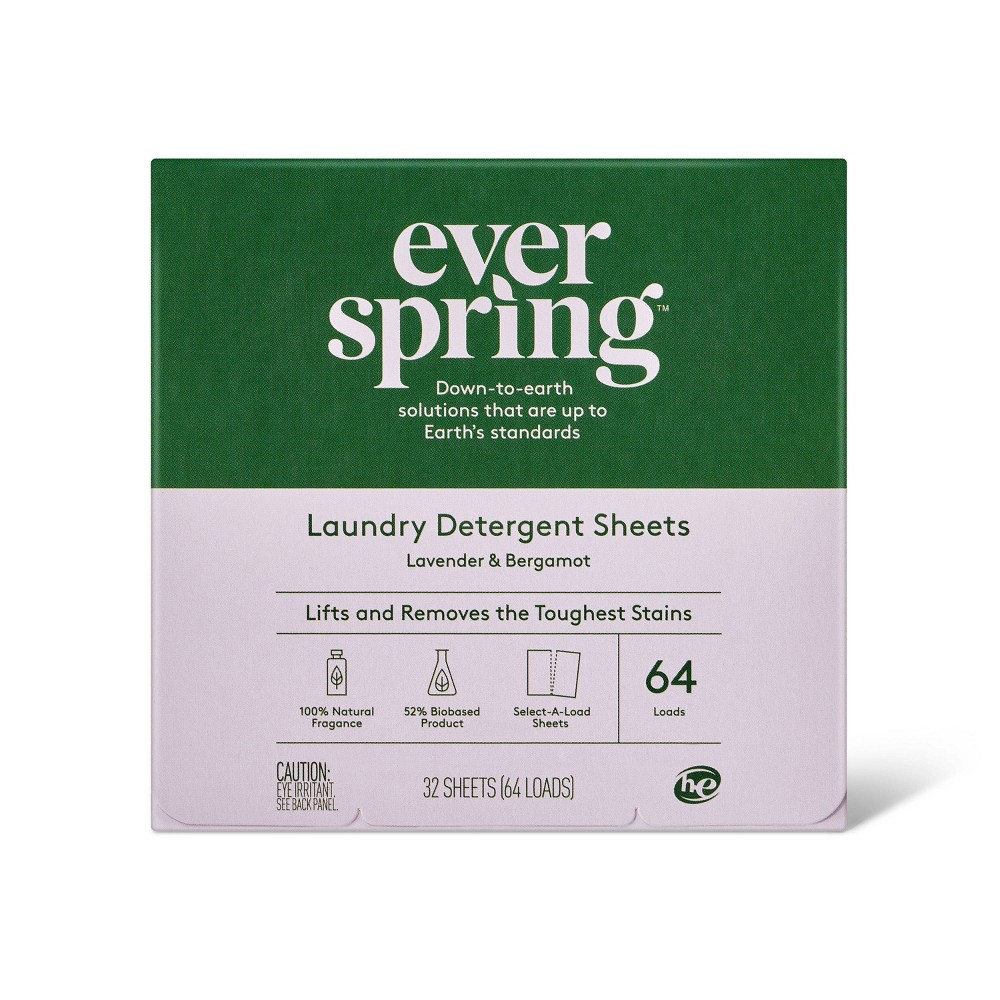

Lavender & Bergamot Laundry Detergent Sheets - 64 Loads - Everspring™: Paraben-Free, Bleach-Free, Non-Toxic
Analysis updated August 2026 · How Scout scores
At a glance
Summary
This laundry detergent features a predominantly plant-derived formulation with ingredients like glycerin, cocoamidopropyl betaine, and lauryl glucoside, which are safe and biodegradable. However, the presence of synthetic fragrance, which can cause allergic reactions and skin irritation, slightly detracts from its overall safety profile. The product is processed, which limits its maximum potential score.
Key ingredients 16
Corn StarchGood
Corn starch is a plant-derived ingredient used as a filler and thickener. It is biodegradable and considered safe for use in cleaning products. It helps in maintaining the structure of detergent sheets.
Risks
There are minimal risks associated with corn starch in cleaning products.
Benefits
It is biodegradable and environmentally friendly.
Glyceryl CocoateGood
Glyceryl cocoate is a plant-derived and synthetic ingredient used as an emulsifier and surfactant. It helps to stabilize formulations and improve the spreadability of the product. It is considered safe and non-toxic.
Risks
Minimal risks associated with glyceryl cocoate in cleaning products.
Benefits
It is biodegradable and helps to stabilize and improve the product's texture.
Cocoamidopropyl BetaineGood
Cocoamidopropyl betaine is a plant-derived surfactant used for its mild cleansing and foaming properties. It is effective in reducing irritation caused by other surfactants. It is considered safe and non-toxic.
Risks
May cause mild irritation in sensitive individuals.
Benefits
It is biodegradable and helps to reduce irritation from other surfactants.
Capryl/Caprylyl GlucosideGood
Capryl/caprylyl glucoside is a plant-derived surfactant used for its mild cleansing properties. It is effective in removing dirt and oils without causing irritation. It is considered safe and biodegradable.
Risks
Minimal risks associated with capryl/caprylyl glucoside in cleaning products.
Benefits
It is biodegradable and effective in gentle cleansing.
Lauryl GlucosideGood
Lauryl glucoside is a plant-derived surfactant used for its mild cleansing properties. It is effective in removing dirt and oils without causing irritation. It is considered safe and biodegradable.
Risks
Minimal risks associated with lauryl glucoside in cleaning products.
Benefits
It is biodegradable and effective in gentle cleansing.
Polyvinyl AlcoholNeutral
Polyvinyl alcohol is a synthetic polymer used to form the structure of detergent sheets. It is water-soluble and helps in the controlled release of active ingredients. It is generally considered safe for use in cleaning products.
Risks
There are concerns about its biodegradability and potential environmental impact.
Benefits
It allows for the controlled release of cleaning agents and is effective in forming detergent sheets.
GlycerinNeutral
Standard formulation ingredient — neither beneficial nor harmful at typical use.
Risks
There are minimal risks associated with glycerin in cleaning products.
Benefits
It is biodegradable and helps to keep the detergent sheets pliable.
Sodium C14-C16 Olefine SulfonateNeutral
Sodium C14-C16 olefin sulfonate is a synthetic surfactant used for its cleaning and foaming properties. It is effective in removing dirt and oils. It is considered milder than SLS but can still cause irritation in some individuals.
Risks
Potential skin irritation with prolonged exposure.
Benefits
Effective in cleaning and removing oils and dirt.
WaterNeutral
Water is used as a solvent and carrier for other ingredients. It is essential for dissolving and distributing active ingredients. It is safe and non-toxic.
Benefits
Acts as a solvent and helps in the distribution of ingredients.
Paraffinum LiquidumNeutral
Paraffinum liquidum, also known as mineral oil, is used as a lubricant and emollient. It helps to improve the texture and spreadability of the product. It is generally considered safe for use in cleaning products.
Risks
Concerns about its environmental impact and non-renewable nature.
Benefits
Improves texture and spreadability of the product.
Sodium GluconateNeutral
Standard formulation ingredient — neither beneficial nor harmful at typical use.
Risks
Minimal risks associated with sodium gluconate in cleaning products.
Benefits
It is biodegradable and helps to improve product stability and effectiveness.
Sodium ChlorideNeutral
Sodium chloride, or table salt, is used as a thickening agent and to adjust the viscosity of the product. It is safe and non-toxic. It is commonly used in cleaning products.
Benefits
Helps to adjust the viscosity and improve the texture of the product.
Sodium HydroxideNeutral
Sodium hydroxide is a mineral-based ingredient used to adjust the pH of cleaning products. It is effective in neutralizing acids and improving cleaning performance. It is generally considered safe when used in appropriate concentrations.
Risks
Can cause irritation if used in high concentrations.
Benefits
Helps to adjust pH and improve cleaning performance.
Sodium SulfateNeutral
Sodium sulfate is a mineral-based ingredient used as a filler and to improve the texture of cleaning products. It is safe and non-toxic. It is commonly used in detergents and cleaning products.
Benefits
Helps to improve the texture and bulk of the product.
Potassium SorbateBad
Synthetic preservative — flagged in daily-use products.
Risks
May cause mild irritation in sensitive individuals.
Benefits
Helps to extend the shelf life of the product by preventing microbial growth.
FragranceVery Bad
Fragrance is used to impart a pleasant scent to cleaning products. It can be composed of various natural and synthetic compounds. Synthetic fragrances can cause allergic reactions and skin irritation.
Risks
Potential for allergic reactions and skin irritation.
Benefits
Provides a pleasant scent to the product.
Get the full breakdown in the Scout appTake Scout shopping
Scan any product to see lab results, healthy alternatives, and your personalized analysis.
Download on theApp Store GET IT ONGoogle Play