
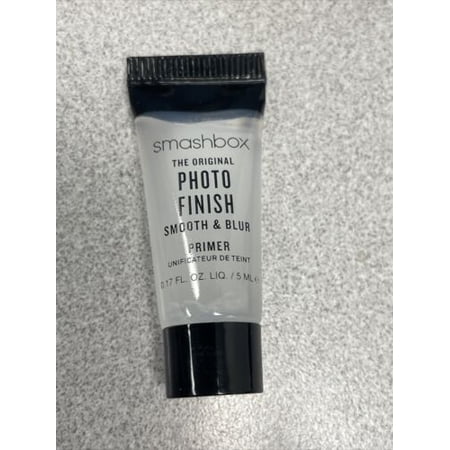

Smashbox Photo Finish Smooth & Blur Primer Base 0.17oz 5mL Mini Sample Size NEW
Summary
This primer contains a mix of silicones and polymers, which are common in cosmetics for their smoothing properties but are synthetic and not naturally derived. It includes beneficial extracts like grape seed and cucumber, which can offer antioxidant benefits. However, the presence of phenoxyethanol as a preservative and BHT, a synthetic antioxidant, raises concerns about potential skin irritation and long-term safety, impacting the overall ingredient safety score.
At a glance
Key ingredients 28
CyclopentasiloxaneNeutral
Cyclopentasiloxane is a silicone that provides a smooth application and helps to fill in fine lines. It is generally considered safe for use in cosmetics. However, it can be an environmental concern due to its persistence.
Risks
Potential environmental persistence and bioaccumulation.
Benefits
Provides a smooth, silky texture and helps in even application.
DimethiconeNeutral
Dimethicone is a silicone-based polymer used for its smoothing properties. It forms a barrier on the skin that can lock in moisture. While generally safe, it may cause irritation in sensitive individuals.
Risks
May cause skin irritation in sensitive individuals.
Benefits
Helps to smooth skin texture and lock in moisture.
Dimethicone CrosspolymerNeutral
Dimethicone Crosspolymer is used to enhance the texture and feel of the product. It provides a silky, smooth finish. It is considered safe for use in cosmetics.
Risks
Minimal risk, primarily related to potential skin irritation.
Benefits
Improves product texture and provides a smooth finish.
TrisiloxaneNeutral
Trisiloxane is a volatile silicone that helps in spreading the product evenly. It evaporates quickly, leaving a smooth finish. It is generally considered safe for use in cosmetics.
Risks
Minimal risk, primarily related to potential skin irritation.
Benefits
Enhances spreadability and provides a smooth finish.
SilicaNeutral
Silica is used as an absorbent and to improve the texture of the product. It helps to control shine and provides a matte finish. It is generally considered safe for use in cosmetics.
Risks
Inhalation of fine silica particles can be harmful.
Benefits
Controls shine and provides a matte finish.
Dimethicone/Vinyl Dimethicone CrosspolymerNeutral
This ingredient is used to enhance the texture and feel of the product. It provides a silky, smooth finish and is considered safe for use in cosmetics.
Risks
Minimal risk, primarily related to potential skin irritation.
Benefits
Improves product texture and provides a smooth finish.
Ethylhexyl SalicylateNeutral
Ethylhexyl Salicylate is used as a UV filter in cosmetics. It helps to protect the skin from UVB rays. It is generally considered safe but can cause irritation in some individuals.
Risks
May cause skin irritation in sensitive individuals.
Benefits
Provides UVB protection.
Retinyl PalmitateGood
Retinyl Palmitate is a form of Vitamin A that can improve skin texture and reduce signs of aging. It is considered beneficial for skin health. However, it can increase sensitivity to sunlight.
Risks
May increase skin sensitivity to sunlight.
Benefits
Improves skin texture and reduces signs of aging.
Tocopheryl AcetateGood
Tocopheryl Acetate is a form of Vitamin E that acts as an antioxidant. It helps to protect the skin from damage caused by free radicals. It is generally considered safe and beneficial for skin health.
Risks
Minimal risk, primarily related to potential skin irritation.
Benefits
Acts as an antioxidant and protects the skin from damage.
Carthamus Tinctorius (Safflower) Seed ExtractGood
Safflower Seed Extract is rich in fatty acids and helps to moisturize the skin. It is considered beneficial for maintaining skin hydration. It is generally safe for use in cosmetics.
Risks
Minimal risk, primarily related to potential skin irritation.
Benefits
Moisturizes the skin and helps maintain hydration.
Propylene GlycolNeutral
Propylene Glycol is used as a humectant to retain moisture in the skin. It is generally considered safe but can cause irritation in sensitive individuals. It helps to improve skin hydration.
Risks
May cause skin irritation in sensitive individuals.
Benefits
Retains moisture and improves skin hydration.
WaterNeutral
Water is used as a solvent in cosmetics to dissolve other ingredients. It is essential for the formulation of many products. It is safe and non-irritating.
Benefits
Acts as a solvent and is essential for product formulation.
Vitis Vinifera (Grape) Seed ExtractGood
Grape Seed Extract is rich in antioxidants and helps to protect the skin from damage. It is considered beneficial for skin health and is generally safe for use in cosmetics.
Risks
Minimal risk, primarily related to potential skin irritation.
Benefits
Rich in antioxidants and protects the skin from damage.
Cola Acuminata (Kola) Seed ExtractNeutral
Kola Seed Extract is used for its antioxidant properties and can help to improve skin texture. It is generally considered safe for use in cosmetics.
Risks
Minimal risk, primarily related to potential skin irritation.
Benefits
Provides antioxidant benefits and improves skin texture.
Camellia Oleifera Leaf ExtractGood
Camellia Oleifera Leaf Extract, also known as Green Tea Extract, is rich in antioxidants and helps to protect the skin from damage. It is considered beneficial for skin health and is generally safe for use in cosmetics.
Risks
Minimal risk, primarily related to potential skin irritation.
Benefits
Rich in antioxidants and protects the skin from damage.
IsododecaneNeutral
Isododecane is used as an emollient and solvent in cosmetics. It helps to improve the spreadability of the product. It is generally considered safe for use in cosmetics.
Risks
Minimal risk, primarily related to potential skin irritation.
Benefits
Improves spreadability and acts as an emollient.
Polysilicone-11Neutral
Polysilicone-11 is used to improve the texture and feel of the product. It provides a silky, smooth finish and is considered safe for use in cosmetics.
Risks
Minimal risk, primarily related to potential skin irritation.
Benefits
Improves product texture and provides a smooth finish.
Methyl TrimethiconeNeutral
Methyl Trimethicone is a volatile silicone that helps in spreading the product evenly. It evaporates quickly, leaving a smooth finish. It is generally considered safe for use in cosmetics.
Risks
Minimal risk, primarily related to potential skin irritation.
Benefits
Enhances spreadability and provides a smooth finish.
Caprylyl MethiconeNeutral
Caprylyl Methicone is a silicone used to improve the texture and feel of the product. It provides a silky, smooth finish and is considered safe for use in cosmetics.
Risks
Minimal risk, primarily related to potential skin irritation.
Benefits
Improves product texture and provides a smooth finish.
Caprylyl GlycolNeutral
Caprylyl Glycol is used as a skin conditioning agent and preservative. It helps to improve skin hydration and is generally considered safe for use in cosmetics.
Risks
Minimal risk, primarily related to potential skin irritation.
Benefits
Improves skin hydration and acts as a preservative.
PEG-12dimethicone/PPG-20 CrosspolymerNeutral
This ingredient is used to enhance the texture and feel of the product. It provides a silky, smooth finish and is considered safe for use in cosmetics.
Risks
Minimal risk, primarily related to potential skin irritation.
Benefits
Improves product texture and provides a smooth finish.
Lauroyl LysineNeutral
Lauroyl Lysine is used as a skin conditioning agent and to improve the texture of the product. It is generally considered safe for use in cosmetics.
Risks
Minimal risk, primarily related to potential skin irritation.
Benefits
Conditions the skin and improves product texture.
Helianthus Annuus (Sunflower) Seed ExtractGood
Sunflower Seed Extract is rich in fatty acids and helps to moisturize the skin. It is considered beneficial for maintaining skin hydration and is generally safe for use in cosmetics.
Risks
Minimal risk, primarily related to potential skin irritation.
Benefits
Moisturizes the skin and helps maintain hydration.
Cucumis Sativus (Cucumber) Fruit ExtractGood
Cucumber Fruit Extract is known for its soothing and hydrating properties. It helps to calm the skin and is considered beneficial for skin health.
Risks
Minimal risk, primarily related to potential skin irritation.
Benefits
Soothes and hydrates the skin.
Hordeum Vulgare ExtractNeutral
Hordeum Vulgare Extract, also known as Barley Extract, is used for its antioxidant properties. It is generally considered safe for use in cosmetics.
Risks
Minimal risk, primarily related to potential skin irritation.
Benefits
Provides antioxidant benefits.
Propylene Glycol DicaprateNeutral
Propylene Glycol Dicaprate is used as an emollient and skin conditioning agent. It helps to improve skin hydration and is generally considered safe for use in cosmetics.
Risks
Minimal risk, primarily related to potential skin irritation.
Benefits
Improves skin hydration and acts as an emollient.
PhenoxyethanolBad
Phenoxyethanol is used as a preservative in cosmetics. It is effective in preventing microbial growth but can cause irritation in some individuals. It is considered a moderate risk ingredient.
Risks
May cause skin irritation and allergic reactions.
Benefits
Prevents microbial growth and extends product shelf life.
BHTNeutral
BHT is used as an antioxidant to prevent product spoilage. It is generally considered safe in low concentrations but has been associated with potential health concerns in high doses.
Risks
Potential health concerns in high doses.
Benefits
Acts as an antioxidant and prevents product spoilage.
Processing
Processed Foods
Get the full breakdown in the Scout app
Scan any product to see lab results, healthy alternatives, and your personalized analysis.
Download on theApp Store