
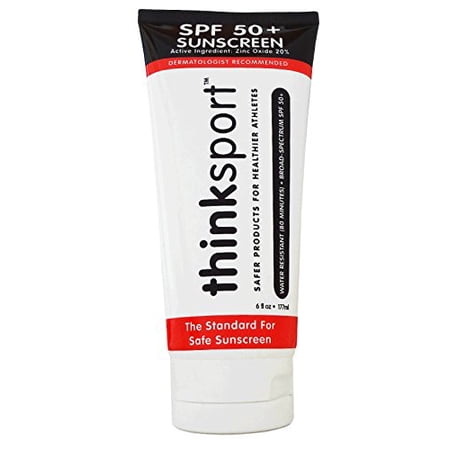

Thinksport Sunscreen SPF 50+ 6 Ounce
Summary
Thinksport Sunscreen SPF 50+ contains a mix of natural and synthetic ingredients. While it includes beneficial components like zinc oxide, which is effective for sun protection, it also contains some synthetic preservatives and emulsifiers that slightly lower its safety profile. The product is moderately processed, which impacts its overall rating, but it remains a relatively safe choice for sun protection.
At a glance
Key ingredients 10
Zinc Oxide
Zinc Oxide is a mineral sunscreen agent that provides broad-spectrum protection against UVA and UVB rays. It is considered safe and effective for sensitive skin. It is often used in natural and organic formulations.
Risks
There are minimal risks associated with Zinc Oxide, primarily related to potential inhalation in powder form.
Benefits
Zinc Oxide is beneficial for its non-irritating properties and its ability to protect the skin from sun damage.
Purified WaterNeutral
Purified Water is used as a solvent in cosmetic formulations. It helps to dissolve other ingredients and provides a base for the product. It is essential for the consistency and application of the product.
Risks
There are no significant risks associated with Purified Water.
Benefits
Purified Water is beneficial as it hydrates the skin and helps in the even application of the product.
Caprylic/Capric Triglyceride
Caprylic/Capric Triglyceride is derived from coconut oil and glycerin. It is used as an emollient and helps to improve the spreadability of the product. It is lightweight and non-greasy, making it suitable for all skin types.
Risks
There are minimal risks associated with Caprylic/Capric Triglyceride, primarily related to potential allergic reactions in sensitive individuals.
Benefits
It is beneficial for its moisturizing properties and ability to enhance the texture of the product.
Aloe Barbadensis Leaf Juice
Aloe Barbadensis Leaf Juice is known for its soothing and hydrating properties. It is often used in skincare products to calm irritated skin and provide moisture. It is rich in vitamins and antioxidants.
Risks
There are minimal risks associated with Aloe Vera, though some individuals may experience allergic reactions.
Benefits
Aloe Vera is beneficial for its anti-inflammatory and skin-healing properties.
Sorbitan StearateNeutral
Sorbitan Stearate is an emulsifier that helps to stabilize and thicken formulations. It allows oil and water components to mix effectively. It is commonly used in cosmetics for its ability to improve texture.
Risks
There are minimal risks associated with Sorbitan Stearate, though it may cause mild irritation in sensitive skin.
Benefits
It is beneficial for its role in maintaining the consistency and stability of the product.
Glycerin
Glycerin is a humectant that attracts moisture to the skin. It is widely used in skincare products for its hydrating properties. It helps to maintain the skin's moisture balance.
Risks
There are minimal risks associated with Glycerin, though it may cause irritation if used in high concentrations.
Benefits
Glycerin is beneficial for its ability to keep the skin hydrated and improve skin barrier function.
Sunflower Oil
Sunflower Oil is a natural oil rich in essential fatty acids and vitamins. It is used in skincare for its emollient properties and ability to nourish the skin. It is non-comedogenic and suitable for all skin types.
Risks
There are minimal risks associated with Sunflower Oil, though it may cause allergic reactions in some individuals.
Benefits
Sunflower Oil is beneficial for its moisturizing and skin-softening properties.
Jojoba Oil
Jojoba Oil is a natural oil that closely resembles the skin's natural sebum. It is used for its moisturizing and balancing properties. It is non-comedogenic and suitable for all skin types.
Risks
There are minimal risks associated with Jojoba Oil, though it may cause allergic reactions in some individuals.
Benefits
Jojoba Oil is beneficial for its ability to regulate oil production and provide long-lasting hydration.
Alpha-Tocopherol
Alpha-Tocopherol, also known as Vitamin E, is a powerful antioxidant. It is used in skincare products to protect the skin from free radical damage. It also has moisturizing and anti-inflammatory properties.
Risks
There are minimal risks associated with Alpha-Tocopherol, though it may cause irritation in sensitive individuals.
Benefits
Vitamin E is beneficial for its protective and skin-conditioning properties.
Hyaluronate Sodium
Hyaluronate Sodium, or Sodium Hyaluronate, is a form of hyaluronic acid. It is used in skincare for its ability to retain moisture and plump the skin. It is highly effective in hydrating and improving skin elasticity.
Risks
There are minimal risks associated with Hyaluronate Sodium, though it may cause irritation in rare cases.
Benefits
It is beneficial for its intense hydrating properties and ability to improve skin texture.
Processing
Processed Foods
Get the full breakdown in the Scout app
Scan any product to see lab results, healthy alternatives, and your personalized analysis.
Download on theApp Store