
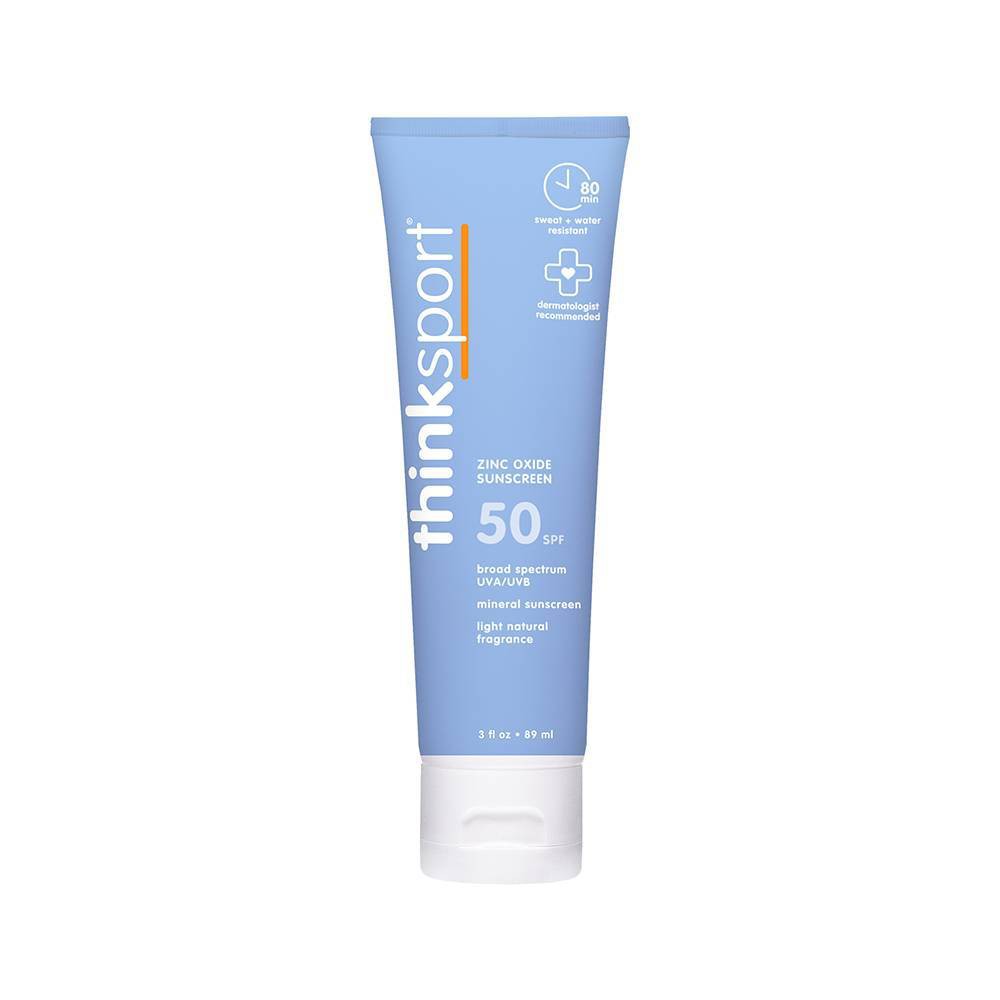

THINKSPORT sunscreen SPF 50 / LOTION
Summary
This sunscreen lotion features zinc oxide as its active ingredient, which is a safe and effective mineral sunscreen agent. The formulation includes beneficial natural oils such as jojoba, olive, and raspberry seed oil, alongside skin-friendly ingredients like aloe vera and hyaluronic acid. The absence of synthetic fragrances, parabens, and harsh chemicals contributes to its high rating, making it a clean and safe choice for sun protection.
At a glance
Key ingredients 23
Zinc OxideGood
Zinc Oxide is a mineral sunscreen agent that provides broad-spectrum UV protection. It is considered safe and effective for sensitive skin. It is non-comedogenic and does not penetrate the skin, making it a preferred choice for physical sunblocks.
Risks
There are minimal risks associated with Zinc Oxide, primarily related to potential whitening effect on the skin.
Benefits
It offers excellent protection against both UVA and UVB rays and is suitable for sensitive skin types.
Purified WaterNeutral
Purified Water is used as a solvent in cosmetic formulations. It helps to dissolve other ingredients and provides a base for the product. It is essential for the consistency and application of the lotion.
Risks
There are no significant risks associated with Purified Water.
Benefits
It hydrates the skin and helps in the even distribution of other active ingredients.
Caprylic/Capric TriglycerideGood
Caprylic/Capric Triglyceride is an emollient derived from coconut oil and glycerin. It helps to moisturize and replenish the skin without leaving a greasy residue. It is known for its skin-replenishing properties and is well-tolerated by most skin types.
Risks
There are minimal risks, primarily related to potential allergic reactions in very sensitive individuals.
Benefits
It provides a lightweight, non-greasy moisturizing effect and enhances the absorption of other ingredients.
Aloe Barbadensis Leaf JuiceVery Good
Aloe Vera is renowned for its soothing and hydrating properties. It helps to calm irritated skin and provides a cooling effect. It is rich in vitamins and antioxidants, promoting skin healing and hydration.
Risks
There are minimal risks, mainly related to potential allergic reactions in rare cases.
Benefits
It soothes and hydrates the skin, making it ideal for sensitive or sun-exposed skin.
Sorbitan StearateNeutral
Sorbitan Stearate is an emulsifier that helps to stabilize and thicken formulations. It ensures that oil and water components mix well, providing a smooth texture. It is generally considered safe for use in cosmetics.
Risks
There are minimal risks, primarily related to potential skin irritation in very sensitive individuals.
Benefits
It helps to maintain the stability and consistency of the product.
Pine Wood ResinNeutral
Pine Wood Resin is used for its adhesive properties in formulations. It helps to improve the texture and spreadability of the product. It is generally considered safe for topical use.
Risks
There are minimal risks, primarily related to potential allergic reactions.
Benefits
It enhances the texture and application of the product.
Vegetable GlycerinVery Good
Vegetable Glycerin is a humectant that attracts moisture to the skin. It helps to keep the skin hydrated and soft. It is non-irritating and suitable for all skin types.
Risks
There are minimal risks, primarily related to potential stickiness if used in high concentrations.
Benefits
It provides excellent hydration and helps to maintain the skin's moisture balance.
Cetyl DimethiconeNeutral
Cetyl Dimethicone is a silicone-based ingredient that provides a smooth, silky feel to the skin. It helps to improve the spreadability of the product. It is generally considered safe for use in cosmetics.
Risks
There are minimal risks, primarily related to potential build-up on the skin with prolonged use.
Benefits
It enhances the texture and application of the product, providing a silky finish.
Hydrogenated Castor OilGood
Hydrogenated Castor Oil is an emollient that helps to soften and condition the skin. It is derived from castor oil and is known for its moisturizing properties. It is well-tolerated by most skin types.
Risks
There are minimal risks, primarily related to potential allergic reactions in very sensitive individuals.
Benefits
It provides deep moisturization and helps to maintain skin softness.
Magnesium SulfateNeutral
Magnesium Sulfate is used as a thickening agent in cosmetic formulations. It helps to improve the texture and consistency of the product. It is generally considered safe for topical use.
Risks
There are minimal risks, primarily related to potential skin irritation in very sensitive individuals.
Benefits
It helps to maintain the stability and consistency of the product.
Sunflower OilVery Good
Sunflower Oil is a natural oil rich in essential fatty acids and vitamins. It helps to nourish and moisturize the skin. It is non-comedogenic and suitable for all skin types.
Risks
There are minimal risks, primarily related to potential allergic reactions in very sensitive individuals.
Benefits
It provides deep nourishment and helps to maintain skin health.
Jojoba OilVery Good
Jojoba Oil is a natural oil that closely resembles the skin's natural sebum. It helps to balance oil production and provides deep hydration. It is non-comedogenic and suitable for all skin types.
Risks
There are minimal risks, primarily related to potential allergic reactions in very sensitive individuals.
Benefits
It provides excellent hydration and helps to balance the skin's natural oils.
Ascorbic AcidVery Good
Ascorbic Acid, also known as Vitamin C, is a powerful antioxidant that helps to brighten the skin and reduce signs of aging. It promotes collagen production and protects against environmental damage. It is well-tolerated by most skin types.
Risks
There are minimal risks, primarily related to potential skin irritation in very sensitive individuals.
Benefits
It brightens the skin and provides antioxidant protection.
TocopherolsVery Good
Tocopherols, or Vitamin E, are antioxidants that help to protect the skin from environmental damage. They provide moisturizing and healing benefits. They are well-tolerated by most skin types.
Risks
There are minimal risks, primarily related to potential allergic reactions in very sensitive individuals.
Benefits
They provide antioxidant protection and help to maintain skin health.
Olive OilVery Good
Olive Oil is a natural oil rich in antioxidants and essential fatty acids. It helps to nourish and moisturize the skin. It is non-comedogenic and suitable for all skin types.
Risks
There are minimal risks, primarily related to potential allergic reactions in very sensitive individuals.
Benefits
It provides deep nourishment and helps to maintain skin health.
Raspberry Seed OilVery Good
Raspberry Seed Oil is a natural oil rich in essential fatty acids and antioxidants. It provides moisturizing and anti-inflammatory benefits. It is well-tolerated by most skin types.
Risks
There are minimal risks, primarily related to potential allergic reactions in very sensitive individuals.
Benefits
It provides deep hydration and helps to protect the skin from environmental damage.
Cranberry Seed OilVery Good
Cranberry Seed Oil is a natural oil rich in essential fatty acids and antioxidants. It provides moisturizing and anti-inflammatory benefits. It is well-tolerated by most skin types.
Risks
There are minimal risks, primarily related to potential allergic reactions in very sensitive individuals.
Benefits
It provides deep hydration and helps to protect the skin from environmental damage.
Hyaluronic AcidVery Good
Hyaluronic Acid is a powerful humectant that attracts and retains moisture in the skin. It helps to keep the skin hydrated and plump. It is well-tolerated by most skin types.
Risks
There are minimal risks, primarily related to potential skin irritation in very sensitive individuals.
Benefits
It provides excellent hydration and helps to maintain skin elasticity.
GlucoseNeutral
Glucose is a simple sugar used as a humectant in cosmetic formulations. It helps to attract moisture to the skin. It is generally considered safe for topical use.
Risks
There are minimal risks, primarily related to potential stickiness if used in high concentrations.
Benefits
It helps to maintain skin hydration.
Glucose OxidaseNeutral
Glucose Oxidase is an enzyme used as a preservative in cosmetic formulations. It helps to maintain the stability and shelf life of the product. It is generally considered safe for topical use.
Risks
There are minimal risks, primarily related to potential skin irritation in very sensitive individuals.
Benefits
It helps to preserve the product and maintain its effectiveness.
LactoperoxidaseNeutral
Lactoperoxidase is an enzyme used as a preservative in cosmetic formulations. It helps to maintain the stability and shelf life of the product. It is generally considered safe for topical use.
Risks
There are minimal risks, primarily related to potential skin irritation in very sensitive individuals.
Benefits
It helps to preserve the product and maintain its effectiveness.
CurrantNeutral
Currant is used for its antioxidant properties in cosmetic formulations. It helps to protect the skin from environmental damage. It is generally considered safe for topical use.
Risks
There are minimal risks, primarily related to potential allergic reactions in very sensitive individuals.
Benefits
It provides antioxidant protection and helps to maintain skin health.
GrapefruitNeutral
Grapefruit is used for its antioxidant and astringent properties in cosmetic formulations. It helps to protect the skin from environmental damage and tighten pores. It is generally considered safe for topical use.
Risks
There are minimal risks, primarily related to potential photosensitivity in very sensitive individuals.
Benefits
It provides antioxidant protection and helps to tighten and tone the skin.
Processing
Processed Foods
Get the full breakdown in the Scout app
Scan any product to see lab results, healthy alternatives, and your personalized analysis.
Download on theApp Store