
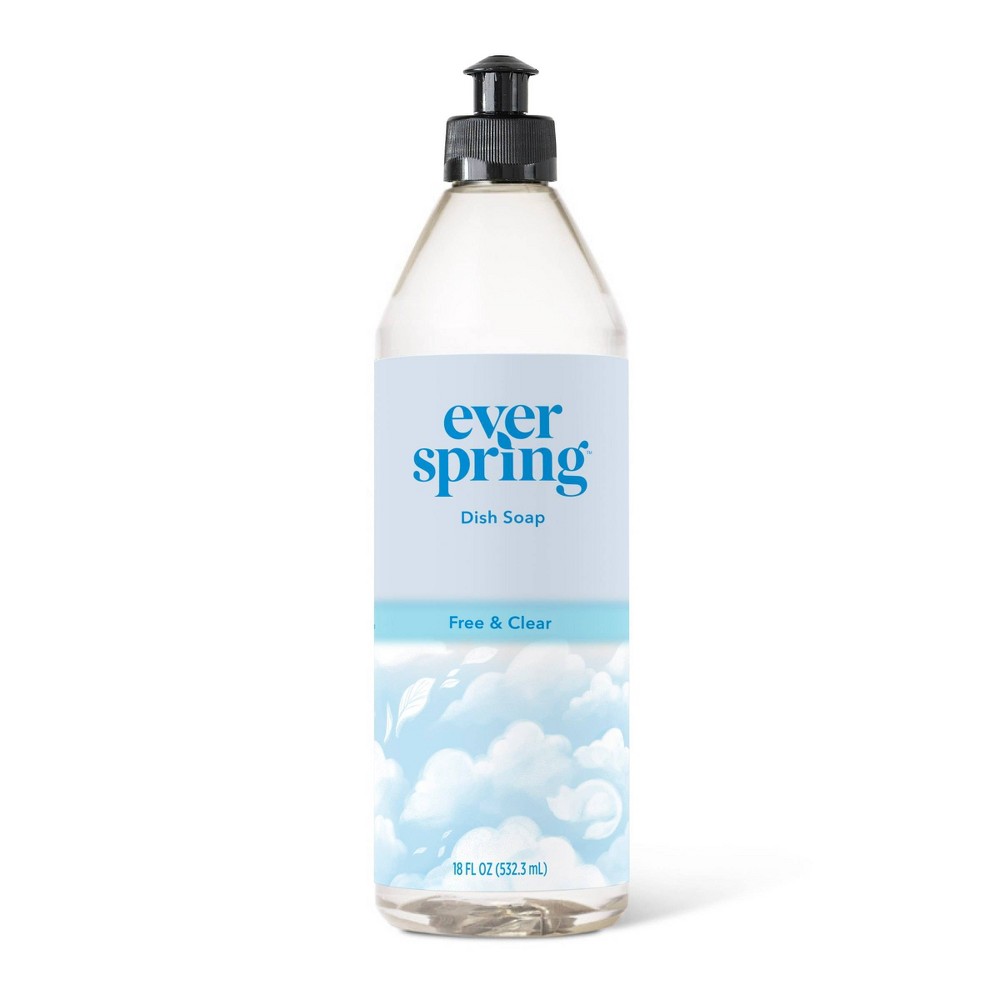

Free & Clear Liquid Dish Soap - 18 fl oz - Everspring™
Summary
This dish soap is primarily plant-based and free from harsh chemicals like sodium lauryl sulfate and synthetic fragrances, which enhances its safety for indoor use. However, it contains some processed ingredients that slightly reduce its environmental friendliness and overall safety profile. The product's processing level indicates it is not minimally processed, which affects its score.
At a glance
Key ingredients 7
Water
Water is used as a solvent and carrier for other ingredients in the formulation. It helps to dissolve and distribute the active components evenly. It is a neutral ingredient with no direct cleaning action.
Risks
There are no significant risks associated with water in this context.
Benefits
Water is essential for dissolving and activating cleaning agents, making it a fundamental component of liquid soaps.
Sodium Lauryl Sulfate
Sodium Lauryl Sulfate (SLS) is a surfactant used to create lather and remove grease. It is effective at breaking down oils and dirt. However, it is known to be a harsh irritant to skin and eyes.
Risks
SLS can cause skin irritation and dryness, especially with prolonged exposure.
Benefits
It is highly effective at cleaning and removing grease, which is beneficial for dishwashing.
Lauramine Oxide
Lauramine Oxide is a surfactant and foam booster that helps to stabilize the lather. It is often used to enhance the cleaning power of formulations. It is considered milder than SLS.
Risks
In some cases, it may cause mild skin irritation.
Benefits
Lauramine Oxide is biodegradable and contributes to the overall cleaning efficacy of the product.
Glycerine
Glycerine is a humectant that helps to retain moisture in the skin. It is often added to formulations to counteract the drying effects of surfactants. It is derived from plant oils or synthesized from propylene.
Risks
There are minimal risks associated with glycerine, though it may cause stickiness in high concentrations.
Benefits
Glycerine helps to moisturize and protect the skin, reducing irritation from other ingredients.
Alkylpolyglucosides
Alkylpolyglucosides are plant-derived surfactants known for their mildness and biodegradability. They are used to enhance the cleaning power while being gentle on the skin. These surfactants are derived from sugars and fatty alcohols.
Risks
There are minimal risks associated with alkylpolyglucosides.
Benefits
They are considered environmentally friendly and suitable for sensitive skin.
Magnesium Sulfate
Magnesium Sulfate, commonly known as Epsom salt, is used to enhance the viscosity and stability of the formulation. It can also act as a mild abrasive. It is generally considered safe for use in cleaning products.
Risks
There are minimal risks associated with magnesium sulfate in this context.
Benefits
It helps to improve the texture and consistency of the product, making it easier to use.
Citric Acid
Citric Acid is used to adjust the pH of the formulation and enhance cleaning performance. It is a natural acid found in citrus fruits. It also acts as a preservative by inhibiting microbial growth.
Risks
Citric acid can cause mild irritation if it comes into contact with the eyes.
Benefits
It is biodegradable and helps to remove mineral deposits and stains, improving cleaning efficiency.
Processing
Processed Foods
Get the full breakdown in the Scout app
Scan any product to see lab results, healthy alternatives, and your personalized analysis.
Download on theApp Store