
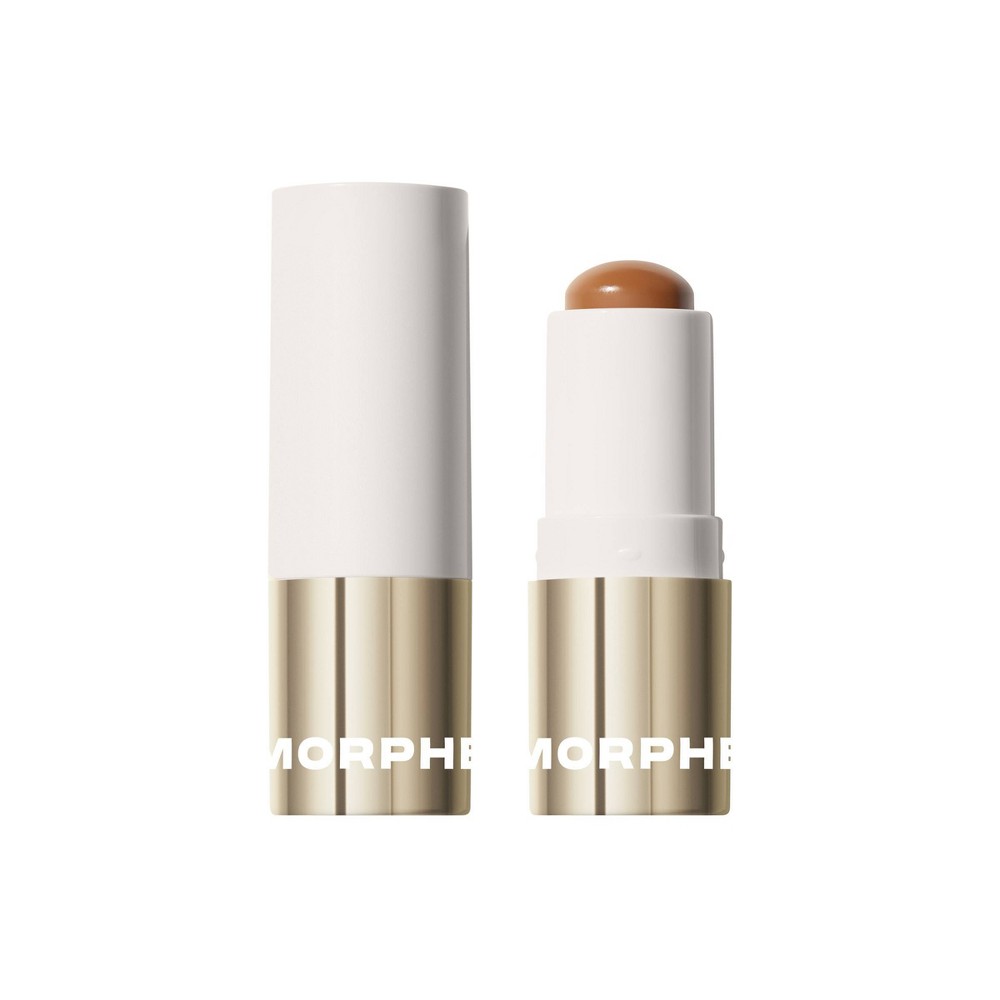



Morphe Sudden Heat Creamy Bronzer Stick - Spark - 8g
Analysis updated September 2026 · How Scout scores
At a glance
Summary
This bronzer stick contains several beneficial natural oils such as jojoba, sweet almond, and castor oil, which are known for their moisturizing and skin-conditioning properties. However, the presence of synthetic ingredients like synthetic wax and synthetic fluorphlogopite, along with artificial colorants, slightly detracts from its overall safety profile. Despite these concerns, the product does not contain any highly harmful substances, making it a relatively safe choice with a moderate level of processing.
Key ingredients 27
Simmondsia Chinensis (Jojoba) Seed OilVery Good
Jojoba Seed Oil is a natural oil used as an emollient and skin-conditioning agent in cosmetics. It helps to moisturize and nourish the skin, mimicking the skin's natural oils. It is well-tolerated by most skin types.
Risks
There are minimal risks associated with this ingredient.
Benefits
It provides excellent moisturizing and nourishing benefits to the skin.
Prunus Amygdalus Dulcis (Sweet Almond) OilVery Good
Sweet Almond Oil is a natural oil used as an emollient and skin-conditioning agent in cosmetics. It helps to moisturize and nourish the skin, providing a smooth and soft feel. It is well-tolerated by most skin types.
Risks
There are minimal risks associated with this ingredient.
Benefits
It provides excellent moisturizing and nourishing benefits to the skin.
Ricinus Communis (Castor) Seed OilVery Good
Castor Seed Oil is a natural oil used as an emollient and skin-conditioning agent in cosmetics. It helps to moisturize and nourish the skin, providing a smooth and soft feel. It is well-tolerated by most skin types.
Risks
There are minimal risks associated with this ingredient.
Benefits
It provides excellent moisturizing and nourishing benefits to the skin.
Caprylic/Capric TriglycerideGood
Caprylic/Capric Triglyceride is derived from coconut oil and glycerin, and is used as an emollient and skin-replenishing ingredient. It helps to moisturize and replenish the skin's surface. It is well-tolerated by most skin types.
Risks
There are minimal risks, though it may cause mild irritation in very sensitive individuals.
Benefits
It provides excellent skin-conditioning properties and enhances the product's texture.
Tocopheryl AcetateGood
Tocopheryl Acetate is a form of Vitamin E used as an antioxidant in cosmetics. It helps to protect the skin from free radical damage and improve the shelf life of products. It is well-tolerated by most skin types.
Risks
There are minimal risks, though it may cause mild irritation in very sensitive individuals.
Benefits
It provides antioxidant benefits and helps to protect the skin.
Sodium HyaluronateGood
Sodium Hyaluronate is a form of hyaluronic acid used as a skin-conditioning agent in cosmetics. It helps to hydrate and plump the skin, reducing the appearance of fine lines. It is well-tolerated by most skin types.
Risks
There are minimal risks associated with this ingredient.
Benefits
It provides excellent hydrating and plumping benefits to the skin.
Isononyl IsononanoateNeutral
Isononyl Isononanoate is an emollient that helps to soften and smooth the skin. It is commonly used in cosmetics for its ability to improve the texture of formulations. It is generally considered safe and non-irritating.
Risks
There are minimal risks associated with this ingredient, though some individuals may experience mild irritation.
Benefits
It provides a smooth application and enhances the skin's texture.
Ethylhexyl PalmitateNeutral
Ethylhexyl Palmitate is a fatty acid ester used as an emollient and texture enhancer in cosmetics. It provides a smooth, non-greasy feel to the skin. It is generally considered safe for use in cosmetics.
Risks
Potential risks include mild irritation for sensitive skin types.
Benefits
It helps to improve the spreadability and feel of the product on the skin.
SilicaNeutral
Silica is used in cosmetics as a thickening agent and to improve the texture of products. It helps to absorb moisture and oil, providing a matte finish. It is generally considered safe for use in cosmetics.
Risks
Inhalation of silica dust can be harmful, but this is not a concern in cream-based products.
Benefits
It helps to control shine and improve the product's texture.
Synthetic WaxNeutral
Synthetic Wax is used in cosmetics to provide structure and stability to formulations. It helps to improve the texture and application of the product. It is generally considered safe for use in cosmetics.
Risks
There are minimal risks associated with this ingredient.
Benefits
It enhances the product's texture and application.
Microcrystalline Wax (Cera Microcristallina, Cire microcristalline)Neutral
Microcrystalline Wax is used in cosmetics to provide structure and stability to formulations. It helps to improve the texture and application of the product. It is generally considered safe for use in cosmetics.
Risks
There are minimal risks associated with this ingredient.
Benefits
It enhances the product's texture and application.
Hydrogenated Coco-GlyceridesNeutral
Hydrogenated Coco-Glycerides are used as emollients and thickeners in cosmetics. They help to moisturize and condition the skin. They are generally considered safe for use in cosmetics.
Risks
There are minimal risks associated with this ingredient.
Benefits
They provide moisturizing and conditioning benefits to the skin.
Synthetic FluorphlogopiteNeutral
Synthetic Fluorphlogopite is a synthetic mica used to add shimmer and shine to cosmetics. It is considered a safe alternative to natural mica. It is generally considered safe for use in cosmetics.
Risks
There are minimal risks associated with this ingredient.
Benefits
It provides a shimmering effect and enhances the visual appeal of the product.
Propylene Glycol Dicaprylate/DicaprateNeutral
Propylene Glycol Dicaprylate/Dicaprate is used as an emollient and skin-conditioning agent in cosmetics. It helps to improve the texture and spreadability of the product. It is generally considered safe for use in cosmetics.
Risks
There are minimal risks associated with this ingredient.
Benefits
It enhances the texture and application of the product.
Sorbitan IsostearateNeutral
Sorbitan Isostearate is used as an emulsifier in cosmetics, helping to blend oil and water-based ingredients. It is generally considered safe for use in cosmetics.
Risks
There are minimal risks associated with this ingredient.
Benefits
It helps to stabilize formulations and improve product consistency.
Silica Dimethyl SilylateNeutral
Silica Dimethyl Silylate is used as a thickening agent and to improve the texture of cosmetics. It helps to provide a matte finish and enhance the product's stability. It is generally considered safe for use in cosmetics.
Risks
There are minimal risks associated with this ingredient.
Benefits
It helps to control shine and improve the product's texture.
Caprylyl GlycolNeutral
Caprylyl Glycol is used as a skin-conditioning agent and preservative booster in cosmetics. It helps to moisturize the skin and enhance the efficacy of preservatives. It is generally considered safe for use in cosmetics.
Risks
There are minimal risks associated with this ingredient.
Benefits
It provides moisturizing benefits and enhances preservative efficacy.
Stearalkonium HectoriteNeutral
Stearalkonium Hectorite is used as a thickening agent and to improve the texture of cosmetics. It helps to stabilize formulations and enhance the product's consistency. It is generally considered safe for use in cosmetics.
Risks
There are minimal risks associated with this ingredient.
Benefits
It helps to stabilize formulations and improve product consistency.
MethiconeNeutral
Methicone is used as an anti-foaming agent and to improve the texture of cosmetics. It helps to provide a smooth application and enhance the product's feel. It is generally considered safe for use in cosmetics.
Risks
There are minimal risks associated with this ingredient.
Benefits
It enhances the product's texture and application.
EthylhexylglycerinNeutral
Ethylhexylglycerin is used as a skin-conditioning agent and preservative booster in cosmetics. It helps to moisturize the skin and enhance the efficacy of preservatives. It is generally considered safe for use in cosmetics.
Risks
There are minimal risks associated with this ingredient.
Benefits
It provides moisturizing benefits and enhances preservative efficacy.
TriethoxycaprylylsilaneNeutral
Triethoxycaprylylsilane is used as a surface modifier in cosmetics, helping to improve the dispersion of pigments. It is generally considered safe for use in cosmetics.
Risks
There are minimal risks associated with this ingredient.
Benefits
It helps to improve pigment dispersion and enhance product performance.
Aluminum HydroxideNeutral
Aluminum Hydroxide is used as an opacifying agent and to improve the texture of cosmetics. It helps to provide a smooth application and enhance the product's feel. It is generally considered safe for use in cosmetics.
Risks
There are minimal risks associated with this ingredient.
Benefits
It enhances the product's texture and application.
Propylene CarbonateNeutral
Propylene Carbonate is used as a solvent and to improve the texture of cosmetics. It helps to provide a smooth application and enhance the product's feel. It is generally considered safe for use in cosmetics.
Risks
There are minimal risks associated with this ingredient.
Benefits
It enhances the product's texture and application.
Hydrogenated Castor OilNeutral
Hydrogenated Castor Oil is used as an emollient and thickening agent in cosmetics. It helps to moisturize and condition the skin, providing a smooth and soft feel. It is generally considered safe for use in cosmetics.
Risks
There are minimal risks associated with this ingredient.
Benefits
It provides moisturizing and conditioning benefits to the skin.
Yellow 5 Lake (CI 19140)Neutral
Yellow 5 Lake is a synthetic pigment used to add color to cosmetics. It is approved for use in cosmetics by regulatory agencies. It is generally considered safe for use in cosmetics.
Risks
There are minimal risks associated with this ingredient.
Benefits
It provides vibrant color to the product.
Iron Oxides (CI 77491, CI 77492, CI 77499)Neutral
Iron Oxides are natural pigments used to add color to cosmetics. They are approved for use in cosmetics by regulatory agencies. They are generally considered safe for use in cosmetics.
Risks
There are minimal risks associated with these ingredients.
Benefits
They provide natural and vibrant color to the product.
Titanium Dioxide (CI 77891)Neutral
Titanium Dioxide is used as a pigment and opacifying agent in cosmetics. It helps to provide coverage and improve the texture of the product. It is generally considered safe for use in cosmetics.
Risks
There are minimal risks associated with this ingredient.
Benefits
It provides coverage and enhances the product's texture.
Get the full breakdown in the Scout appTake Scout shopping
Scan any product to see lab results, healthy alternatives, and your personalized analysis.
Download on theApp Store GET IT ONGoogle Play