
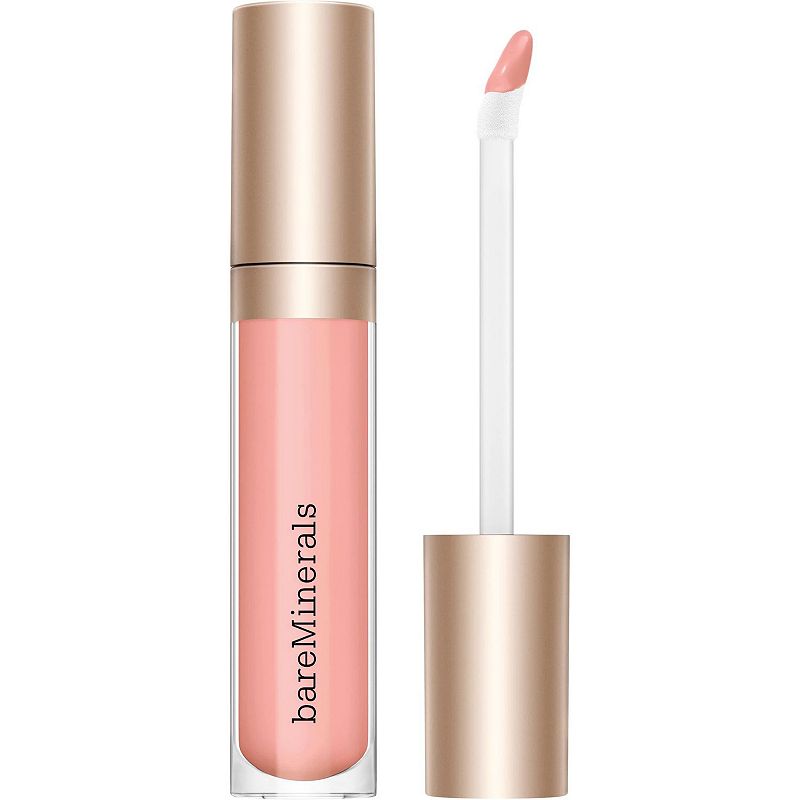

bareMinerals Lip-Gloss Balm, Size: 0.13 FL Oz, Serenity
Analysis updated August 2026 · How Scout scores
At a glance
Summary
This lip gloss balm contains several beneficial natural ingredients such as jojoba seed oil, sea buckthorn oil, and pomegranate flower extract, which provide moisturizing and antioxidant properties. However, the presence of synthetic flavoring and artificial colorants slightly detracts from its overall safety profile. The product is moderately processed, which limits its score despite the inclusion of high-quality natural oils and extracts.
Key ingredients 23
SIMMONDSIA CHINENSIS (JOJOBA) SEED OILVery Good
Jojoba Seed Oil is a natural oil known for its moisturizing and skin-conditioning properties. It closely resembles the natural oils of the skin, making it highly effective in maintaining skin hydration. It is widely regarded as safe and beneficial in cosmetics.
Risks
There are minimal risks, with rare cases of allergic reactions.
Benefits
It provides excellent moisturizing properties and helps to balance the skin's natural oils.
HIPPOPHAE RHAMNOIDES OILVery Good
Sea Buckthorn Oil is rich in vitamins and fatty acids, known for its nourishing and regenerative properties. It is used in cosmetics for its ability to improve skin elasticity and hydration. It is considered highly beneficial and safe.
Risks
There are minimal risks, with rare cases of skin irritation.
Benefits
It provides deep nourishment and helps in skin regeneration and repair.
TOCOPHEROLVery Good
Tocopherol, or Vitamin E, is a powerful antioxidant used to protect the skin from environmental damage. It is widely used in cosmetics for its moisturizing and skin-conditioning properties. It is considered highly beneficial and safe.
Risks
There are minimal risks, with rare cases of skin irritation.
Benefits
It provides antioxidant protection and helps to maintain skin hydration.
HELIANTHUS ANNUUS (SUNFLOWER) SEED WAXGood
Sunflower Seed Wax is a natural wax used for its emollient and thickening properties. It helps to provide structure to the product and improve its application. It is considered safe and beneficial in cosmetics.
Risks
There are minimal risks associated with this ingredient, primarily limited to rare allergic reactions.
Benefits
It provides a natural alternative to synthetic waxes and helps to lock in moisture.
PUNICA GRANATUM FLOWER EXTRACTGood
Pomegranate Flower Extract is known for its antioxidant properties, helping to protect the skin from environmental damage. It is used in cosmetics for its potential anti-aging benefits. It is considered safe for use.
Risks
Potential risks are minimal, with rare cases of skin sensitivity.
Benefits
It provides antioxidant protection and may help in reducing signs of aging.
PRUNUS DOMESTICA SEED OILGood
Plum Seed Oil is a natural oil known for its moisturizing and antioxidant properties. It is used in cosmetics to improve skin hydration and protect against environmental damage. It is considered safe and beneficial.
Risks
Potential risks are minimal, with rare cases of allergic reactions.
Benefits
It provides excellent moisturizing properties and helps to protect the skin from oxidative stress.
ASCORBYL PALMITATEGood
Ascorbyl Palmitate is a stable form of Vitamin C used for its antioxidant properties. It helps to protect the skin from free radical damage and improve skin tone. It is considered safe and beneficial in cosmetics.
Risks
There are minimal risks, with rare cases of skin sensitivity.
Benefits
It provides antioxidant protection and helps to brighten the skin.
MICAGood
Beneficial ingredient — whole-food or functional value in this product class.
Risks
There are minimal risks, with concerns primarily related to ethical sourcing.
Benefits
It provides a shimmering effect and enhances the visual appeal of the product.
DIISOSTEARYL MALATENeutral
Diisostearyl Malate is an ester used for its emollient properties, providing a smooth application. It helps in improving the texture of the product. It is generally considered safe for use in cosmetics.
Risks
There are minimal risks associated with this ingredient, primarily limited to rare cases of skin irritation.
Benefits
It enhances the spreadability and feel of the product on the lips.
PHENYL DIMETHICONENeutral
Phenyl Dimethicone is a silicone used to provide a silky feel and improve the spreadability of the product. It is commonly used in cosmetics for its conditioning properties. It is considered safe for use in cosmetics.
Risks
Potential risks include mild skin irritation for sensitive individuals.
Benefits
It provides a smooth, non-greasy feel and enhances the product's texture.
TRIISOSTEARYL CITRATENeutral
Triisostearyl Citrate is an emollient that helps to soften and smooth the skin. It is used to improve the texture and application of cosmetic products. It is generally regarded as safe for use.
Risks
There are minimal risks, with rare cases of skin irritation reported.
Benefits
It contributes to a smooth application and helps maintain skin moisture.
GLYCERYL BEHENATENeutral
Glyceryl Behenate is an ester of glycerin and behenic acid, used as an emollient and thickening agent. It helps to stabilize the product and improve its texture. It is considered safe for use in cosmetics.
Risks
Potential risks are minimal, with rare instances of skin irritation.
Benefits
It provides a creamy texture and helps in maintaining product stability.
SILICA DIMETHYL SILYLATENeutral
Silica Dimethyl Silylate is used as a thickening agent and to improve the texture of cosmetic products. It helps to provide a smooth application and enhance the product's stability. It is considered safe for use.
Risks
Potential risks include mild skin irritation for sensitive individuals.
Benefits
It enhances the texture and stability of the product.
CALCIUM STEARATENeutral
Calcium Stearate is used as a thickening agent and to improve the texture of cosmetic products. It helps to stabilize the formulation and provide a smooth application. It is generally regarded as safe for use.
Risks
There are minimal risks, with rare cases of skin irritation.
Benefits
It contributes to the product's stability and texture.
POLYGLYCERYL-2 TRIISOSTEARATENeutral
Polyglyceryl-2 Triisostearate is an emulsifier used to blend oil and water components in cosmetics. It helps to improve the texture and stability of the product. It is considered safe for use.
Risks
Potential risks are minimal, with rare cases of skin irritation.
Benefits
It enhances the product's texture and ensures a stable formulation.
TITANIUM DIOXIDE (CI 77891)Neutral
Titanium Dioxide is a mineral used as a pigment and UV filter in cosmetics. It provides opacity and sun protection. It is considered safe for use in cosmetics.
Risks
There are minimal risks, with concerns primarily related to inhalation in powder form.
Benefits
It provides sun protection and enhances the product's color.
IRON OXIDES (CI 77491, CI 77492, CI 77499)Neutral
Iron Oxides are natural pigments used to provide color in cosmetics. They are stable and non-toxic, making them a popular choice for colorants. They are considered safe for use.
Risks
There are minimal risks, with rare cases of skin sensitivity.
Benefits
They provide natural and stable color to the product.
BLUE 1 LAKE (CI 42090)Neutral
Blue 1 Lake is a synthetic dye used to impart color in cosmetics. It is approved for use in cosmetics and is considered safe when used within regulatory limits. It is widely used for its vibrant color.
Risks
There is a potential risk of allergic reactions in sensitive individuals.
Benefits
It provides vibrant color to the product, enhancing its visual appeal.
RED 7 LAKE (CI 15850)Neutral
Red 7 Lake is a synthetic dye used to provide color in cosmetics. It is approved for use in cosmetics and is considered safe when used within regulatory limits. It is commonly used for its bright color.
Risks
There is a potential risk of allergic reactions in sensitive individuals.
Benefits
It provides bright color to the product, enhancing its visual appeal.
RED 28 LAKE (CI 45410)Neutral
Red 28 Lake is a synthetic dye used to impart color in cosmetics. It is approved for use in cosmetics and is considered safe when used within regulatory limits. It is widely used for its vibrant color.
Risks
There is a potential risk of allergic reactions in sensitive individuals.
Benefits
It provides vibrant color to the product, enhancing its visual appeal.
YELLOW 5 LAKE (CI 19140)Neutral
Yellow 5 Lake is a synthetic dye used to provide color in cosmetics. It is approved for use in cosmetics and is considered safe when used within regulatory limits. It is commonly used for its bright color.
Risks
There is a potential risk of allergic reactions in sensitive individuals.
Benefits
It provides bright color to the product, enhancing its visual appeal.
FLAVOR (AROMA)Bad
Flavor or Aroma in cosmetics is often a blend of synthetic and natural compounds used to impart scent. It can cause allergic reactions or irritation in sensitive individuals. It is considered a potential concern in cosmetics.
Risks
There is a risk of allergic reactions or irritation, especially for sensitive skin.
Benefits
It provides a pleasant scent to the product, enhancing user experience.
LINALOOLBad
Processed additive flagged under Scout's ingredient doctrine.
Risks
There is a risk of skin irritation or allergic reactions, particularly for sensitive skin.
Benefits
It provides a pleasant floral scent to the product.
Get the full breakdown in the Scout appTake Scout shopping
Scan any product to see lab results, healthy alternatives, and your personalized analysis.
Download on theApp Store GET IT ONGoogle PlayAmazon pricing & content
Amazon price as of . Product prices and availability are accurate as of the date/time indicated and are subject to change. Any price and availability information displayed on Amazon.com at the time of purchase will apply to the purchase of this product.
CERTAIN CONTENT THAT APPEARS ON THIS SITE COMES FROM AMAZON. THIS CONTENT IS PROVIDED “AS IS” AND IS SUBJECT TO CHANGE OR REMOVAL AT ANY TIME.