


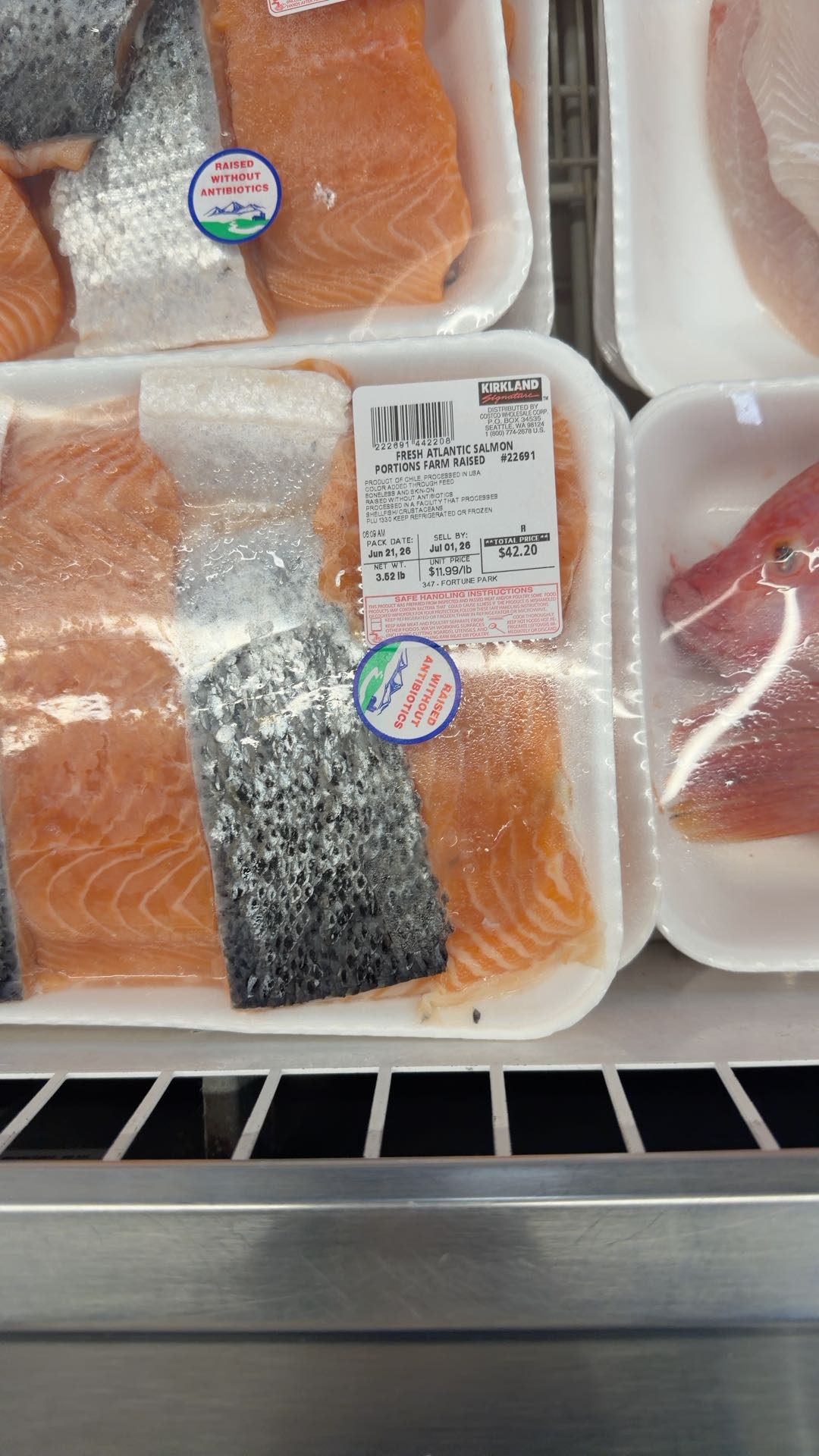




Fresh Atlantic Salmon Fillet Farm Raised
Kirkland SignatureAnalysis updated September 2026 · How Scout scores
Near you
Kirkland Signature is carried at Costco stores. Find one within 25 miles.
At a glance
Summary
This product is a minimally processed whole food, consisting solely of salmon, which is a high-quality source of protein and omega-3 fatty acids. While farm-raised salmon may have varying omega-3 levels compared to wild-caught, it still provides essential nutrients beneficial for heart and brain health. The simplicity and nutritional value of the ingredient contribute to its high rating.
Key ingredients 1
SalmonGood
Salmon is a high-quality source of protein and omega-3 fatty acids, which are beneficial for heart and brain health. Farm-raised salmon may have varying levels of omega-3s compared to wild-caught, but it still provides essential nutrients. It is a versatile ingredient that can be prepared in various healthy ways.
Risks
Farm-raised salmon may contain higher levels of contaminants and antibiotics compared to wild-caught salmon.
Benefits
Rich in omega-3 fatty acids that support cardiovascular health and reduce inflammation. Provides a good source of high-quality protein and essential vitamins and minerals.
Processing
Unprocessed or Minimally Processed Foods
Get the full breakdown in the Scout appTake Scout shopping
Scan any product to see lab results, healthy alternatives, and your personalized analysis.
Download on theApp Store GET IT ONGoogle Play