
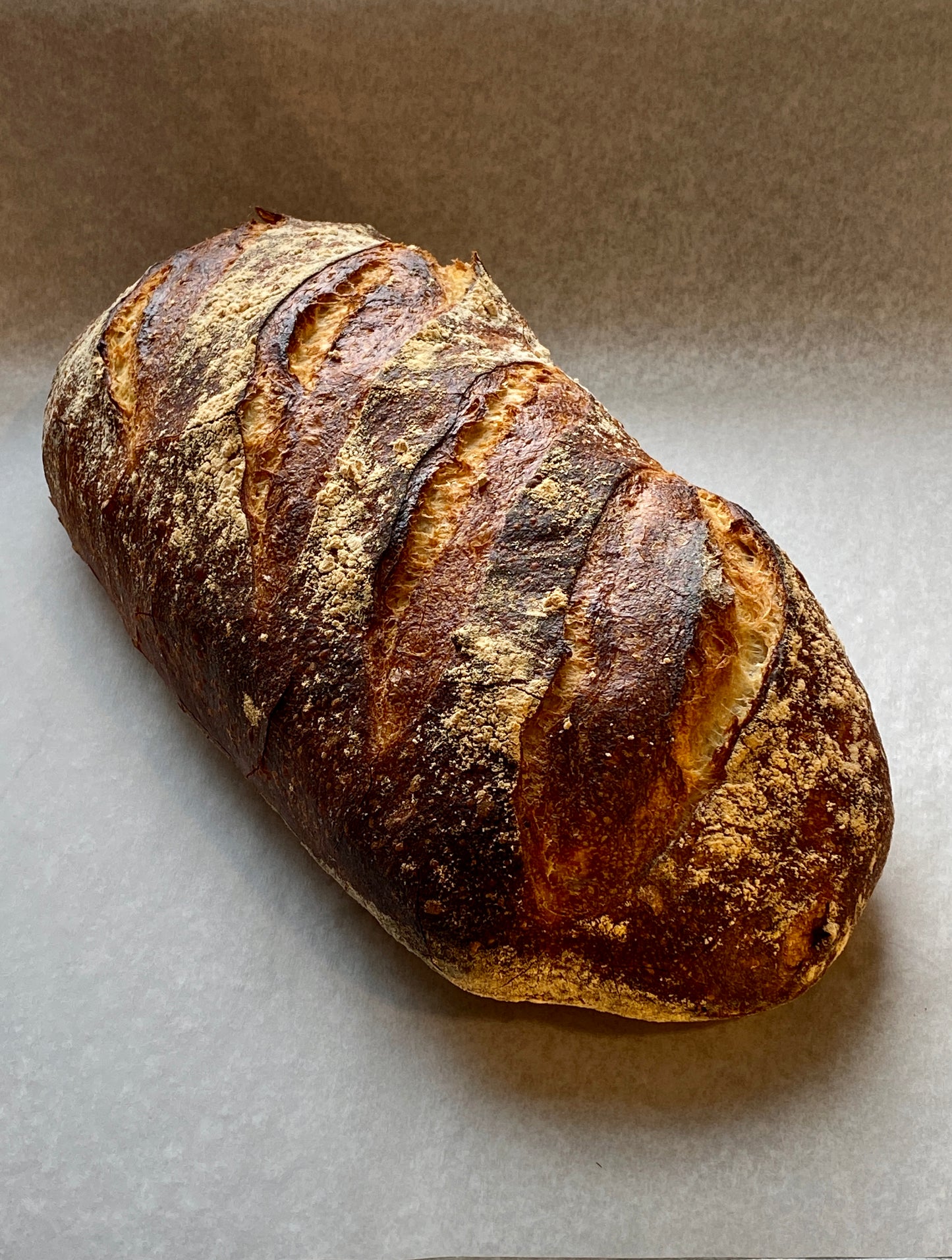


At a glance
Summary
This bread is made with a relatively clean ingredient list, featuring unbleached unbromated wheat flour, whole wheat flour, and pepitas, which contribute to its nutritional value. The presence of a sourdough starter and minimal additives supports a healthier profile. However, as a processed food, it is subject to a processing score cap, limiting its maximum potential score.
Key ingredients 7
PepitasGood
Pepitas add a nutty flavor and provide healthy fats, fiber, and nutrients beneficial for overall health.
Whole Wheat FlourGood
Whole wheat flour offers more fiber and nutrients compared to refined flour, supporting digestive health.
See more about Whole Wheat Flour →Sourdough StarterGood
Sourdough starter enhances flavor and digestibility, and may improve nutrient absorption.
See more about Sourdough Starter →Unbleached Unbromated Wheat FlourNeutral
This flour is minimally processed and provides a good source of carbohydrates, making it a staple in bread making.
WaterNeutral
Water is essential for dough formation and hydration, with no adverse effects.
See more about Water →SaltNeutral
Standard formulation ingredient — neither beneficial nor harmful at typical use.
See more about Salt →YeastNeutral
Baker's/nutritional yeast in standard use — benign.
See more about Yeast →Processing
Processed Foods
Get the full breakdown in the Scout appTake Scout shopping
Scan any product to see lab results, healthy alternatives, and your personalized analysis.
Download on theApp Store GET IT ONGoogle PlayAmazon pricing & content
Amazon price as of . Product prices and availability are accurate as of the date/time indicated and are subject to change. Any price and availability information displayed on Amazon.com at the time of purchase will apply to the purchase of this product.
CERTAIN CONTENT THAT APPEARS ON THIS SITE COMES FROM AMAZON. THIS CONTENT IS PROVIDED “AS IS” AND IS SUBJECT TO CHANGE OR REMOVAL AT ANY TIME.