
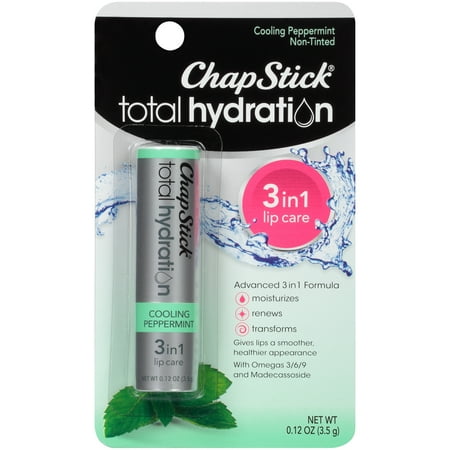
Chapstick Total Hydration Lip Balm - Cooling Peppermint - 0.12oz

65 Fair
$11.99 · 0.12 oz
View on Amazon
Verified Amazon match

Summary

This lip balm contains a mix of natural and synthetic ingredients, including beneficial oils like argan and avocado butter, which are nourishing for the skin. However, the presence of petrolatum and polyethylene, which are synthetic and processed components, slightly lowers its rating. The product is moderately processed, which impacts its overall score despite the inclusion of some high-quality natural ingredients.

At a glance

Beneficial ingredients 0
Harmful ingredients 0
Category Lip Care

Key ingredients 13

madecassoside

Madecassoside is a compound derived from Centella Asiatica, known for its soothing and anti-inflammatory properties. It helps in skin repair and reduces irritation. It is beneficial for sensitive skin types.

Risks

There are minimal risks associated with madecassoside, though rare allergic reactions may occur.

Benefits

It promotes skin healing and reduces inflammation, making it ideal for sensitive or damaged skin.

botanical oils

Botanical oils are derived from plants and are rich in essential fatty acids and vitamins. They provide deep hydration and nourishment to the skin. These oils are generally well-tolerated and beneficial for maintaining skin health.

Risks

Some individuals may experience allergic reactions to specific botanical oils.

Benefits

They offer moisturizing and nourishing properties, enhancing skin elasticity and smoothness.

See more about botanical oils →
omegas 3, 6, 9

Omega fatty acids are essential nutrients that support skin barrier function and hydration. They help reduce inflammation and improve skin texture. These fatty acids are crucial for maintaining healthy skin.

Risks

There are generally no significant risks, though excessive use may lead to oily skin.

Benefits

They improve skin hydration, reduce inflammation, and support overall skin health.

Argan Oil

Argan oil is a natural oil rich in vitamin E and fatty acids, known for its moisturizing and anti-aging properties. It helps to soften and hydrate the skin. Argan oil is highly regarded for its ability to improve skin elasticity.

Risks

Rarely, argan oil can cause allergic reactions in sensitive individuals.

Benefits

It provides deep hydration and has anti-aging benefits, improving skin texture and elasticity.

See more about Argan Oil →
Avocado Butter

Avocado butter is derived from the fruit of the avocado and is rich in vitamins A, D, and E. It provides intense moisture and nourishment to the skin. This butter is beneficial for dry and sensitive skin types.

Risks

There is a low risk of allergic reactions, but it is generally safe for most skin types.

Benefits

It deeply moisturizes and nourishes the skin, enhancing softness and elasticity.

jojoba esters

Jojoba esters are derived from jojoba oil and mimic the skin's natural sebum. They provide excellent moisturizing properties without clogging pores. Jojoba esters are suitable for all skin types, including sensitive skin.

Risks

There are minimal risks, though some individuals may experience mild irritation.

Benefits

They offer non-greasy hydration and help balance the skin's natural oils.

See more about jojoba esters →
octyldodecanol

Octyldodecanol is a fatty alcohol used as an emollient and texture enhancer in cosmetics. It provides a smooth application and helps to soften the skin. It is generally considered safe for use in skincare products.

Risks

In rare cases, it may cause skin irritation or allergic reactions.

Benefits

It improves product texture and provides a soft, smooth feel to the skin.

See more about octyldodecanol →
diisostearyl malate

Diisostearyl malate is an ester used as an emollient and skin conditioning agent. It enhances the texture and spreadability of products. It is well-tolerated and provides a silky feel to the skin.

Risks

There are minimal risks, though it may cause irritation in very sensitive skin.

Benefits

It improves product texture and provides a smooth, silky finish on the skin.

See more about diisostearyl malate →
polyethylene

Polyethylene is a synthetic polymer used as a thickening agent and film-former in cosmetics. It helps to improve the texture and stability of products. However, it is a microplastic and poses environmental concerns.

Risks

Polyethylene can contribute to environmental pollution as a microplastic.

Benefits

It enhances product texture and stability, providing a smooth application.

See more about polyethylene →
petrolatum

Petrolatum is a petroleum-derived occlusive agent that forms a barrier on the skin to lock in moisture. It is effective in preventing moisture loss and protecting the skin. However, it is a controversial ingredient due to its synthetic origin.

Risks

Petrolatum can be comedogenic and may cause breakouts in acne-prone skin.

Benefits

It provides excellent moisture retention and skin protection, especially for dry skin.

See more about petrolatum →
beeswax

Beeswax is a natural wax produced by honeybees, used as an emollient and thickening agent in cosmetics. It forms a protective barrier on the skin, locking in moisture. Beeswax is well-tolerated and beneficial for dry and sensitive skin.

Risks

There is a low risk of allergic reactions, particularly in individuals allergic to bee products.

Benefits

It provides a protective barrier and helps retain moisture, enhancing skin hydration.

See more about beeswax →
butyrospermum parkii (shea) butter

Shea butter is a natural fat extracted from the nuts of the shea tree, known for its moisturizing and anti-inflammatory properties. It is rich in vitamins A and E, providing nourishment and protection to the skin. Shea butter is highly beneficial for dry and sensitive skin.

Risks

There is a low risk of allergic reactions, but it is generally safe for most skin types.

Benefits

It deeply moisturizes and nourishes the skin, improving softness and elasticity.

See more about butyrospermum parkii (shea) butter →
hydrogenated polyisobutene

Hydrogenated polyisobutene is a synthetic polymer used as an emollient and lubricant in cosmetics. It provides a smooth application and enhances the texture of products. It is generally considered safe for use in skincare products.

Risks

There are minimal risks, though it may cause irritation in very sensitive skin.

Benefits

It improves product texture and provides a smooth, silky feel to the skin.

Processing

Group 3 · Processed

Processed Foods

Get the full breakdown in the Scout app

Scan any product to see lab results, healthy alternatives, and your personalized analysis.

Download on theApp Store