
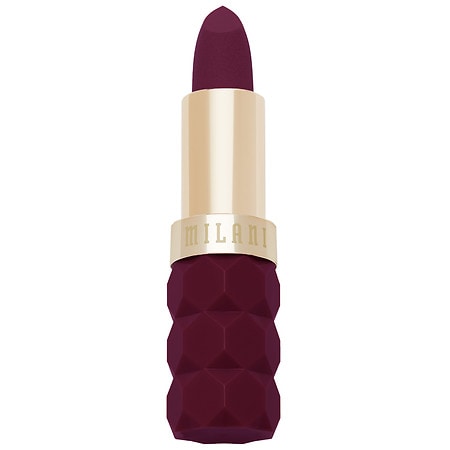

Milani Color Fetish Matte Lipstick Dahlia
Analysis updated October 2026 · How Scout scores
At a glance
Summary
This lipstick contains beneficial ingredients like Sodium Hyaluronate and Castor Seed Oil, which provide moisturizing and hydrating properties. However, the presence of synthetic fragrance, which can be a source of allergens and irritants, slightly lowers its safety profile. The product also includes synthetic waxes and colorants, which contribute to a moderate level of processing.
Key ingredients 26
Ricinus Communis (Castor) Seed OilVery Good
Castor Seed Oil is a natural oil used for its emollient and moisturizing properties. It helps to soften and condition the skin. It is highly valued in cosmetics for its ability to improve skin hydration.
Risks
There are minimal risks associated with its use in cosmetics.
Benefits
It provides excellent moisturizing benefits and helps to improve the skin's texture and appearance.
Caprylic/Capric TriglycerideGood
Caprylic/Capric Triglyceride is a mixed triester derived from coconut oil and glycerin. It is used for its emollient properties, providing a lightweight and non-greasy feel. It helps to moisturize and soften the skin.
Risks
There are minimal risks associated with this ingredient, though it may cause mild irritation in very sensitive individuals.
Benefits
It is beneficial for its moisturizing properties and ability to improve the texture of the product.
Copernicia Cerifera (Carnauba) WaxGood
Carnauba Wax is a natural wax derived from the leaves of the carnauba palm. It is used as a thickening agent and provides a glossy finish. It is valued for its hypoallergenic and emollient properties.
Risks
There are minimal risks associated with its use in cosmetics.
Benefits
It provides a natural, glossy finish and helps to improve the texture and stability of the product.
Sodium HyaluronateGood
Sodium Hyaluronate is a form of hyaluronic acid used for its hydrating properties. It helps to retain moisture in the skin, providing a plumping effect. It is highly valued in cosmetics for its ability to improve skin hydration.
Risks
There are minimal risks associated with its use in cosmetics.
Benefits
It provides excellent hydration and helps to improve the skin's texture and appearance.
Iron Oxides (CI 77499)Good
Beneficial ingredient — whole-food or functional value in this product class.
Risks
There are minimal risks associated with their use in cosmetics.
Benefits
They provide stable, non-reactive color to the product, enhancing its visual appeal.
OctyldodecanolNeutral
Octyldodecanol is a fatty alcohol used as an emollient and texture enhancer. It provides a smooth application and helps to condition the skin. It is well-tolerated by most skin types.
Risks
Rarely, it may cause irritation in individuals with very sensitive skin.
Benefits
It enhances the texture and feel of the product, contributing to a smooth application.
Barium SulfateNeutral
Barium Sulfate is used as a pigment and opacifying agent in cosmetics. It provides a white color and increases the opacity of the product. It is considered safe for use in cosmetics.
Risks
There are minimal risks associated with its use in cosmetics, as it is inert and non-reactive.
Benefits
It enhances the color and opacity of the product, contributing to its visual appeal.
Polysilicone-11Neutral
Polysilicone-11 is a silicone elastomer used to provide a silky, smooth texture. It helps to fill in fine lines and create a blurring effect on the skin. It is commonly used in cosmetics for its texture-enhancing properties.
Risks
Some individuals may experience mild irritation from silicones, though this is rare.
Benefits
It improves the texture and feel of the product, providing a smooth, even application.
Aluminum HydroxideNeutral
Aluminum Hydroxide is used as a thickening agent and opacifier in cosmetics. It helps to stabilize formulations and improve texture. It is generally considered safe for use in cosmetics.
Risks
There are minimal risks associated with its use in cosmetics, though some individuals may have concerns about aluminum compounds.
Benefits
It provides structural integrity to the product, enhancing its stability and application.
Hydrated SilicaNeutral
Hydrated Silica is used as an abrasive and thickening agent in cosmetics. It helps to improve the texture and application of the product. It is considered safe for use in cosmetics.
Risks
There are minimal risks associated with its use in cosmetics, though inhalation of silica dust should be avoided.
Benefits
It enhances the texture and feel of the product, contributing to a smooth application.
Polyhydroxystearic AcidNeutral
Polyhydroxystearic Acid is used as an emulsifier and stabilizer in cosmetics. It helps to maintain the consistency and texture of the product. It is generally considered safe for use in cosmetics.
Risks
There are minimal risks associated with its use in cosmetics.
Benefits
It provides stability to the formulation, ensuring a consistent texture and application.
Synthetic WaxNeutral
Synthetic Wax is used as a thickening agent and emollient in cosmetics. It helps to provide structure and improve the texture of the product. It is considered safe for use in cosmetics.
Risks
There are minimal risks associated with its use in cosmetics.
Benefits
It enhances the texture and feel of the product, contributing to a smooth application.
Disteardimonium HectoriteNeutral
Disteardimonium Hectorite is used as a thickening agent and stabilizer in cosmetics. It helps to improve the texture and consistency of the product. It is considered safe for use in cosmetics.
Risks
There are minimal risks associated with its use in cosmetics.
Benefits
It provides stability to the formulation, ensuring a consistent texture and application.
TriethoxycaprylylsilaneNeutral
Triethoxycaprylylsilane is used as a surface treatment for pigments in cosmetics. It helps to improve the dispersion and adhesion of pigments. It is considered safe for use in cosmetics.
Risks
There are minimal risks associated with its use in cosmetics.
Benefits
It enhances the color and adhesion of pigments, contributing to the product's visual appeal.
Dicalcium PhosphateNeutral
Dicalcium Phosphate is used as a polishing agent and opacifier in cosmetics. It helps to improve the texture and appearance of the product. It is considered safe for use in cosmetics.
Risks
There are minimal risks associated with its use in cosmetics.
Benefits
It enhances the texture and appearance of the product, contributing to its visual appeal.
Pentaerythrityl Tetra-Di-t-Butyl HydroxyhydrocinnamateNeutral
This ingredient is an antioxidant used to stabilize formulations and prevent oxidation. It helps to extend the shelf life of the product. It is considered safe for use in cosmetics.
Risks
There are minimal risks associated with its use in cosmetics.
Benefits
It helps to stabilize the formulation and extend the product's shelf life.
Hydrogenated Castor OilNeutral
Standard formulation ingredient — neither beneficial nor harmful at typical use.
Risks
There are minimal risks associated with its use in cosmetics.
Benefits
It enhances the texture and feel of the product, providing moisturizing benefits.
Aluminum BenzoateNeutral
Aluminum Benzoate is used as a stabilizer and preservative in cosmetics. It helps to maintain the integrity of the formulation. It is considered safe for use in cosmetics.
Risks
There are minimal risks associated with its use in cosmetics.
Benefits
It helps to stabilize the formulation and extend the product's shelf life.
Titanium Dioxide (CI 77891)Neutral
Titanium Dioxide is used as a pigment and opacifying agent in cosmetics. It provides a white color and increases the opacity of the product. It is considered safe for use in cosmetics.
Risks
There are minimal risks associated with its use in cosmetics.
Benefits
It enhances the color and opacity of the product, contributing to its visual appeal.
Red 7 Lake (CI 15850)Neutral
Red 7 Lake is a synthetic pigment used to provide color in cosmetics. It is considered safe for use in cosmetics and is commonly used for its vibrant color. It provides a stable, non-reactive color to the product.
Risks
There are minimal risks associated with its use in cosmetics.
Benefits
It provides vibrant color to the product, enhancing its visual appeal.
Red 28 Lake (CI 45410)Neutral
Red 28 Lake is a synthetic pigment used to provide color in cosmetics. It is considered safe for use in cosmetics and is commonly used for its vibrant color. It provides a stable, non-reactive color to the product.
Risks
There are minimal risks associated with its use in cosmetics.
Benefits
It provides vibrant color to the product, enhancing its visual appeal.
Blue 1 Lake (CI 42090)Neutral
Blue 1 Lake is a synthetic pigment used to provide color in cosmetics. It is considered safe for use in cosmetics and is commonly used for its vibrant color. It provides a stable, non-reactive color to the product.
Risks
There are minimal risks associated with its use in cosmetics.
Benefits
It provides vibrant color to the product, enhancing its visual appeal.
DimethiconeBad
Occlusive silicone film-former — flagged under clean-beauty doctrine.
Risks
Some individuals may experience breakouts or irritation from silicones, though this is uncommon.
Benefits
It helps to create a smooth, even application and can improve the longevity of the product on the skin.
Synthetic BeeswaxBad
Processed additive flagged under Scout's ingredient doctrine.
Risks
There are minimal risks associated with its use in cosmetics.
Benefits
It enhances the texture and feel of the product, contributing to a smooth application.
PolyethyleneVery Bad
Heavily flagged ingredient class under Scout's doctrine.
Risks
Concerns about microplastics in the environment are associated with polyethylene, though its use in cosmetics is typically in non-microplastic forms.
Benefits
It provides structural integrity to the product, enhancing its stability and application.
Fragrance / ParfumVery Bad
Fragrance is used to impart a pleasant scent to cosmetics. However, it can be a source of allergens and irritants, especially for sensitive individuals. The exact composition of fragrances is often undisclosed, leading to concerns about potential allergens.
Risks
Fragrance can cause allergic reactions and irritation, particularly in sensitive individuals.
Benefits
It provides a pleasant scent to the product, enhancing the user experience.
Get the full breakdown in the Scout appTake Scout shopping
Scan any product to see lab results, healthy alternatives, and your personalized analysis.
Download on theApp Store GET IT ONGoogle PlayAmazon pricing & content
Amazon price as of . Product prices and availability are accurate as of the date/time indicated and are subject to change. Any price and availability information displayed on Amazon.com at the time of purchase will apply to the purchase of this product.
CERTAIN CONTENT THAT APPEARS ON THIS SITE COMES FROM AMAZON. THIS CONTENT IS PROVIDED “AS IS” AND IS SUBJECT TO CHANGE OR REMOVAL AT ANY TIME.