
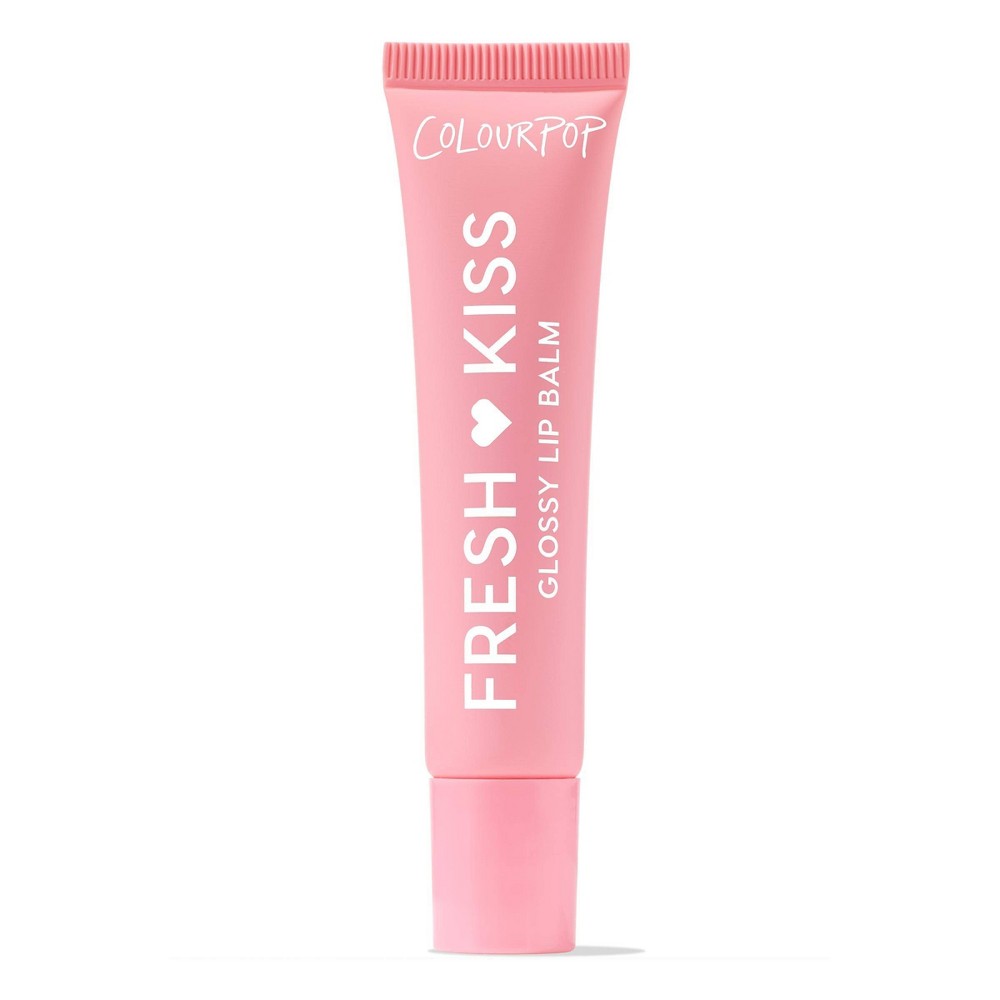

ColourPop Fresh Kiss Glossy Lip Balm - Strawberry Milk - 0.49oz: Moisturizing Translucent Cosmetic with Gloss Finish
Analysis updated August 2026 · How Scout scores
At a glance
Summary
This lip balm contains beneficial ingredients like Caprylic/Capric Triglyceride, Tocopheryl Acetate, and Sodium Hyaluronate, which provide moisturizing and antioxidant benefits. However, the presence of synthetic components such as flavor, paraffin, and artificial colorants, along with a moderate level of processing, detracts from its overall safety and naturalness. The lack of specific disclosure for 'flavor' also poses potential allergy risks.
Key ingredients 30
Caprylic/Capric TriglycerideVery Good
Caprylic/Capric Triglyceride is derived from coconut oil and glycerin, used for its emollient properties. It helps in moisturizing and conditioning the skin. It is considered safe and beneficial in cosmetics.
Risks
There are minimal risks, with rare cases of skin sensitivity.
Benefits
It provides excellent moisturizing and conditioning benefits.
TocopherolVery Good
Tocopherol, a form of Vitamin E, is used for its antioxidant properties. It helps in protecting the skin from free radical damage and provides moisturizing benefits. It is considered highly beneficial in cosmetics.
Risks
There are minimal risks, with rare cases of skin sensitivity.
Benefits
It provides antioxidant protection and moisturizes the skin.
Tocopheryl AcetateGood
Tocopheryl Acetate is a form of Vitamin E used for its antioxidant properties. It helps in protecting the skin from free radical damage. It is widely used and considered beneficial in cosmetics.
Risks
Minimal risks include potential skin sensitivity in rare cases.
Benefits
It provides antioxidant protection and helps in skin conditioning.
Sodium HyaluronateGood
Sodium Hyaluronate is a form of hyaluronic acid used for its excellent moisturizing properties. It helps in retaining moisture and plumping the skin. It is highly beneficial in cosmetics for hydration.
Risks
There are minimal risks, with rare cases of skin sensitivity.
Benefits
It provides deep hydration and helps in plumping the skin.
Tripeptide-1Good
Tripeptide-1 is a peptide used for its skin-rejuvenating properties. It helps in promoting collagen production and improving skin elasticity. It is beneficial in cosmetics for anti-aging effects.
Risks
Minimal risks include potential skin sensitivity in rare cases.
Benefits
It promotes collagen production and improves skin elasticity.
Bis-Behenyl/Isostearyl/Phytosteryl Dimer Dilinoleyl Dimer DilinoleateNeutral
This ingredient is a synthetic ester used for its emollient properties, providing a smooth application. It helps in forming a protective barrier on the skin. It is generally considered safe for use in cosmetics.
Risks
There are minimal risks associated with this ingredient, primarily related to potential skin sensitivity in rare cases.
Benefits
It provides a smooth texture and helps in moisturizing the lips.
Diisostearyl MalateNeutral
Diisostearyl Malate is an ester used as an emollient and texture enhancer in lip products. It contributes to a glossy finish and smooth application. It is widely used in cosmetics and considered safe.
Risks
Potential risks include mild irritation for sensitive individuals.
Benefits
It enhances the texture and provides a glossy finish to lip products.
PolyisobuteneNeutral
Polyisobutene is a synthetic polymer used as a thickening agent and film former. It helps in providing a long-lasting glossy effect. It is generally recognized as safe for use in cosmetics.
Risks
There are minimal risks, with rare cases of skin irritation reported.
Benefits
It provides a long-lasting glossy effect and improves the texture of the product.
Hydrogenated PolyisobuteneNeutral
Hydrogenated Polyisobutene is a synthetic polymer used for its emollient and moisturizing properties. It helps in enhancing the texture and longevity of the product. It is considered safe for use in cosmetics.
Risks
Potential risks are minimal, with rare instances of skin irritation.
Benefits
It provides moisture and enhances the texture of lip products.
OctyldodecanolNeutral
Octyldodecanol is a fatty alcohol used as an emollient and texture enhancer. It helps in providing a smooth application and improving the product's feel. It is widely used and considered safe in cosmetics.
Risks
There is a low risk of skin irritation, primarily in sensitive individuals.
Benefits
It enhances the texture and provides a smooth application.
Polyglyceryl-2 TriisostearateNeutral
This ingredient is an emulsifier and emollient, helping to stabilize formulations and provide a smooth texture. It is commonly used in lip products and considered safe. It aids in the even distribution of ingredients.
Risks
Minimal risks are associated, with rare cases of skin irritation.
Benefits
It helps stabilize formulations and provides a smooth texture.
Silica Dimethyl SilylateNeutral
Silica Dimethyl Silylate is used as a thickening agent and to improve the texture of cosmetic products. It provides a smooth, silky feel. It is considered safe for use in cosmetics.
Risks
There are minimal risks, with rare cases of skin irritation.
Benefits
It improves the texture and provides a smooth, silky feel.
Microcrystalline WaxNeutral
Microcrystalline Wax is used as a thickening agent and to provide structure to cosmetic products. It helps in forming a protective barrier on the skin. It is considered safe for use in cosmetics.
Risks
Potential risks include skin sensitivity in rare cases.
Benefits
It provides structure and forms a protective barrier.
Stearalkonium HectoriteNeutral
Stearalkonium Hectorite is used as a thickening agent and to stabilize emulsions. It helps in improving the texture and consistency of products. It is considered safe for use in cosmetics.
Risks
Minimal risks are associated, with rare cases of skin irritation.
Benefits
It stabilizes emulsions and improves texture.
Propylene CarbonateNeutral
Propylene Carbonate is used as a solvent and viscosity controller in cosmetics. It helps in improving the texture and consistency of products. It is considered safe for use in cosmetics.
Risks
There are minimal risks, with rare cases of skin irritation.
Benefits
It improves texture and consistency.
IsohexadecaneNeutral
Isohexadecane is used as an emollient and solvent, providing a lightweight, non-greasy feel. It helps in improving the texture of products. It is considered safe for use in cosmetics.
Risks
There are minimal risks, with rare cases of skin irritation.
Benefits
It provides a lightweight, non-greasy feel.
Pentaerythrityl Tetra-di-t-butyl HydroxyhydrocinnamateNeutral
This ingredient is an antioxidant used to stabilize formulations and prevent oxidation. It helps in extending the shelf life of products. It is considered safe for use in cosmetics.
Risks
Minimal risks are associated, with rare cases of skin irritation.
Benefits
It stabilizes formulations and prevents oxidation.
Ethylene/Propylene/Styrene CopolymerNeutral
This copolymer is used as a film-forming agent and to improve the texture of products. It provides a smooth application and enhances product stability. It is considered safe for use in cosmetics.
Risks
Minimal risks are associated, with rare cases of skin irritation.
Benefits
It improves texture and provides a smooth application.
Butylene/Ethylene/Styrene CopolymerNeutral
This copolymer is used as a film-forming agent and to enhance the texture of products. It provides a smooth, glossy finish. It is considered safe for use in cosmetics.
Risks
There are minimal risks, with rare cases of skin irritation.
Benefits
It enhances texture and provides a glossy finish.
Xanthan GumNeutral
Xanthan Gum is used as a thickening agent and stabilizer in cosmetics. It helps in improving the texture and consistency of products. It is considered safe for use in cosmetics.
Risks
Minimal risks are associated, with rare cases of skin irritation.
Benefits
It stabilizes formulations and improves texture.
Aluminum HydroxideNeutral
Aluminum Hydroxide is used as an opacifying agent and to improve the texture of products. It helps in providing a smooth application. It is considered safe for use in cosmetics.
Risks
There are minimal risks, with rare cases of skin irritation.
Benefits
It improves texture and provides a smooth application.
Titanium Dioxide (CI 77891)Neutral
Titanium Dioxide is used as a pigment and UV filter in cosmetics. It helps in providing coverage and protection from UV rays. It is considered safe for use in cosmetics.
Risks
Potential risks include inhalation concerns in powder form.
Benefits
It provides coverage and UV protection.
Yellow 5 Lake (CI 19140)Neutral
Yellow 5 Lake is a synthetic dye used for coloring cosmetics. It provides vibrant color to products. It is approved for use in cosmetics with safety regulations.
Risks
Potential risks include allergic reactions in sensitive individuals.
Benefits
It provides vibrant color to cosmetic products.
Red 6 Lake (CI 15850)Neutral
Red 6 Lake is a synthetic dye used for coloring cosmetics. It provides vibrant red color to products. It is approved for use in cosmetics with safety regulations.
Risks
Potential risks include allergic reactions in sensitive individuals.
Benefits
It provides vibrant red color to cosmetic products.
Iron Oxides (CI 77491, CI 77492, CI 77499)Neutral
Iron Oxides are used as pigments in cosmetics, providing a range of colors. They are stable and non-toxic, widely used in cosmetics. They are considered safe for use in cosmetics.
Risks
Minimal risks include potential skin sensitivity in rare cases.
Benefits
They provide a range of stable, non-toxic colors.
Red 7 (CI 15850)Neutral
Red 7 is a synthetic dye used for coloring cosmetics. It provides vibrant red color to products. It is approved for use in cosmetics with safety regulations.
Risks
Potential risks include allergic reactions in sensitive individuals.
Benefits
It provides vibrant red color to cosmetic products.
ParaffinBad
Processed additive flagged under Scout's ingredient doctrine.
Risks
Potential risks include skin sensitivity and pore-clogging in some individuals.
Benefits
It helps lock in moisture and provides a protective barrier.
FlavorBad
Flavor is often a mixture of various compounds used to impart taste or scent. It can include synthetic or natural components. The lack of specific ingredient disclosure can pose allergy risks.
Risks
Potential risks include allergic reactions and skin irritation.
Benefits
It enhances the sensory experience of the product.
AspartameBad
Processed additive flagged under Scout's ingredient doctrine.
Risks
Potential risks include allergic reactions in sensitive individuals.
Benefits
It enhances the taste of lip products.
PhenoxyethanolBad
Processed additive flagged under Scout's ingredient doctrine.
Risks
Potential risks include skin irritation and allergic reactions in sensitive individuals.
Benefits
It prevents microbial growth and extends product shelf life.
Get the full breakdown in the Scout appTake Scout shopping
Scan any product to see lab results, healthy alternatives, and your personalized analysis.
Download on theApp Store GET IT ONGoogle PlayAmazon pricing & content
Amazon price as of . Product prices and availability are accurate as of the date/time indicated and are subject to change. Any price and availability information displayed on Amazon.com at the time of purchase will apply to the purchase of this product.
CERTAIN CONTENT THAT APPEARS ON THIS SITE COMES FROM AMAZON. THIS CONTENT IS PROVIDED “AS IS” AND IS SUBJECT TO CHANGE OR REMOVAL AT ANY TIME.