
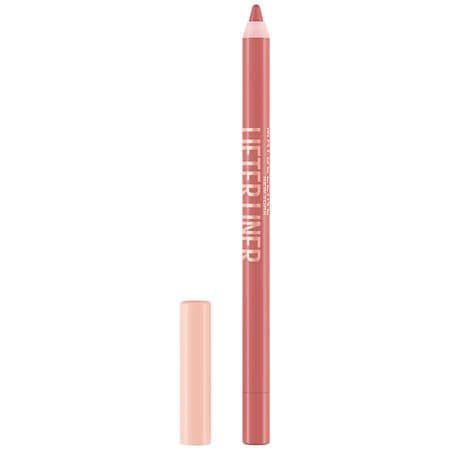
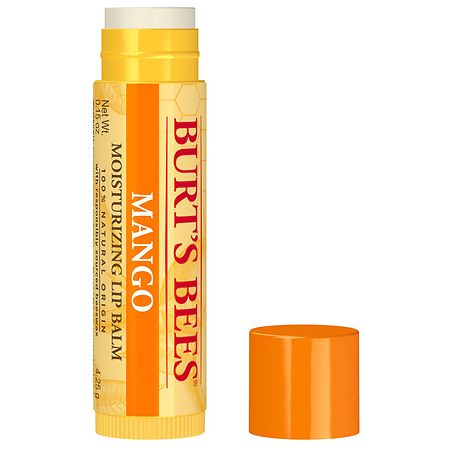

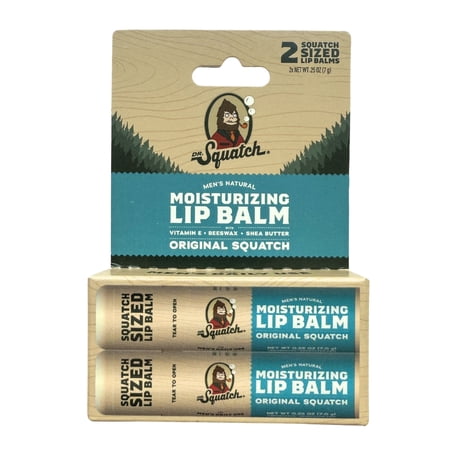
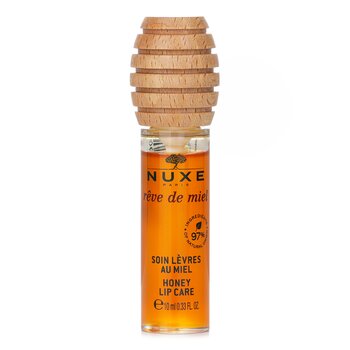
Maybelline Lifter Liner Lip Liner Pencil with Hyaluronic Acid - Crop Top - 0.04oz
Analysis updated August 2026 · How Scout scores
At a glance
Summary
This lip liner contains beneficial ingredients like hydrogenated jojoba oil and sodium hyaluronate, which provide moisturizing and skin-conditioning benefits. However, it also includes synthetic waxes and colorants, which are more processed and less natural. The presence of synthetic ingredients and colorants, while not harmful, reduces the overall score compared to products with entirely natural formulations.
Key ingredients 28
HYDROGENATED JOJOBA OILVery Good
Hydrogenated jojoba oil is a natural oil used for its moisturizing and skin-conditioning properties. It is similar to the skin's natural sebum, making it highly compatible. It is considered very beneficial in cosmetics.
Risks
There are minimal risks associated with this ingredient.
Benefits
It provides excellent moisturization and enhances skin barrier function.
KAOLINGood
Beneficial ingredient — whole-food or functional value in this product class.
Risks
There are minimal risks, primarily related to potential dryness in sensitive skin.
Benefits
It provides a matte finish and helps in oil control.
SODIUM HYALURONATEGood
Sodium hyaluronate is a form of hyaluronic acid known for its excellent moisturizing properties. It helps in retaining moisture and improving skin hydration. It is highly beneficial in cosmetics for its skin-conditioning effects.
Risks
There are minimal risks associated with this ingredient.
Benefits
It provides deep hydration and enhances skin elasticity.
CI 77491, CI 77492, CI 77499 / IRON OXIDESGood
Beneficial ingredient — whole-food or functional value in this product class.
Risks
There are minimal risks associated with these colorants.
Benefits
They provide vibrant and stable color to cosmetic products.
MICAGood
Beneficial ingredient — whole-food or functional value in this product class.
Risks
There are minimal risks associated with this ingredient.
Benefits
It adds a shimmering effect and enhances the visual appeal of cosmetic products.
ISODODECANENeutral
Isododecane is a hydrocarbon often used in cosmetics for its lightweight and non-greasy feel. It helps in the smooth application of products. It is generally considered safe for use in cosmetics.
Risks
There are minimal risks associated with isododecane, primarily related to potential skin irritation in sensitive individuals.
Benefits
It provides a silky texture and helps in the even application of makeup products.
SYNTHETIC WAXNeutral
Synthetic wax is used in cosmetics to provide structure and stability to the product. It mimics the properties of natural waxes. It is generally considered safe for use in cosmetics.
Risks
Synthetic waxes may cause minor irritation in sensitive skin types.
Benefits
They help in maintaining the shape and consistency of the product.
POLYBUTENENeutral
Polybutene is a polymer used as a binder and film-forming agent in cosmetics. It provides a glossy finish and helps in product adhesion. It is considered safe for use in cosmetics.
Risks
There are minimal risks, with rare cases of skin irritation reported.
Benefits
It enhances the texture and longevity of cosmetic products.
TRIMETHYLSILOXYSILICATENeutral
Trimethylsiloxysilicate is a silicone used in cosmetics for its film-forming properties. It provides water resistance and long-lasting wear. It is generally regarded as safe for use in cosmetics.
Risks
Potential risks include skin irritation, especially in sensitive individuals.
Benefits
It enhances the durability and water resistance of makeup products.
SUCROSE TETRASTEARATE TRIACETATENeutral
This ingredient is used as an emollient and thickening agent in cosmetics. It helps in improving the texture and feel of the product. It is considered safe for use in cosmetics.
Risks
There are minimal risks associated with this ingredient.
Benefits
It provides a smooth and creamy texture to cosmetic formulations.
ISOAMYL LAURATENeutral
Isoamyl laurate is an ester used as an emollient and skin-conditioning agent. It provides a silky feel and enhances product spreadability. It is considered safe for use in cosmetics.
Risks
There are minimal risks, with rare cases of skin irritation reported.
Benefits
It improves the texture and application of cosmetic products.
SILICANeutral
Silica is used in cosmetics as an absorbent and anti-caking agent. It helps in controlling shine and improving the texture of products. It is generally considered safe for use in cosmetics.
Risks
Inhalation of silica particles can be a concern, but this is less relevant in solid cosmetic forms.
Benefits
It provides a matte finish and enhances the smoothness of cosmetic products.
CETEARYL BEHENATENeutral
Cetearyl behenate is used as an emollient and thickening agent in cosmetics. It helps in improving the texture and stability of products. It is considered safe for use in cosmetics.
Risks
There are minimal risks, with rare cases of skin irritation reported.
Benefits
It enhances the texture and feel of cosmetic formulations.
SYNTHETIC FLUORPHLOGOPITENeutral
Synthetic fluorphlogopite is a synthetic mica used for its shimmering effect in cosmetics. It provides a pearlescent finish and is considered safe for use. It is a stable and inert ingredient.
Risks
There are minimal risks associated with this ingredient.
Benefits
It adds a shimmering effect and enhances the visual appeal of cosmetic products.
PENTAERYTHRITYL TETRA-DI-T-BUTYL HYDROXYHYDROCINNAMATENeutral
This ingredient is an antioxidant used to stabilize cosmetic formulations. It helps in preventing the degradation of products. It is considered safe for use in cosmetics.
Risks
There are minimal risks associated with this ingredient.
Benefits
It enhances the shelf life and stability of cosmetic products.
ETHYLHEXYL PALMITATENeutral
Ethylhexyl palmitate is an ester used as an emollient and skin-conditioning agent. It provides a smooth application and is considered safe for use in cosmetics. It is commonly used in various formulations.
Risks
There are minimal risks, with rare cases of skin irritation reported.
Benefits
It improves the texture and spreadability of cosmetic products.
TRIHYDROXYSTEARINNeutral
Trihydroxystearin is used as a thickening agent and emollient in cosmetics. It helps in improving the texture and stability of products. It is considered safe for use in cosmetics.
Risks
There are minimal risks associated with this ingredient.
Benefits
It enhances the texture and consistency of cosmetic formulations.
COLOPHONIUM / ROSIN / COLOPHANENeutral
Colophonium, also known as rosin, is used as a film-forming agent in cosmetics. It helps in product adhesion and is considered safe for use. It is derived from natural sources.
Risks
There is a potential risk of allergic reactions in sensitive individuals.
Benefits
It enhances the adhesion and longevity of cosmetic products.
CI 77891 / TITANIUM DIOXIDENeutral
Titanium dioxide is used as a pigment and UV filter in cosmetics. It provides opacity and sun protection. It is considered safe for use in cosmetics.
Risks
Inhalation of titanium dioxide particles can be a concern, but this is less relevant in solid cosmetic forms.
Benefits
It provides color and UV protection in cosmetic products.
CI 77742 / MANGANESE VIOLETNeutral
Manganese violet is a colorant used in cosmetics to provide a violet hue. It is stable and considered safe for use. It is commonly used in various formulations.
Risks
There are minimal risks associated with this colorant.
Benefits
It provides vibrant and stable color to cosmetic products.
CI 19140 / YELLOW 5 LAKENeutral
Yellow 5 Lake is a synthetic dye used as a colorant in cosmetics. It provides a bright yellow hue and is considered safe for use. It is commonly used in various formulations.
Risks
There are minimal risks associated with this colorant.
Benefits
It provides vibrant and stable color to cosmetic products.
CI 15850 / RED 7Neutral
Red 7 is a synthetic dye used as a colorant in cosmetics. It provides a bright red hue and is considered safe for use. It is commonly used in various formulations.
Risks
There are minimal risks associated with this colorant.
Benefits
It provides vibrant and stable color to cosmetic products.
CI 15850 / RED 6Neutral
Red 6 is a synthetic dye used as a colorant in cosmetics. It provides a bright red hue and is considered safe for use. It is commonly used in various formulations.
Risks
There are minimal risks associated with this colorant.
Benefits
It provides vibrant and stable color to cosmetic products.
CI 42090 / BLUE 1 LAKENeutral
Blue 1 Lake is a synthetic dye used as a colorant in cosmetics. It provides a bright blue hue and is considered safe for use. It is commonly used in various formulations.
Risks
There are minimal risks associated with this colorant.
Benefits
It provides vibrant and stable color to cosmetic products.
CI 15985 / YELLOW 6 LAKENeutral
Yellow 6 Lake is a synthetic dye used as a colorant in cosmetics. It provides a bright orange hue and is considered safe for use. It is commonly used in various formulations.
Risks
There are minimal risks associated with this colorant.
Benefits
It provides vibrant and stable color to cosmetic products.
CI 45410 / RED 28 LAKENeutral
Red 28 Lake is a synthetic dye used as a colorant in cosmetics. It provides a bright pink hue and is considered safe for use. It is commonly used in various formulations.
Risks
There are minimal risks associated with this colorant.
Benefits
It provides vibrant and stable color to cosmetic products.
CI 77163 / BISMUTH OXYCHLORIDENeutral
Bismuth oxychloride is used in cosmetics for its pearlescent effect. It provides a shimmering finish and is considered safe for use. It is commonly used in various formulations.
Risks
There are minimal risks associated with this ingredient.
Benefits
It adds a shimmering effect and enhances the visual appeal of cosmetic products.
CI 15850 / RED 7 LAKENeutral
Red 7 Lake is a synthetic dye used as a colorant in cosmetics. It provides a bright red hue and is considered safe for use. It is commonly used in various formulations.
Risks
There are minimal risks associated with this colorant.
Benefits
It provides vibrant and stable color to cosmetic products.
Get the full breakdown in the Scout appTake Scout shopping
Scan any product to see lab results, healthy alternatives, and your personalized analysis.
Download on theApp Store GET IT ONGoogle Play