
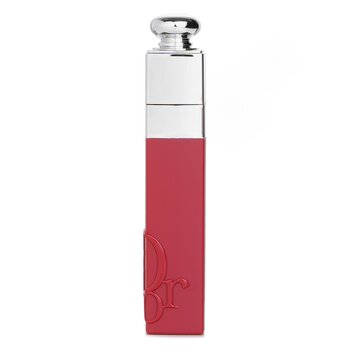

Christian DiorDior Addict Lip Tint - # 541 Natural Sienna 5ml/0.16oz
Analysis updated September 2026 · How Scout scores
At a glance
Summary
This lip tint contains beneficial ingredients like glycerin, squalane, and sodium hyaluronate, which provide moisturizing and antioxidant benefits. However, the presence of synthetic fragrance can cause irritation and allergic reactions in sensitive individuals. The product also includes several synthetic colorants and emulsifiers, which contribute to a moderate level of processing.
Key ingredients 38
SqualaneVery Good
Squalane is a highly effective emollient and natural antioxidant. It mimics the skin's natural oils, making it an excellent moisturizer.
Risks
There are minimal risks associated with squalane, as it is non-irritating and suitable for all skin types.
Benefits
Squalane provides deep hydration and helps to protect the skin from environmental damage.
TocopherolVery Good
Tocopherol, also known as Vitamin E, is a powerful antioxidant that helps to protect the skin from free radical damage. It also provides moisturizing benefits.
Risks
There are minimal risks associated with tocopherol, as it is well-tolerated by most skin types.
Benefits
It provides antioxidant protection and helps to maintain skin health.
GlycerinGood
Glycerin is a humectant that attracts moisture to the skin, helping to keep it hydrated. It is well-tolerated by most skin types and enhances the skin's natural barrier function.
Risks
There are minimal risks associated with glycerin, though it can be sticky in high concentrations.
Benefits
Glycerin improves skin hydration and resilience, making it a beneficial ingredient in lip care.
Sodium HyaluronateGood
Sodium Hyaluronate is a form of hyaluronic acid that is highly effective at retaining moisture in the skin. It helps to plump and hydrate the skin, reducing the appearance of fine lines.
Risks
There are minimal risks associated with sodium hyaluronate, as it is well-tolerated by most skin types.
Benefits
It provides intense hydration and helps to improve skin elasticity.
Prunus Avium (Sweet Cherry) Seed OilGood
Sweet Cherry Seed Oil is a natural emollient rich in vitamins and fatty acids. It helps to nourish and moisturize the skin.
Risks
There are minimal risks associated with this ingredient, though it can cause mild irritation in rare cases.
Benefits
It provides nourishment and hydration to the skin, enhancing its softness and elasticity.
CI 77499 (Iron Oxides)Good
Beneficial ingredient — whole-food or functional value in this product class.
Risks
There are no significant risks associated with this ingredient.
Benefits
It provides natural color to the product.
Aqua (Water)Neutral
Aqua is commonly used as a solvent in cosmetic formulations. It helps to dissolve other ingredients and provides a base for the product. It is generally considered safe and non-irritating.
Risks
There are no significant risks associated with water in cosmetics.
Benefits
Water helps to hydrate the skin and acts as a carrier for other beneficial ingredients.
Methyl Hydrogenated RosinateNeutral
Methyl Hydrogenated Rosinate is used as a film-forming agent in cosmetics. It helps to provide a glossy finish and improve the texture of the product. It is generally considered safe for use in cosmetics.
Risks
There are no significant risks associated with this ingredient in typical cosmetic use.
Benefits
It enhances the product's texture and provides a desirable finish.
Butylene GlycolNeutral
Butylene Glycol is a solvent and conditioning agent that helps to improve the texture and spreadability of cosmetic products. It is generally considered safe for use in cosmetics.
Risks
In rare cases, it can cause irritation in sensitive individuals.
Benefits
It helps to improve the texture and application of the product.
Polyglyceryl-2 TriisostearateNeutral
This ingredient is an emulsifier that helps to blend oil and water-based components in cosmetics. It is generally considered safe and non-irritating.
Risks
There are no significant risks associated with this ingredient.
Benefits
It helps to stabilize the formulation and improve product consistency.
AlcoholNeutral
Alcohol is used as a solvent and can help to improve the penetration of other ingredients. It can be drying if used in high concentrations.
Risks
Alcohol can be drying and irritating to the skin, especially in high concentrations.
Benefits
It helps to enhance the absorption of active ingredients.
Polyglycerin-3Neutral
Polyglycerin-3 is an emulsifier and humectant that helps to retain moisture in the skin. It is generally considered safe for use in cosmetics.
Risks
There are no significant risks associated with this ingredient.
Benefits
It helps to maintain skin hydration and improve product stability.
Hydroxyethyl Acrylate/Sodium Acryloyldimethyl Taurate CopolymerNeutral
This copolymer is used as a thickening agent and stabilizer in cosmetics. It helps to improve the texture and consistency of the product.
Risks
There are no significant risks associated with this ingredient.
Benefits
It enhances the product's texture and stability.
Polyurethane-35Neutral
Polyurethane-35 is used as a film-forming agent in cosmetics. It helps to provide a long-lasting finish and improve the product's durability.
Risks
There are no significant risks associated with this ingredient.
Benefits
It enhances the longevity and finish of the product.
1,2-HexanediolNeutral
1,2-Hexanediol is a solvent and preservative that helps to improve the stability and shelf-life of cosmetic products. It is generally considered safe for use.
Risks
There are no significant risks associated with this ingredient.
Benefits
It helps to preserve the product and maintain its effectiveness.
MenthoxypropanediolNeutral
Menthoxypropanediol is used for its cooling and soothing properties in cosmetics. It provides a refreshing sensation upon application.
Risks
There are no significant risks associated with this ingredient.
Benefits
It provides a cooling effect that can be soothing to the skin.
Trimethylolpropane TriisostearateNeutral
This ingredient is used as an emollient and thickening agent in cosmetics. It helps to improve the texture and feel of the product.
Risks
There are no significant risks associated with this ingredient.
Benefits
It enhances the product's texture and provides a smooth application.
HydroxyacetophenoneNeutral
Hydroxyacetophenone is an antioxidant and preservative used in cosmetics. It helps to protect the product from degradation and extend its shelf life.
Risks
There are no significant risks associated with this ingredient.
Benefits
It helps to preserve the product and protect it from oxidative damage.
Ammonium GlycyrrhizateNeutral
Ammonium Glycyrrhizate is derived from licorice root and is used for its soothing and anti-inflammatory properties. It helps to calm irritated skin.
Risks
There are no significant risks associated with this ingredient.
Benefits
It provides soothing benefits and helps to reduce skin irritation.
Sorbitan IsostearateNeutral
Sorbitan Isostearate is an emulsifier that helps to blend oil and water-based components in cosmetics. It is generally considered safe for use.
Risks
There are no significant risks associated with this ingredient.
Benefits
It helps to stabilize the formulation and improve product consistency.
MethylpropanediolNeutral
Methylpropanediol is a solvent and skin-conditioning agent used in cosmetics. It helps to improve the texture and absorption of the product.
Risks
There are no significant risks associated with this ingredient.
Benefits
It enhances the product's texture and helps active ingredients penetrate the skin.
Ethyl VanillinNeutral
Ethyl Vanillin is a synthetic flavoring agent used to impart a vanilla scent to cosmetic products. It is generally considered safe for use.
Risks
There are no significant risks associated with this ingredient.
Benefits
It provides a pleasant vanilla scent to the product.
Citric AcidNeutral
Citric Acid is used to adjust the pH of cosmetic products and acts as a mild exfoliant. It is generally considered safe for use in low concentrations.
Risks
In high concentrations, it can cause irritation, especially on sensitive skin.
Benefits
It helps to maintain the product's pH balance and provides mild exfoliation.
Caprylyl GlycolNeutral
Caprylyl Glycol is a skin-conditioning agent and preservative that helps to improve the texture and shelf-life of cosmetic products. It is generally considered safe for use.
Risks
There are no significant risks associated with this ingredient.
Benefits
It helps to condition the skin and preserve the product.
Capsicum Frutescens Fruit ExtractNeutral
Capsicum Frutescens Fruit Extract is used for its warming and stimulating properties in cosmetics. It can enhance blood circulation and provide a tingling sensation.
Risks
It can cause irritation or a burning sensation in sensitive individuals.
Benefits
It provides a warming effect that can enhance product performance.
Propyl GallateNeutral
Propyl Gallate is an antioxidant used to prevent the oxidation of oils in cosmetic products. It helps to extend the shelf-life of the product.
Risks
In rare cases, it can cause allergic reactions or irritation.
Benefits
It helps to preserve the product and maintain its effectiveness.
PhenylpropanolNeutral
Phenylpropanol is used as a fragrance and preservative in cosmetics. It helps to enhance the scent and stability of the product.
Risks
There are no significant risks associated with this ingredient.
Benefits
It provides fragrance and helps to preserve the product.
Pentaerythrityl Tetra-Di-T-Butyl HydroxyhydrocinnamateNeutral
This ingredient is an antioxidant used to protect cosmetic products from oxidation. It helps to extend the shelf-life and stability of the product.
Risks
There are no significant risks associated with this ingredient.
Benefits
It helps to preserve the product and protect it from oxidative damage.
CI 77891 (Titanium Dioxide)Neutral
Titanium Dioxide is used as a pigment and UV filter in cosmetics. It provides opacity and sun protection to the product.
Risks
Inhalation of fine particles can be harmful, but it is generally safe in topical applications.
Benefits
It provides color and sun protection benefits.
CI 17200 (Red 33)Neutral
Red 33 is a synthetic dye used to impart color to cosmetic products. It is approved for use in cosmetics and is generally considered safe.
Risks
There are no significant risks associated with this ingredient.
Benefits
It provides vibrant color to the product.
CI 15985 (Yellow 6)Neutral
Yellow 6 is a synthetic dye used to impart color to cosmetic products. It is approved for use in cosmetics and is generally considered safe.
Risks
There are no significant risks associated with this ingredient.
Benefits
It provides vibrant color to the product.
CI 77491Neutral
CI 77491 is an iron oxide pigment used to impart color to cosmetic products. It is approved for use in cosmetics and is generally considered safe.
Risks
There are no significant risks associated with this ingredient.
Benefits
It provides natural color to the product.
CI 42090 (Blue 1, Blue 1 Lake)Neutral
Blue 1 is a synthetic dye used to impart color to cosmetic products. It is approved for use in cosmetics and is generally considered safe.
Risks
There are no significant risks associated with this ingredient.
Benefits
It provides vibrant color to the product.
LecithinBad
Processed additive flagged under Scout's ingredient doctrine.
Risks
There are minimal risks associated with lecithin, though it can cause mild irritation in rare cases.
Benefits
Lecithin helps to improve skin hydration and product texture.
Polysorbate 60Bad
Processed additive flagged under Scout's ingredient doctrine.
Risks
There are no significant risks associated with this ingredient.
Benefits
It helps to stabilize the formulation and improve product consistency.
Sodium BenzoateBad
Synthetic preservative that can form benzene in the presence of vitamin C.
Risks
In rare cases, it can cause mild irritation or allergic reactions.
Benefits
It helps to maintain the product's freshness and safety.
Parfum (Fragrance)Very Bad
Fragrance is used to impart scent to cosmetic products. It can cause allergic reactions and irritation in sensitive individuals.
Risks
Fragrance can be irritating and is a common allergen in cosmetics.
Benefits
It provides a pleasant scent to the product.
CI 19140 (Yellow 5)Very Bad
Heavily flagged ingredient class under Scout's doctrine.
Risks
There are no significant risks associated with this ingredient.
Benefits
It provides vibrant color to the product.
Get the full breakdown in the Scout appTake Scout shopping
Scan any product to see lab results, healthy alternatives, and your personalized analysis.
Download on theApp Store GET IT ONGoogle PlayAmazon pricing & content
Amazon price as of . Product prices and availability are accurate as of the date/time indicated and are subject to change. Any price and availability information displayed on Amazon.com at the time of purchase will apply to the purchase of this product.
CERTAIN CONTENT THAT APPEARS ON THIS SITE COMES FROM AMAZON. THIS CONTENT IS PROVIDED “AS IS” AND IS SUBJECT TO CHANGE OR REMOVAL AT ANY TIME.