
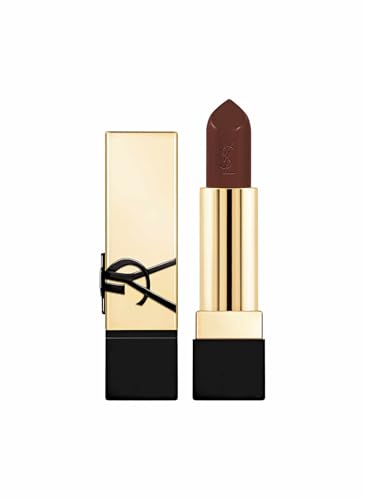

Yves Saint Laurent Rouge Pur Couture Satin Lipstick Rose Dahlia
Analysis updated September 2026 · How Scout scores
At a glance
Summary
This lipstick contains a mix of synthetic and natural ingredients. While it includes beneficial components like candelilla wax and ceramide NP, it also contains fragrance, which can be a potential irritant. The presence of synthetic colorants and other processed ingredients contributes to a moderate processing level, impacting the overall score.
Key ingredients 27
MICAGood
Beneficial ingredient — whole-food or functional value in this product class.
Risks
Inhalation of mica particles can be harmful, but this is not a concern in lipstick.
Benefits
Adds shimmer and shine to the product.
CANDELILLA CERA / CANDELILLA WAX / CIRE DE CANDELILLAGood
Candelilla Wax is a natural wax used as a thickening agent and emollient in cosmetics. It helps to provide structure and stability to the product. It is considered safe and beneficial for use in cosmetics.
Risks
There are minimal risks associated with this ingredient.
Benefits
Provides structure and stability, and helps to lock in moisture.
CAPRYLIC/CAPRIC TRIGLYCERIDEGood
Caprylic/Capric Triglyceride is a mixed triester derived from coconut oil and glycerin. It is used as an emollient and skin conditioning agent. It is considered safe and beneficial for use in cosmetics.
Risks
There are minimal risks associated with this ingredient.
Benefits
Provides excellent skin conditioning and emollient properties.
CERAMIDE NPGood
Ceramide NP is a skin-identical lipid used to help restore and maintain the skin's natural barrier. It is beneficial for improving skin hydration and resilience. It is considered safe and beneficial for use in cosmetics.
Risks
There are minimal risks associated with this ingredient.
Benefits
Helps to restore and maintain the skin's natural barrier.
OCTYLDODECANOLNeutral
Octyldodecanol is a fatty alcohol used as an emollient and texture enhancer in cosmetics. It is generally considered safe and non-irritating for most skin types. It helps improve the spreadability of the product.
Risks
There are minimal risks associated with octyldodecanol, though it may cause irritation in very sensitive individuals.
Benefits
It provides a smooth application and helps to soften the skin.
PENTAERYTHRITYL TETRAISOSTEARATENeutral
Pentaerythrityl TetraIsostearate is an ester used as an emollient and thickening agent in cosmetics. It is known for its ability to provide a silky feel and improve the texture of formulations. It is generally considered safe for use in cosmetics.
Risks
There are no significant risks associated with this ingredient.
Benefits
It enhances the texture and feel of the product, providing a smooth application.
PROPYLENE GLYCOL DIBENZOATENeutral
Propylene Glycol Dibenzoate is used as a plasticizer and emollient in cosmetic formulations. It helps to improve the flexibility and spreadability of the product. It is generally considered safe for use in cosmetics.
Risks
May cause irritation in sensitive individuals if used in high concentrations.
Benefits
Improves the texture and application of the product.
NEOPENTYL GLYCOL DIHEPTANOATENeutral
Neopentyl Glycol Diheptanoate is an ester used as an emollient and skin conditioning agent. It provides a silky feel and enhances the spreadability of the product. It is considered safe for use in cosmetics.
Risks
There are minimal risks associated with this ingredient.
Benefits
Contributes to a smooth and silky application.
BIS-DIGLYCERYL POLYACYLADIPATE-2Neutral
This ingredient is used as an emollient and film-forming agent in cosmetics. It helps to provide a glossy finish and improve the texture of the product. It is generally considered safe for use.
Risks
There are no significant risks associated with this ingredient.
Benefits
Enhances the gloss and texture of the product.
POLYBUTENENeutral
Polybutene is used as a binder and viscosity increasing agent in cosmetics. It helps to improve the texture and adhesion of the product. It is considered safe for use in cosmetics.
Risks
There are minimal risks associated with this ingredient.
Benefits
Improves the texture and adhesion of the product.
HYDROGENATED CASTOR OIL DIMER DILINOLEATENeutral
This ingredient is used as an emollient and film-forming agent in cosmetics. It helps to provide a smooth application and improve the texture of the product. It is generally considered safe for use.
Risks
There are no significant risks associated with this ingredient.
Benefits
Contributes to a smooth application and improved texture.
HYDROGENATED COCO-GLYCERIDESNeutral
Hydrogenated Coco-Glycerides are used as emollients and skin conditioning agents in cosmetics. They help to soften and smooth the skin. They are generally considered safe for use.
Risks
There are minimal risks associated with this ingredient.
Benefits
Helps to soften and smooth the skin.
CI 15850 / RED 6Neutral
CI 15850, also known as Red 6, is a synthetic dye used to impart color to cosmetics. It is approved for use in cosmetics and is considered safe when used within regulatory limits.
Risks
May cause irritation in sensitive individuals.
Benefits
Provides vibrant color to the product.
CI 15850 / RED 7Neutral
CI 15850, also known as Red 7, is a synthetic dye used to impart color to cosmetics. It is approved for use in cosmetics and is considered safe when used within regulatory limits.
Risks
May cause irritation in sensitive individuals.
Benefits
Provides vibrant color to the product.
CI 45410 / RED 28 LAKENeutral
CI 45410, also known as Red 28 Lake, is a synthetic dye used to impart color to cosmetics. It is approved for use in cosmetics and is considered safe when used within regulatory limits.
Risks
May cause irritation in sensitive individuals.
Benefits
Provides vibrant color to the product.
CERA MICROCRISTALLINA / MICROCRYSTALLINE WAX / CIRE MICROCRISTALLINENeutral
Microcrystalline Wax is used as a thickening agent and emollient in cosmetics. It helps to provide structure and stability to the product. It is generally considered safe for use in cosmetics.
Risks
There are minimal risks associated with this ingredient.
Benefits
Provides structure and stability to the formulation.
SILICA SILYLATENeutral
Silica Silylate is used as a thickening agent and anti-caking agent in cosmetics. It helps to improve the texture and stability of the product. It is generally considered safe for use in cosmetics.
Risks
There are minimal risks associated with this ingredient.
Benefits
Improves texture and stability of the product.
CI 77891 / TITANIUM DIOXIDENeutral
Titanium Dioxide is used as a pigment and UV filter in cosmetics. It provides opacity and sun protection. It is generally considered safe for use in cosmetics.
Risks
Inhalation of titanium dioxide particles can be harmful, but this is not a concern in lipstick.
Benefits
Provides color and UV protection.
PENTAERYTHRITYL TETRA-DI-T-BUTYL HYDROXYHYDROCINNAMATENeutral
This ingredient is used as an antioxidant in cosmetics. It helps to stabilize the product and prevent oxidation. It is generally considered safe for use in cosmetics.
Risks
There are minimal risks associated with this ingredient.
Benefits
Helps to stabilize the product and extend its shelf life.
ALUMINUM HYDROXIDENeutral
Aluminum Hydroxide is used as an opacifying agent and skin protectant in cosmetics. It helps to provide opacity and improve the texture of the product. It is generally considered safe for use in cosmetics.
Risks
There are minimal risks associated with this ingredient.
Benefits
Provides opacity and improves texture.
ANISE ALCOHOLNeutral
Anise Alcohol is used as a fragrance component in cosmetics. It provides a mild anise scent to the product. It is generally considered safe for use in cosmetics.
Risks
May cause irritation in sensitive individuals.
Benefits
Provides a pleasant anise scent to the product.
SILICANeutral
Silica is used as a thickening agent and absorbent in cosmetics. It helps to improve the texture and stability of the product. It is generally considered safe for use in cosmetics.
Risks
There are minimal risks associated with this ingredient.
Benefits
Improves texture and stability of the product.
POLIANTHES TUBEROSA FLOWER EXTRACTNeutral
Polianthes Tuberosa Flower Extract is used as a fragrance component in cosmetics. It provides a floral scent to the product. It is generally considered safe for use in cosmetics.
Risks
May cause irritation in sensitive individuals.
Benefits
Provides a pleasant floral scent to the product.
OPUNTIA FICUS-INDICA FLOWER EXTRACTNeutral
Opuntia Ficus-Indica Flower Extract is used as a skin conditioning agent in cosmetics. It is known for its moisturizing and soothing properties. It is generally considered safe for use in cosmetics.
Risks
There are minimal risks associated with this ingredient.
Benefits
Provides moisturizing and soothing benefits to the skin.
BENZYL ALCOHOLBad
Processed additive flagged under Scout's ingredient doctrine.
Risks
May cause irritation in sensitive individuals.
Benefits
Acts as a preservative to extend the product's shelf life.
POLYETHYLENEVery Bad
Heavily flagged ingredient class under Scout's doctrine.
Risks
Concerns about microplastic pollution exist, but it is considered safe for topical use.
Benefits
Provides structure and stability to the formulation.
PARFUM / FRAGRANCEVery Bad
Fragrance is used to impart scent to cosmetics. It is a common cause of allergic reactions and skin irritation. It is considered a potential irritant in cosmetics.
Risks
May cause allergic reactions and skin irritation.
Benefits
Provides a pleasant scent to the product.
Get the full breakdown in the Scout appTake Scout shopping
Scan any product to see lab results, healthy alternatives, and your personalized analysis.
Download on theApp Store GET IT ONGoogle PlayAmazon pricing & content
Amazon price as of . Product prices and availability are accurate as of the date/time indicated and are subject to change. Any price and availability information displayed on Amazon.com at the time of purchase will apply to the purchase of this product.
CERTAIN CONTENT THAT APPEARS ON THIS SITE COMES FROM AMAZON. THIS CONTENT IS PROVIDED “AS IS” AND IS SUBJECT TO CHANGE OR REMOVAL AT ANY TIME.