
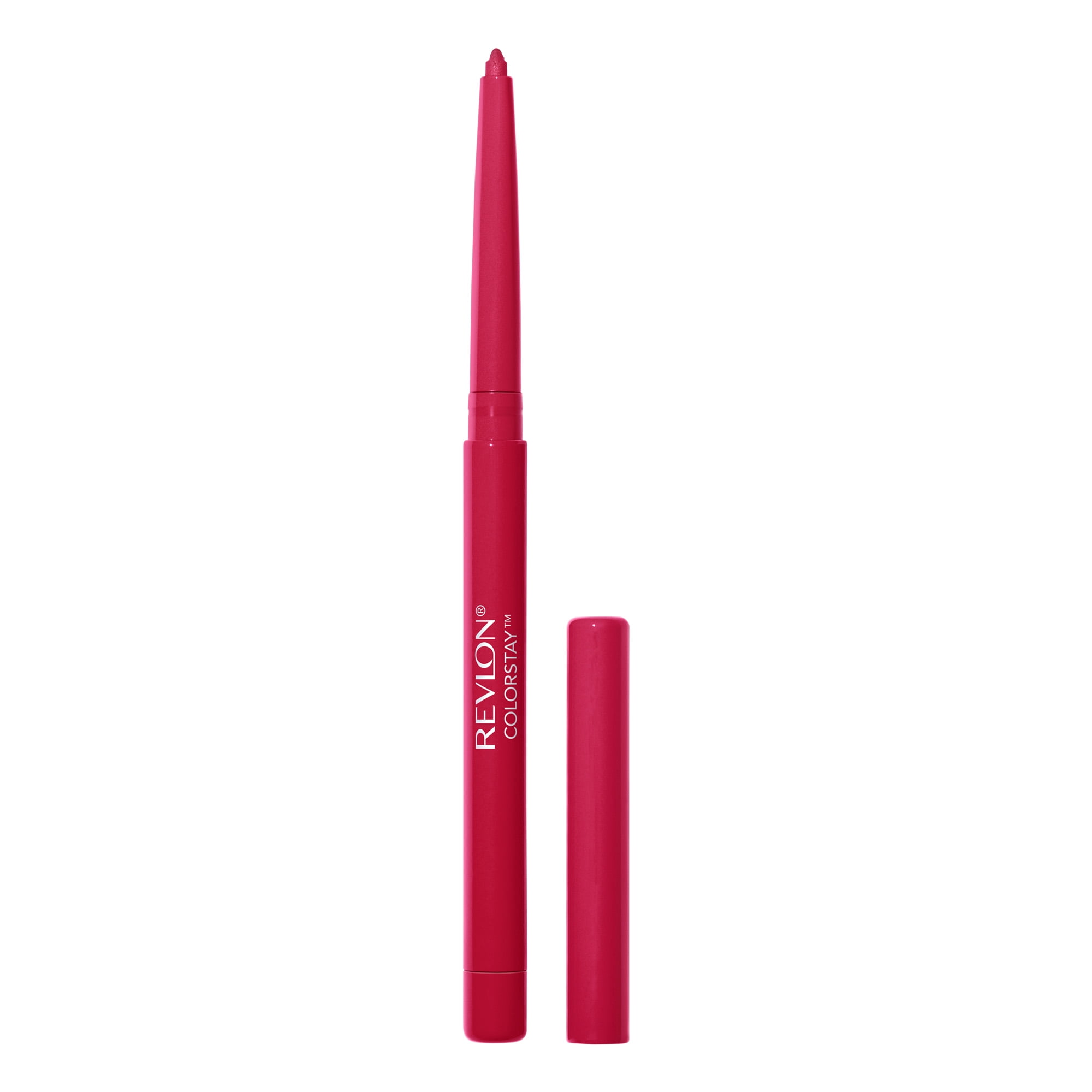

Revlon ColorStay Lip Liner Pencil with Built-in Sharpener Longwearing & Defined Rich Lip Colors 679 Soft Pink 0.01 oz
Analysis updated September 2026 · How Scout scores
At a glance
Summary
This lip liner contains beneficial ingredients like tocopherol and aloe barbadensis leaf extract, which provide antioxidant and soothing properties. However, it also includes synthetic colorants and polyethylene, which are less desirable due to potential environmental concerns and skin irritation risks. The presence of these synthetic components and the level of processing involved in creating the product contribute to a moderate score.
Key ingredients 29
TocopherolVery Good
Tocopherol, also known as Vitamin E, is an antioxidant that helps protect the skin from free radical damage. It is widely used in cosmetics for its skin-conditioning properties. It is considered safe and beneficial for skin health.
Risks
There are minimal risks associated with tocopherol, though it may cause minor irritation in very sensitive individuals.
Benefits
It provides antioxidant protection and helps in maintaining skin health.
Aloe Barbadensis Leaf ExtractVery Good
Aloe Barbadensis Leaf Extract is a natural extract known for its soothing and moisturizing properties. It is commonly used in cosmetics for its skin-calming effects. It is considered safe and beneficial for skin health.
Risks
There are minimal risks associated with aloe vera, though it may cause minor irritation in very sensitive individuals.
Benefits
It provides soothing and moisturizing benefits to the skin.
Glycine Soja (Soybean) OilGood
Glycine Soja (Soybean) Oil is a natural oil rich in fatty acids and antioxidants. It is used in cosmetics for its moisturizing and skin-conditioning properties. It is considered safe and beneficial for skin health.
Risks
There are minimal risks associated with soybean oil, though it may cause minor irritation in very sensitive individuals.
Benefits
It provides moisturizing and skin-conditioning benefits.
MicaGood
Beneficial ingredient — whole-food or functional value in this product class.
Risks
There are minimal risks associated with mica, though it may cause minor irritation in very sensitive individuals.
Benefits
It provides a shimmering effect to the product.
OzokeriteNeutral
Ozokerite is a mineral wax used to provide structure and stability to cosmetic products. It is generally considered safe for use in cosmetics. However, it does not offer any significant skin benefits.
Risks
There are minimal risks associated with ozokerite, though it may cause minor irritation in sensitive individuals.
Benefits
Ozokerite helps in maintaining the form and consistency of the product.
CyclopentasiloxaneNeutral
Cyclopentasiloxane is a silicone used to provide a smooth application and silky feel. It evaporates quickly, leaving no residue. It is generally considered safe for use in cosmetics.
Risks
There are concerns about bioaccumulation in the environment, but it poses minimal risk to human health.
Benefits
It enhances the spreadability and texture of the product.
TrimethylsiloxysilicateNeutral
Trimethylsiloxysilicate is a silicone resin that forms a film on the skin, providing long-lasting wear. It is commonly used in long-wear cosmetics. It is considered safe for use in cosmetics.
Risks
There are minimal risks associated with this ingredient, though it may cause minor irritation in sensitive individuals.
Benefits
It helps in providing long-lasting wear and water resistance.
Phenyl TrimethiconeNeutral
Phenyl Trimethicone is a silicone that provides a smooth, silky feel and enhances shine. It is used to improve the texture of cosmetic products. It is considered safe for use in cosmetics.
Risks
There are minimal risks associated with this ingredient, though it may cause minor irritation in sensitive individuals.
Benefits
It enhances the shine and smoothness of the product.
Disteardimonium HectoriteNeutral
Disteardimonium Hectorite is a clay-derived thickening agent used to stabilize emulsions. It is considered safe for use in cosmetics. However, it does not offer any significant skin benefits.
Risks
There are minimal risks associated with this ingredient.
Benefits
It helps in stabilizing the product formulation.
Propylene CarbonateNeutral
Propylene Carbonate is a solvent used to dissolve other ingredients in cosmetics. It is considered safe for use in cosmetics. However, it does not offer any significant skin benefits.
Risks
There are minimal risks associated with this ingredient.
Benefits
It helps in dissolving and stabilizing other ingredients in the formulation.
Dicalcium PhosphateNeutral
Dicalcium Phosphate is a mineral used as a bulking agent in cosmetics. It is considered safe for use in cosmetics. However, it does not offer any significant skin benefits.
Risks
There are minimal risks associated with this ingredient.
Benefits
It helps in maintaining the form and consistency of the product.
Titanium Dioxide (Ci 77891)Neutral
Titanium Dioxide is a mineral used as a pigment and UV filter in cosmetics. It is considered safe for use in cosmetics. However, it does not offer any significant skin benefits in this formulation.
Risks
There are minimal risks associated with titanium dioxide, though it may cause minor irritation in very sensitive individuals.
Benefits
It provides pigmentation and UV protection.
Iron Oxides (Ci 77491, 77492, 77499)Neutral
Iron Oxides are pigments used to provide color in cosmetics. They are considered safe for use in cosmetics. However, they do not offer any significant skin benefits.
Risks
There are minimal risks associated with iron oxides.
Benefits
They provide pigmentation to the product.
Red 7 Lake (Ci 15850)Neutral
Red 7 Lake is a synthetic dye used to provide color in cosmetics. It is considered safe for use in cosmetics. However, it does not offer any significant skin benefits.
Risks
There are minimal risks associated with synthetic dyes, though they may cause minor irritation in very sensitive individuals.
Benefits
It provides pigmentation to the product.
Blue 1 Lake (Ci 42090)Neutral
Blue 1 Lake is a synthetic dye used to provide color in cosmetics. It is considered safe for use in cosmetics. However, it does not offer any significant skin benefits.
Risks
There are minimal risks associated with synthetic dyes, though they may cause minor irritation in very sensitive individuals.
Benefits
It provides pigmentation to the product.
Carmine (Ci 75470)Neutral
Carmine is a natural dye derived from insects, used to provide color in cosmetics. It is considered safe for use in cosmetics. However, it does not offer any significant skin benefits.
Risks
There are minimal risks associated with carmine, though it may cause minor irritation in very sensitive individuals.
Benefits
It provides pigmentation to the product.
Yellow 6 Lake (Ci 15985)Neutral
Yellow 6 Lake is a synthetic dye used to provide color in cosmetics. It is considered safe for use in cosmetics. However, it does not offer any significant skin benefits.
Risks
There are minimal risks associated with synthetic dyes, though they may cause minor irritation in very sensitive individuals.
Benefits
It provides pigmentation to the product.
Manganese Violet (Ci 77742)Neutral
Manganese Violet is a pigment used to provide color in cosmetics. It is considered safe for use in cosmetics. However, it does not offer any significant skin benefits.
Risks
There are minimal risks associated with manganese violet.
Benefits
It provides pigmentation to the product.
Red 21 Lake (Ci 45380)Neutral
Red 21 Lake is a synthetic dye used to provide color in cosmetics. It is considered safe for use in cosmetics. However, it does not offer any significant skin benefits.
Risks
There are minimal risks associated with synthetic dyes, though they may cause minor irritation in very sensitive individuals.
Benefits
It provides pigmentation to the product.
Red 6 (Ci 15850)Neutral
Red 6 is a synthetic dye used to provide color in cosmetics. It is considered safe for use in cosmetics. However, it does not offer any significant skin benefits.
Risks
There are minimal risks associated with synthetic dyes, though they may cause minor irritation in very sensitive individuals.
Benefits
It provides pigmentation to the product.
Yellow 5 Lake (Ci 19140)Neutral
Yellow 5 Lake is a synthetic dye used to provide color in cosmetics. It is considered safe for use in cosmetics. However, it does not offer any significant skin benefits.
Risks
There are minimal risks associated with synthetic dyes, though they may cause minor irritation in very sensitive individuals.
Benefits
It provides pigmentation to the product.
Bismuth Oxychloride (Ci 77163)Neutral
Bismuth Oxychloride is a pigment used to provide a pearlescent finish in cosmetics. It is considered safe for use in cosmetics. However, it does not offer any significant skin benefits.
Risks
There are minimal risks associated with bismuth oxychloride, though it may cause minor irritation in very sensitive individuals.
Benefits
It provides a pearlescent finish to the product.
Orange 5 Lake (Ci 45370)Neutral
Orange 5 Lake is a synthetic dye used to provide color in cosmetics. It is considered safe for use in cosmetics. However, it does not offer any significant skin benefits.
Risks
There are minimal risks associated with synthetic dyes, though they may cause minor irritation in very sensitive individuals.
Benefits
It provides pigmentation to the product.
Red 21 (Ci 45380)Neutral
Red 21 is a synthetic dye used to provide color in cosmetics. It is considered safe for use in cosmetics. However, it does not offer any significant skin benefits.
Risks
There are minimal risks associated with synthetic dyes, though they may cause minor irritation in very sensitive individuals.
Benefits
It provides pigmentation to the product.
Red 27 Lake (Ci 45410)Neutral
Red 27 Lake is a synthetic dye used to provide color in cosmetics. It is considered safe for use in cosmetics. However, it does not offer any significant skin benefits.
Risks
There are minimal risks associated with synthetic dyes, though they may cause minor irritation in very sensitive individuals.
Benefits
It provides pigmentation to the product.
Red 30 (Ci 73360)Neutral
Red 30 is a synthetic dye used to provide color in cosmetics. It is considered safe for use in cosmetics. However, it does not offer any significant skin benefits.
Risks
There are minimal risks associated with synthetic dyes, though they may cause minor irritation in very sensitive individuals.
Benefits
It provides pigmentation to the product.
Red 6 Lake (Ci 15850)Neutral
Red 6 Lake is a synthetic dye used to provide color in cosmetics. It is considered safe for use in cosmetics. However, it does not offer any significant skin benefits.
Risks
There are minimal risks associated with synthetic dyes, though they may cause minor irritation in very sensitive individuals.
Benefits
It provides pigmentation to the product.
Sorbic AcidBad
Processed additive flagged under Scout's ingredient doctrine.
Risks
There are minimal risks associated with this ingredient, though it may cause minor irritation in very sensitive individuals.
Benefits
It helps in preserving the product and extending its shelf life.
PolyethyleneVery Bad
Heavily flagged ingredient class under Scout's doctrine.
Risks
There are concerns about microplastic pollution, but it poses minimal risk to human health.
Benefits
It helps in maintaining the form and consistency of the product.
Get the full breakdown in the Scout appTake Scout shopping
Scan any product to see lab results, healthy alternatives, and your personalized analysis.
Download on theApp Store GET IT ONGoogle PlayAmazon pricing & content
Amazon price as of . Product prices and availability are accurate as of the date/time indicated and are subject to change. Any price and availability information displayed on Amazon.com at the time of purchase will apply to the purchase of this product.
CERTAIN CONTENT THAT APPEARS ON THIS SITE COMES FROM AMAZON. THIS CONTENT IS PROVIDED “AS IS” AND IS SUBJECT TO CHANGE OR REMOVAL AT ANY TIME.