
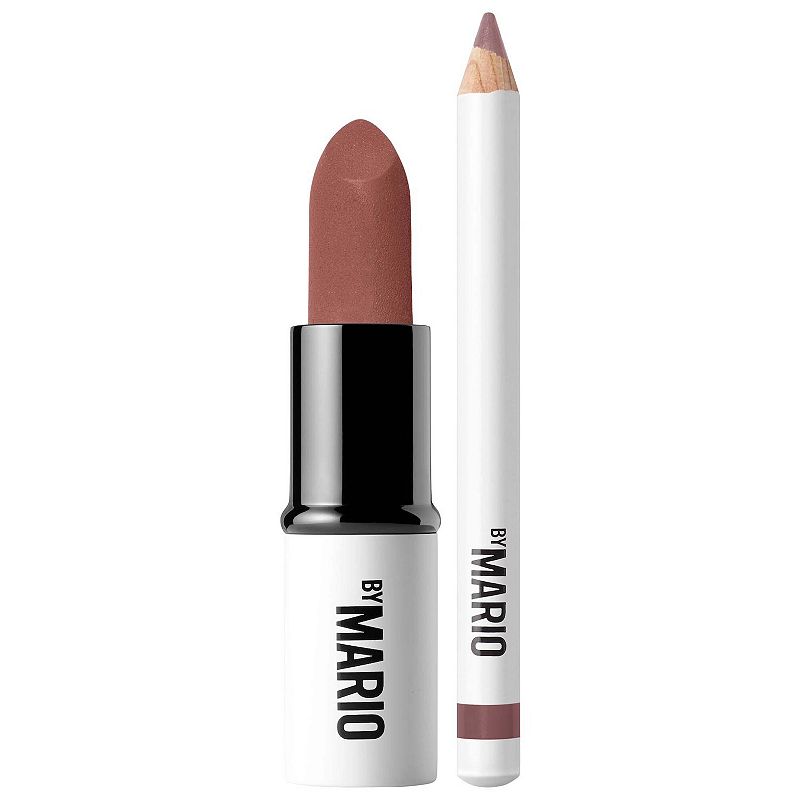

Makeup By Mario Mario s Lip Lift Kit - Pink Nude (SAM & HUGH)
Analysis updated August 2026 · How Scout scores
At a glance
Summary
This lip care product contains beneficial ingredients like rosehip oil and Vitamin E, which are known for their skin-repairing and antioxidant properties. However, the presence of BHT, a synthetic antioxidant with potential health concerns, and the overall processed nature of the product limit its score. The formulation includes a mix of natural and synthetic components, which affects its overall ingredient safety rating.
Key ingredients 24
Rosa Canina Fruit OilVery Good
Rosa Canina Fruit Oil, also known as rosehip oil, is a natural oil rich in essential fatty acids and vitamins. It is known for its skin-repairing and moisturizing properties. It is considered highly beneficial for skin health.
Risks
There are minimal risks, though it may cause irritation in sensitive individuals.
Benefits
It provides excellent moisturizing and skin-repairing benefits.
TocopherolVery Good
Tocopherol, also known as Vitamin E, is a powerful antioxidant used in cosmetics for its skin-protecting properties. It helps to protect the skin from environmental damage and supports skin health. It is considered highly beneficial for skin care.
Risks
There are minimal risks, though it may cause irritation in sensitive individuals.
Benefits
It provides antioxidant protection and supports skin health.
Caprylic/capric TriglycerideGood
Caprylic/capric Triglyceride is derived from coconut oil and glycerin, used as an emollient and skin-repairing ingredient. It is lightweight and non-greasy, making it ideal for moisturizing formulations. It is considered safe and beneficial for skin health.
Risks
There are minimal risks associated with this ingredient.
Benefits
It provides excellent moisturizing properties and enhances skin barrier function.
KaolinGood
Beneficial ingredient — whole-food or functional value in this product class.
Risks
There are minimal risks, though it may cause dryness in some skin types.
Benefits
It helps to control oil and provides a smooth, matte finish.
MicaGood
Beneficial ingredient — whole-food or functional value in this product class.
Risks
There are concerns about ethical sourcing and inhalation risks, though it is safe for topical use.
Benefits
It adds a shimmering effect and enhances the product's appearance.
Copernicia Cerifera (Carnauba) [cera Carnauba]Good
Carnauba Wax is a natural wax used to provide structure and stability to cosmetic formulations. It enhances the texture and consistency of the product. It is considered safe and beneficial for use in cosmetics.
Risks
There are minimal risks associated with this natural ingredient.
Benefits
It helps to stabilize the product and improve its texture naturally.
Hydrogenated PolyisobuteneNeutral
Hydrogenated Polyisobutene is a synthetic polymer used as a skin conditioning agent. It provides a smooth application and enhances the texture of the product. It is generally considered safe for use in cosmetics.
Risks
There are minimal risks associated with this ingredient, though it is a synthetic compound.
Benefits
It helps to improve the texture and spreadability of the product.
Cetearyl EthylhexanoateNeutral
Cetearyl Ethylhexanoate is an ester used as an emollient and conditioning agent. It provides a lightweight feel and enhances the spreadability of the product. It is considered safe for use in cosmetics.
Risks
There are minimal risks, though it may cause irritation in sensitive individuals.
Benefits
It improves the texture and feel of the product on the skin.
Microcrystalline Wax (Cera Microcristallina)Neutral
Microcrystalline Wax is a refined wax used to thicken and stabilize formulations. It provides structure and enhances the product's consistency. It is generally regarded as safe for use in cosmetics.
Risks
There are minimal risks, though it is a petroleum-derived product.
Benefits
It helps to stabilize the product and improve its texture.
SilicaNeutral
Silica is a mineral used as a thickening agent and absorbent in cosmetics. It provides a matte finish and improves the texture of the product. It is considered safe for use in cosmetics.
Risks
Inhalation of silica dust can be harmful, but this is not a concern in topical applications.
Benefits
It helps to control oil and provides a smooth finish.
Trimethylolpropane TriisostearateNeutral
Trimethylolpropane Triisostearate is an ester used as an emollient and skin conditioning agent. It provides a smooth application and enhances the product's texture. It is considered safe for use in cosmetics.
Risks
There are minimal risks associated with this ingredient.
Benefits
It improves the texture and feel of the product on the skin.
Synthetic WaxNeutral
Synthetic Wax is used to provide structure and stability to cosmetic formulations. It enhances the texture and consistency of the product. It is generally considered safe for use in cosmetics.
Risks
There are minimal risks, though it is a synthetic compound.
Benefits
It helps to stabilize the product and improve its texture.
Bis-diglyceryl Polyacyladipate-2Neutral
This ingredient is used as an emollient and conditioning agent in cosmetics. It provides a smooth application and enhances the product's texture. It is considered safe for use in cosmetics.
Risks
There are minimal risks associated with this ingredient.
Benefits
It improves the texture and feel of the product on the skin.
Stearalkonium HectoriteNeutral
Stearalkonium Hectorite is a clay-derived thickening agent used to stabilize emulsions in cosmetics. It provides a smooth texture and enhances the product's consistency. It is considered safe for use in cosmetics.
Risks
There are minimal risks associated with this ingredient.
Benefits
It helps to stabilize the product and improve its texture.
Polyhydroxystearic AcidNeutral
Polyhydroxystearic Acid is used as an emulsifier and stabilizer in cosmetic formulations. It helps to maintain the consistency and stability of the product. It is considered safe for use in cosmetics.
Risks
There are minimal risks associated with this ingredient.
Benefits
It helps to stabilize the product and maintain its consistency.
Pentaerythrityl Tetra-di-t-butyl HydroxyhydrocinnamateNeutral
This ingredient is an antioxidant used to prevent the oxidation of cosmetic formulations. It helps to extend the shelf life of the product. It is considered safe for use in cosmetics.
Risks
There are minimal risks associated with this ingredient.
Benefits
It helps to preserve the product and prevent degradation.
Propylene CarbonateNeutral
Propylene Carbonate is used as a solvent and viscosity regulator in cosmetics. It helps to improve the texture and spreadability of the product. It is considered safe for use in cosmetics.
Risks
There are minimal risks associated with this ingredient.
Benefits
It enhances the product's texture and application.
Passiflora Edulis Seed Dicalcium PhosphateNeutral
This ingredient is used as a bulking agent and stabilizer in cosmetics. It helps to maintain the consistency and stability of the product. It is considered safe for use in cosmetics.
Risks
There are minimal risks associated with this ingredient.
Benefits
It helps to stabilize the product and maintain its consistency.
TriethylhexanoinNeutral
Triethylhexanoin is an emollient used to enhance the texture and spreadability of cosmetic products. It provides a smooth application and is considered safe for use in cosmetics.
Risks
There are minimal risks associated with this ingredient.
Benefits
It improves the texture and feel of the product on the skin.
Dicalcium PhosphateNeutral
Dicalcium Phosphate is used as a bulking agent and stabilizer in cosmetics. It helps to maintain the consistency and stability of the product. It is considered safe for use in cosmetics.
Risks
There are minimal risks associated with this ingredient.
Benefits
It helps to stabilize the product and maintain its consistency.
DimethiconeBad
Occlusive silicone film-former — flagged under clean-beauty doctrine.
Risks
Some individuals may experience skin irritation or allergic reactions.
Benefits
It provides a silky texture and helps to lock in moisture.
Dimethicone/vinyl Dimethicone CrosspolymerBad
Processed additive flagged under Scout's ingredient doctrine.
Risks
There are minimal risks, though it is a synthetic compound.
Benefits
It enhances the texture and application of the product.
BHTBad
BHT (Butylated Hydroxytoluene) is a synthetic antioxidant used to prevent the oxidation of cosmetic formulations. It is controversial due to potential health concerns and environmental impact. It is considered safe in low concentrations but is often scrutinized.
Risks
There are concerns about its potential endocrine-disrupting effects and environmental impact.
Benefits
It helps to preserve the product and prevent degradation.
PolyethyleneVery Bad
Heavily flagged ingredient class under Scout's doctrine.
Risks
There are concerns about microplastic pollution, though it is safe for topical use.
Benefits
It enhances the product's texture and stability.
Get the full breakdown in the Scout appTake Scout shopping
Scan any product to see lab results, healthy alternatives, and your personalized analysis.
Download on theApp Store GET IT ONGoogle PlayAmazon pricing & content
Amazon price as of . Product prices and availability are accurate as of the date/time indicated and are subject to change. Any price and availability information displayed on Amazon.com at the time of purchase will apply to the purchase of this product.
CERTAIN CONTENT THAT APPEARS ON THIS SITE COMES FROM AMAZON. THIS CONTENT IS PROVIDED “AS IS” AND IS SUBJECT TO CHANGE OR REMOVAL AT ANY TIME.