
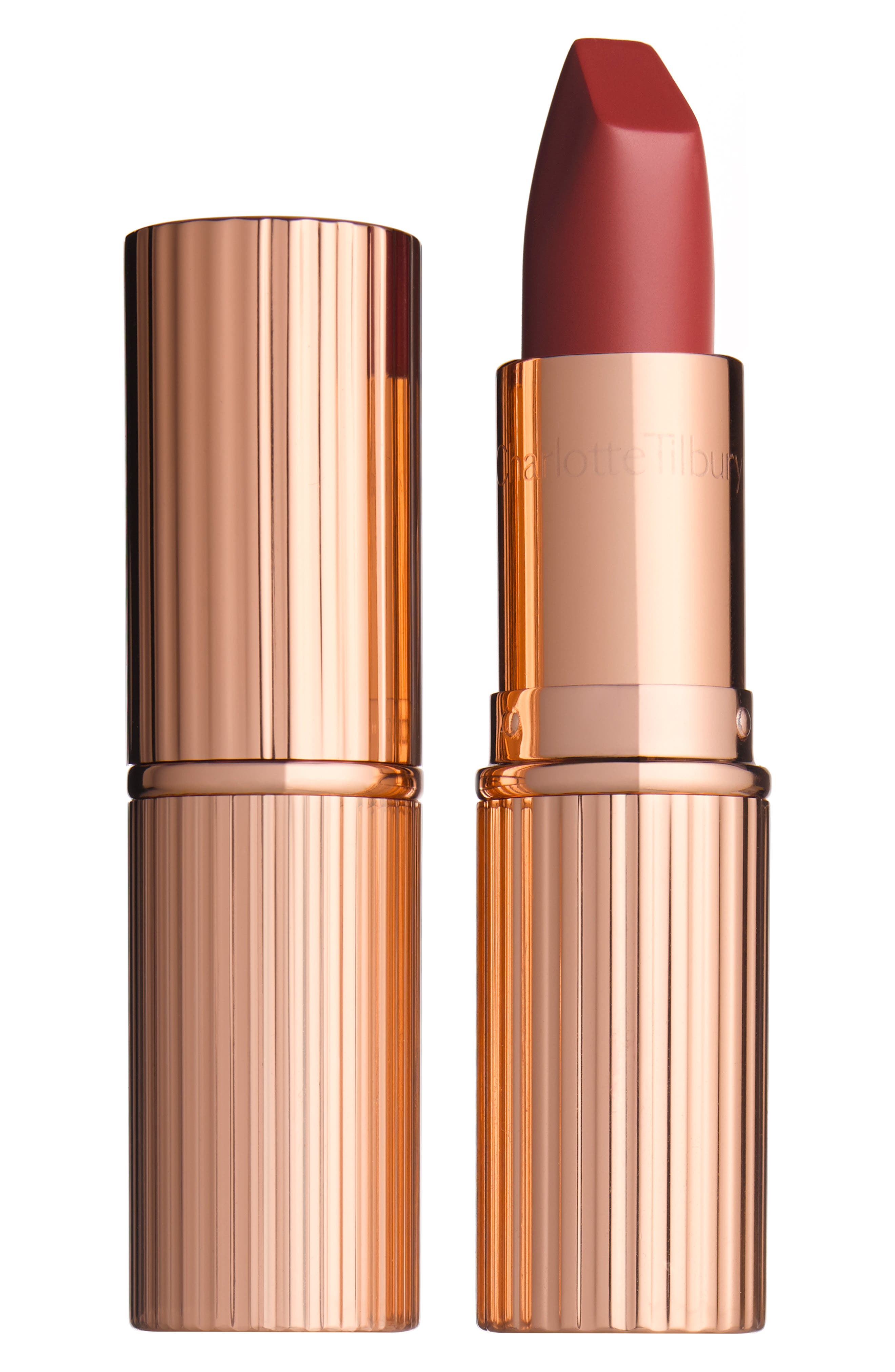

Charlotte Tilbury Matte Revolution Lipstick - Bond Girl
Analysis updated September 2026 · How Scout scores
At a glance
Summary
This lipstick contains a mix of beneficial and concerning ingredients. It includes natural oils and extracts like safflower seed oil and papaya fruit extract, which provide moisturizing and nourishing benefits. However, the presence of BHT, a synthetic antioxidant with potential health concerns, and multiple artificial colorants contribute to a moderate processing level, impacting the overall safety and cleanliness of the formulation.
Key ingredients 30
TocopherolVery Good
Tocopherol, also known as Vitamin E, is an antioxidant that helps to protect the skin from free radical damage. It is widely used for its skin conditioning properties. It is considered safe and beneficial for use in cosmetics.
Risks
There are no significant risks associated with this ingredient.
Benefits
It provides antioxidant protection and conditions the skin.
Carthamus Tinctorius (Safflower) Seed OilVery Good
Safflower Seed Oil is a natural oil rich in linoleic acid, which helps to moisturize and nourish the skin. It is considered safe and beneficial for use in cosmetics. It is known for its skin conditioning properties.
Risks
There are no significant risks associated with this ingredient.
Benefits
It moisturizes and nourishes the skin, providing conditioning benefits.
MicaGood
Beneficial ingredient — whole-food or functional value in this product class.
Risks
There are no significant risks associated with this ingredient.
Benefits
It adds shimmer and shine to the product.
Caprylic/Capric TriglycerideGood
This ingredient is an emollient derived from coconut oil and glycerin. It helps to moisturize and condition the skin. It is considered safe and beneficial for use in cosmetics.
Risks
There are no significant risks associated with this ingredient.
Benefits
It provides moisturizing and conditioning benefits to the skin.
Zea Mays (Corn) OilGood
Corn Oil is a natural oil used to moisturize and condition the skin. It is considered safe and beneficial for use in cosmetics. It provides emollient properties to the product.
Risks
There are no significant risks associated with this ingredient.
Benefits
It moisturizes and conditions the skin, providing emollient benefits.
Carica Papaya (Papaya) Fruit ExtractGood
Papaya Fruit Extract is rich in vitamins and enzymes that help to exfoliate and nourish the skin. It is considered safe and beneficial for use in cosmetics. It provides gentle exfoliation and skin conditioning benefits.
Risks
There are no significant risks associated with this ingredient.
Benefits
It exfoliates and nourishes the skin, providing conditioning benefits.
Tocopheryl AcetateGood
Tocopheryl Acetate is a form of Vitamin E used for its antioxidant and skin conditioning properties. It is considered safe and beneficial for use in cosmetics. It helps to protect the skin and improve its texture.
Risks
There are no significant risks associated with this ingredient.
Benefits
It provides antioxidant protection and conditions the skin.
Neopentyl Glycol Dicaprylate/DicaprateNeutral
This ingredient is an emollient that helps to soften and smooth the skin. It is commonly used in cosmetics for its ability to improve texture. It is generally considered safe with no significant risks.
Risks
There are no significant risks associated with this ingredient.
Benefits
It provides a smooth application and enhances the texture of the product.
Trimethylolpropane TriisostearateNeutral
This is an emollient that helps to condition the skin and improve the spreadability of the product. It is widely used in cosmetics for its non-greasy feel. It is considered safe for use in cosmetics.
Risks
There are no significant risks associated with this ingredient.
Benefits
It enhances the spreadability and feel of the product on the skin.
Microcrystalline Wax/Cera Microcristallina/Cire MicrocristallineNeutral
This wax is used to thicken formulations and provide structure to the product. It is derived from petroleum but is highly refined and considered safe for use in cosmetics. It helps to stabilize the product and improve its texture.
Risks
There are no significant risks associated with this ingredient.
Benefits
It provides structure and stability to the product.
PolybuteneNeutral
Polybutene is a polymer used as a binder and film-former in cosmetics. It helps to improve the texture and adhesion of the product. It is considered safe for use in cosmetics.
Risks
There are no significant risks associated with this ingredient.
Benefits
It improves the adhesion and texture of the product.
Dimethicone CrosspolymerNeutral
This is a silicone-based polymer used to enhance the texture and feel of the product. It provides a silky, smooth application and helps to fill in fine lines. It is considered safe for use in cosmetics.
Risks
There are no significant risks associated with this ingredient.
Benefits
It provides a smooth application and helps to fill in fine lines.
SilicaNeutral
Silica is used as an absorbent and anti-caking agent in cosmetics. It helps to control oil and improve the texture of the product. It is considered safe for use in cosmetics.
Risks
There are no significant risks associated with this ingredient.
Benefits
It helps to control oil and improve the texture of the product.
Dicalcium PhosphateNeutral
Dicalcium Phosphate is used as a polishing agent and opacifying agent in cosmetics. It helps to improve the texture and appearance of the product. It is considered safe for use in cosmetics.
Risks
There are no significant risks associated with this ingredient.
Benefits
It improves the texture and appearance of the product.
Ethyl VanillinNeutral
Ethyl Vanillin is a synthetic flavoring agent used to add a vanilla scent to cosmetics. It is considered safe for use in cosmetics. It enhances the sensory experience of the product.
Risks
There are no significant risks associated with this ingredient.
Benefits
It adds a pleasant vanilla scent to the product.
Pentaerythrityl Tetra-Di-T-Butyl HydroxyhydrocinnamateNeutral
This ingredient is an antioxidant used to stabilize formulations and prevent oxidation. It is considered safe for use in cosmetics. It helps to extend the shelf life of the product.
Risks
There are no significant risks associated with this ingredient.
Benefits
It stabilizes the formulation and prevents oxidation.
Orchis Mascula Flower ExtractNeutral
Orchis Mascula Flower Extract is used for its skin conditioning properties. It is considered safe for use in cosmetics. It provides moisturizing benefits to the skin.
Risks
There are no significant risks associated with this ingredient.
Benefits
It conditions and moisturizes the skin.
Bixa Orellana Seed ExtractNeutral
Bixa Orellana Seed Extract is used for its antioxidant properties. It is considered safe for use in cosmetics. It helps to protect the skin from free radical damage.
Risks
There are no significant risks associated with this ingredient.
Benefits
It provides antioxidant protection to the skin.
Tin OxideNeutral
Tin Oxide is used as an opacifying agent and to add shine to cosmetics. It is considered safe for use in cosmetics. It enhances the appearance of the product.
Risks
There are no significant risks associated with this ingredient.
Benefits
It adds shine and enhances the appearance of the product.
Titanium Dioxide (CI 77891)Neutral
Titanium Dioxide is used as a pigment and UV filter in cosmetics. It is considered safe for use in cosmetics. It provides color and sun protection benefits.
Risks
There are no significant risks associated with this ingredient.
Benefits
It provides color and sun protection benefits.
Iron Oxides (CI 77491, CI 77492, CI 77499)Neutral
Iron Oxides are used as pigments in cosmetics to provide color. They are considered safe for use in cosmetics. They provide a range of color options for the product.
Risks
There are no significant risks associated with these ingredients.
Benefits
They provide a range of color options for the product.
Red 7 Lake (CI 15850)Neutral
Red 7 Lake is a synthetic pigment used to add color to cosmetics. It is considered safe for use in cosmetics. It provides vibrant color to the product.
Risks
There are no significant risks associated with this ingredient.
Benefits
It provides vibrant color to the product.
Red 6 (CI 15850)Neutral
Red 6 is a synthetic pigment used to add color to cosmetics. It is considered safe for use in cosmetics. It provides vibrant color to the product.
Risks
There are no significant risks associated with this ingredient.
Benefits
It provides vibrant color to the product.
Yellow 5 Lake (CI 19140)Neutral
Yellow 5 Lake is a synthetic pigment used to add color to cosmetics. It is considered safe for use in cosmetics. It provides vibrant color to the product.
Risks
There are no significant risks associated with this ingredient.
Benefits
It provides vibrant color to the product.
Yellow 6 Lake (CI 15985)Neutral
Yellow 6 Lake is a synthetic pigment used to add color to cosmetics. It is considered safe for use in cosmetics. It provides vibrant color to the product.
Risks
There are no significant risks associated with this ingredient.
Benefits
It provides vibrant color to the product.
Red 28 Lake (CI 45410)Neutral
Red 28 Lake is a synthetic pigment used to add color to cosmetics. It is considered safe for use in cosmetics. It provides vibrant color to the product.
Risks
There are no significant risks associated with this ingredient.
Benefits
It provides vibrant color to the product.
Blue 1 Lake (CI 42090)Neutral
Blue 1 Lake is a synthetic pigment used to add color to cosmetics. It is considered safe for use in cosmetics. It provides vibrant color to the product.
Risks
There are no significant risks associated with this ingredient.
Benefits
It provides vibrant color to the product.
DimethiconeBad
Occlusive silicone film-former — flagged under clean-beauty doctrine.
Risks
There are no significant risks associated with this ingredient.
Benefits
It helps to lock in moisture and provides a smooth application.
BHTBad
BHT is a synthetic antioxidant used to prevent product spoilage. It has been associated with potential health concerns, including skin irritation and endocrine disruption. It is considered controversial in cosmetics.
Risks
There are potential risks of skin irritation and endocrine disruption.
Benefits
It helps to stabilize the product and prevent spoilage.
PolyethyleneVery Bad
Heavily flagged ingredient class under Scout's doctrine.
Risks
There are no significant risks associated with this ingredient.
Benefits
It enhances the texture and application of the product.
Get the full breakdown in the Scout appTake Scout shopping
Scan any product to see lab results, healthy alternatives, and your personalized analysis.
Download on theApp Store GET IT ONGoogle PlayAmazon pricing & content
Amazon price as of . Product prices and availability are accurate as of the date/time indicated and are subject to change. Any price and availability information displayed on Amazon.com at the time of purchase will apply to the purchase of this product.
CERTAIN CONTENT THAT APPEARS ON THIS SITE COMES FROM AMAZON. THIS CONTENT IS PROVIDED “AS IS” AND IS SUBJECT TO CHANGE OR REMOVAL AT ANY TIME.