
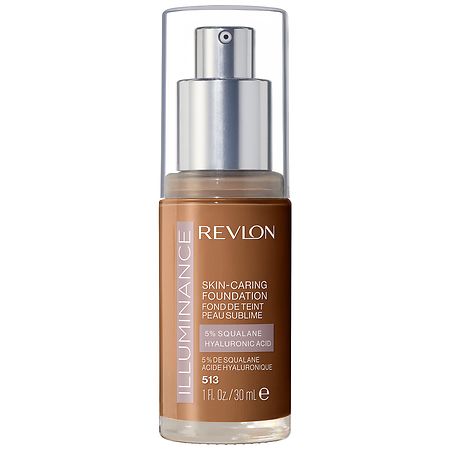


Revlon Illuminance Skin-Caring Liquid Foundation Hyaluronic Acid Hydrating and Nourishing Formula with Medium Coverage 513 Brown Suede 1 fl oz.
Summary
This foundation contains beneficial ingredients like hyaluronic acid, which is known for its hydrating properties. However, the presence of synthetic chemicals and potential skin irritants lowers its overall safety profile. The product is moderately processed, which affects its rating, but it does not contain the most harmful additives like parabens or formaldehyde releasers.
At a glance
Key ingredients 23
DIMETHICONE
Dimethicone is a type of silicone used in cosmetics for its smoothing properties. It forms a barrier on the skin that can help retain moisture. It is generally considered safe and non-irritating for most skin types.
Risks
There is a potential for buildup on the skin, which may lead to clogged pores in some individuals.
Benefits
It provides a silky texture and helps to fill in fine lines and wrinkles, improving the appearance of the skin.
OCTYLDODECANOL
Octyldodecanol is a fatty alcohol used as an emollient and thickening agent in cosmetics. It helps to improve the texture and spreadability of products. It is generally considered safe for use in cosmetics.
Risks
In rare cases, it may cause skin irritation or allergic reactions.
Benefits
It provides a smooth application and helps to soften and condition the skin.
POLYETHYLENE
Polyethylene is a polymer used as a thickening agent and film-former in cosmetics. It helps to improve the texture and stability of products. It is generally considered safe for use in cosmetics.
Risks
There are environmental concerns regarding its biodegradability and potential microplastic pollution.
Benefits
It enhances the texture and consistency of cosmetic formulations.
POLYSILICONE-11
Polysilicone-11 is a type of silicone used for its film-forming and skin-conditioning properties. It provides a smooth, silky feel to the skin. It is considered safe for use in cosmetics.
Risks
There is a potential for skin irritation in sensitive individuals.
Benefits
It helps to create a smooth, matte finish on the skin, improving the appearance of the product.
NYLON-12
Nylon-12 is a synthetic polymer used as a bulking agent and texture enhancer in cosmetics. It provides a soft focus effect, reducing the appearance of fine lines. It is considered safe for use in cosmetics.
Risks
There are minimal risks associated with its use, though it may cause irritation in very sensitive skin.
Benefits
It improves the texture and appearance of the skin by providing a smooth, matte finish.
CAPRYLIC/CAPRIC TRIGLYCERIDE
Caprylic/Capric Triglyceride is derived from coconut oil and glycerin, used as an emollient and skin-repairing ingredient. It helps to replenish the skin's surface and resist moisture loss. It is considered safe and beneficial for most skin types.
Risks
There are minimal risks, though it may cause breakouts in acne-prone skin.
Benefits
It provides a lightweight, non-greasy barrier of lubrication that helps to make the skin feel smooth and soft.
BIS-PEG-12 DIMETHICONE BEESWAX
Bis-PEG-12 Dimethicone Beeswax is a synthetic wax used as an emollient and thickening agent. It helps to improve the texture and spreadability of products. It is considered safe for use in cosmetics.
Risks
There are minimal risks associated with its use, though it may cause irritation in sensitive skin.
Benefits
It provides a smooth application and helps to condition the skin.
METHYL METHACRYLATE CROSSPOLYMER
Methyl Methacrylate Crosspolymer is a polymer used as a film-former and texture enhancer in cosmetics. It helps to improve the texture and stability of products. It is considered safe for use in cosmetics.
Risks
There are minimal risks, though it may cause irritation in sensitive skin.
Benefits
It enhances the texture and consistency of cosmetic formulations, providing a smooth finish.
DICALCIUM PHOSPHATE
Dicalcium Phosphate is used as a bulking agent and abrasive in cosmetics. It helps to improve the texture and stability of products. It is considered safe for use in cosmetics.
Risks
There are minimal risks associated with its use.
Benefits
It provides a smooth application and helps to improve the texture of the product.
STEARALKONIUM BENTONITE
Stearalkonium Bentonite is a clay-based thickening agent used in cosmetics. It helps to improve the texture and stability of products. It is considered safe for use in cosmetics.
Risks
There are minimal risks, though it may cause irritation in sensitive skin.
Benefits
It enhances the texture and consistency of cosmetic formulations.
POLYHYDROXYSTEARIC ACID
Polyhydroxystearic Acid is used as an emulsifier and thickening agent in cosmetics. It helps to stabilize and improve the texture of products. It is considered safe for use in cosmetics.
Risks
There are minimal risks associated with its use.
Benefits
It provides a smooth application and helps to stabilize the product.
PROPYLENE CARBONATE
Propylene Carbonate is used as a solvent and viscosity controller in cosmetics. It helps to improve the texture and spreadability of products. It is considered safe for use in cosmetics.
Risks
There are minimal risks, though it may cause irritation in sensitive skin.
Benefits
It enhances the texture and consistency of cosmetic formulations.
LAURETH-12
Laureth-12 is a surfactant and emulsifier used in cosmetics. It helps to stabilize and improve the texture of products. It is considered safe for use in cosmetics.
Risks
There is a potential for skin irritation, especially in sensitive individuals.
Benefits
It provides a smooth application and helps to stabilize the product.
PENTAERYTHRITYL TETRA-DI-t-BUTYL HYDROXYHYDROCINNAMATE
Pentaerythrityl Tetra-Di-t-Butyl Hydroxyhydrocinnamate is an antioxidant used to stabilize cosmetic formulations. It helps to prevent the oxidation of ingredients, extending the shelf life of products. It is considered safe for use in cosmetics.
Risks
There are minimal risks associated with its use.
Benefits
It helps to protect the product from degradation, maintaining its efficacy and stability.
MICA
Mica is a mineral used for its shimmering properties in cosmetics. It provides a natural sheen and glow to the skin. It is considered safe for use in cosmetics.
Risks
There are minimal risks, though inhalation of mica particles can be a concern in loose powder forms.
Benefits
It enhances the appearance of the skin by providing a luminous finish.
TIN OXIDE
Tin Oxide is used as an opacifying agent and colorant in cosmetics. It helps to improve the texture and appearance of products. It is considered safe for use in cosmetics.
Risks
There are minimal risks associated with its use.
Benefits
It provides opacity and enhances the color of cosmetic formulations.
TITANIUM DIOXIDE (CI 77891)
Titanium Dioxide is a mineral used as a pigment and sunscreen agent in cosmetics. It provides opacity and UV protection. It is considered safe for use in cosmetics.
Risks
There are concerns about inhalation risks in powder form, but it is generally safe in cream or liquid formulations.
Benefits
It provides excellent coverage and sun protection, enhancing the product's efficacy.
IRON OXIDES (CI 77491, CI 77492)
Iron Oxides are used as pigments in cosmetics to provide color. They are stable and non-toxic, making them ideal for use in a variety of products. They are considered safe for use in cosmetics.
Risks
There are minimal risks associated with their use.
Benefits
They provide natural-looking color and are stable under various conditions.
RED 6 (CI 15850)
Red 6 is a synthetic pigment used to provide color in cosmetics. It is widely used and considered safe for use in cosmetics. It provides vibrant color to products.
Risks
There are minimal risks, though some individuals may experience allergic reactions.
Benefits
It provides vibrant, long-lasting color to cosmetic formulations.
RED 7 LAKE (CI 15850)
Red 7 Lake is a synthetic pigment used to provide color in cosmetics. It is widely used and considered safe for use in cosmetics. It provides vibrant color to products.
Risks
There are minimal risks, though some individuals may experience allergic reactions.
Benefits
It provides vibrant, long-lasting color to cosmetic formulations.
RED 28 LAKE (CI 45410)
Red 28 Lake is a synthetic pigment used to provide color in cosmetics. It is widely used and considered safe for use in cosmetics. It provides vibrant color to products.
Risks
There are minimal risks, though some individuals may experience allergic reactions.
Benefits
It provides vibrant, long-lasting color to cosmetic formulations.
YELLOW 5 LAKE (CI 19140)
Yellow 5 Lake is a synthetic pigment used to provide color in cosmetics. It is widely used and considered safe for use in cosmetics. It provides vibrant color to products.
Risks
There are minimal risks, though some individuals may experience allergic reactions.
Benefits
It provides vibrant, long-lasting color to cosmetic formulations.
BLUE 1 LAKE (CI 42090)
Blue 1 Lake is a synthetic pigment used to provide color in cosmetics. It is widely used and considered safe for use in cosmetics. It provides vibrant color to products.
Risks
There are minimal risks, though some individuals may experience allergic reactions.
Benefits
It provides vibrant, long-lasting color to cosmetic formulations.
Processing
Processed Foods
Get the full breakdown in the Scout app
Scan any product to see lab results, healthy alternatives, and your personalized analysis.
Download on theApp Store