
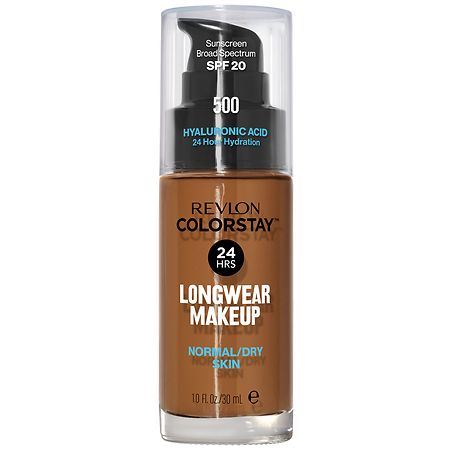


Revlon ColorStay Liquid Foundation Makeup Normal/Dry Skin SPF 20 410 Cappuccino 1 fl oz
Analysis updated August 2026 · How Scout scores
At a glance
Summary
This foundation contains beneficial ingredients like salicylic acid, sodium hyaluronate, and tocopheryl acetate, which provide exfoliating, moisturizing, and antioxidant benefits. However, the presence of parabens such as ethylparaben and methylparaben, along with phenoxyethanol, raises concerns due to their potential endocrine-disrupting effects and skin irritation risks. The product's processing level and inclusion of synthetic ingredients further impact its overall rating.
Key ingredients 31
MicaGood
Beneficial ingredient — whole-food or functional value in this product class.
Risks
Inhalation of mica dust can be harmful, but this is not a concern in liquid formulations.
Benefits
It adds shimmer and color to the product.
Salicylic AcidGood
Salicylic Acid is a beta hydroxy acid used for its exfoliating and anti-acne properties. It helps in unclogging pores and reducing acne. It is considered effective and beneficial for acne-prone skin.
Risks
Overuse can lead to skin irritation and dryness.
Benefits
It helps in exfoliating the skin and reducing acne.
Sodium HyaluronateGood
Sodium Hyaluronate is a form of hyaluronic acid used for its excellent moisturizing properties. It helps in retaining moisture and improving skin hydration. It is considered highly beneficial for all skin types.
Risks
There are minimal risks, though it may cause irritation in very sensitive skin.
Benefits
It provides deep hydration and improves skin texture.
Tocopheryl AcetateGood
Tocopheryl Acetate is a form of Vitamin E used for its antioxidant properties. It helps in protecting the skin from free radical damage. It is considered beneficial for skin health.
Risks
There are minimal risks, though it may cause irritation in sensitive skin.
Benefits
It provides antioxidant protection and improves skin health.
Aqua/Water/EauNeutral
Water is a common solvent used in cosmetics to dissolve other ingredients. It helps in forming emulsions and provides a base for the product. It is generally considered safe and non-reactive.
Risks
There are no significant risks associated with water in cosmetics.
Benefits
Water helps in hydrating the skin and acts as a carrier for other beneficial ingredients.
CyclopentasiloxaneNeutral
Cyclopentasiloxane is a silicone used to give products a smooth application and silky feel. It evaporates quickly, leaving no residue. It is generally considered safe for use in cosmetics.
Risks
There are minimal risks, though some may experience skin irritation.
Benefits
It provides a smooth application and helps in spreading the product evenly.
TrimethylsiloxysilicateNeutral
Trimethylsiloxysilicate is a silicone resin that provides water resistance and film-forming properties. It helps in long-lasting wear of makeup products. It is generally considered safe for use.
Risks
There are minimal risks, though it may cause irritation in sensitive skin.
Benefits
It enhances the longevity and water resistance of makeup.
PEG-9 Polydimethylsiloxyethyl DimethiconeNeutral
This ingredient is a silicone-based polymer used to improve the texture and spreadability of products. It acts as an emulsifier and conditioning agent. It is generally considered safe for use in cosmetics.
Risks
There is a potential risk of skin irritation, especially in sensitive individuals.
Benefits
It helps in improving the texture and feel of the product on the skin.
Phenyl TrimethiconeNeutral
Phenyl Trimethicone is a silicone that provides a smooth, silky feel to products. It enhances shine and spreadability. It is considered safe for use in cosmetics.
Risks
There are minimal risks, though it may cause irritation in sensitive skin.
Benefits
It improves the texture and shine of the product.
Methyl Methacrylate CrosspolymerNeutral
This ingredient is a polymer used to provide texture and absorb excess oil. It helps in creating a matte finish. It is generally considered safe for use in cosmetics.
Risks
There are minimal risks, though it may cause irritation in sensitive skin.
Benefits
It helps in controlling oil and providing a matte finish.
SilicaNeutral
Silica is used as an absorbent and anti-caking agent in cosmetics. It helps in controlling shine and improving the texture of products. It is generally considered safe for use.
Risks
Inhalation of silica dust can be harmful, but this is not a concern in liquid formulations.
Benefits
It helps in controlling oil and providing a smooth finish.
Butylene GlycolNeutral
Butylene Glycol is a solvent and conditioning agent used to improve the texture and moisture retention of products. It is widely used and considered safe in cosmetics.
Risks
There is a low risk of skin irritation, especially in sensitive individuals.
Benefits
It helps in retaining moisture and improving the texture of the product.
Nylon-12Neutral
Nylon-12 is used as a bulking agent and to improve the texture of products. It provides a smooth, silky feel. It is generally considered safe for use in cosmetics.
Risks
There are minimal risks, though it may cause irritation in sensitive skin.
Benefits
It enhances the texture and feel of the product.
AluminaNeutral
Alumina is used as an abrasive and thickening agent in cosmetics. It helps in improving the texture and stability of products. It is generally considered safe for use.
Risks
There are minimal risks, though it may cause irritation in sensitive skin.
Benefits
It enhances the texture and stability of the product.
Disteardimonium HectoriteNeutral
Disteardimonium Hectorite is used as a thickening and stabilizing agent in cosmetics. It helps in improving the texture and consistency of products. It is generally considered safe for use.
Risks
There are minimal risks, though it may cause irritation in sensitive skin.
Benefits
It enhances the texture and stability of the product.
Ethylene BrassylateNeutral
Ethylene Brassylate is used as a fragrance ingredient in cosmetics. It provides a pleasant scent to products. It is generally considered safe for use.
Risks
There is a potential risk of skin irritation, especially in sensitive individuals.
Benefits
It adds a pleasant fragrance to the product.
Hydrogen DimethiconeNeutral
Hydrogen Dimethicone is a silicone used to improve the texture and spreadability of products. It provides a smooth, silky feel. It is generally considered safe for use in cosmetics.
Risks
There are minimal risks, though it may cause irritation in sensitive skin.
Benefits
It improves the texture and feel of the product.
Hydrolyzed Vegetable ProteinNeutral
Hydrolyzed Vegetable Protein is used as a conditioning agent in cosmetics. It helps in improving the texture and moisture retention of products. It is generally considered safe for use.
Risks
There are minimal risks, though it may cause irritation in sensitive skin.
Benefits
It helps in retaining moisture and improving the texture of the product.
Laureth-7Neutral
Laureth-7 is used as an emulsifier and surfactant in cosmetics. It helps in improving the texture and spreadability of products. It is generally considered safe for use.
Risks
There is a potential risk of skin irritation, especially in sensitive individuals.
Benefits
It helps in improving the texture and feel of the product on the skin.
Magnesium SulfateNeutral
Magnesium Sulfate is used as a thickening agent and to improve the texture of products. It is generally considered safe for use in cosmetics.
Risks
There are minimal risks, though it may cause irritation in sensitive skin.
Benefits
It enhances the texture and stability of the product.
MethiconeNeutral
Methicone is a silicone used to improve the texture and spreadability of products. It provides a smooth, silky feel. It is generally considered safe for use in cosmetics.
Risks
There are minimal risks, though it may cause irritation in sensitive skin.
Benefits
It improves the texture and feel of the product.
Polyglyceryl-3 DiisostearateNeutral
Polyglyceryl-3 Diisostearate is used as an emulsifier and conditioning agent in cosmetics. It helps in improving the texture and spreadability of products. It is generally considered safe for use.
Risks
There is a potential risk of skin irritation, especially in sensitive individuals.
Benefits
It helps in improving the texture and feel of the product on the skin.
Tetrasodium EDTANeutral
Tetrasodium EDTA is used as a chelating agent to improve the stability and efficacy of cosmetics. It helps in preventing the deterioration of products. It is generally considered safe for use.
Risks
There are minimal risks, though it may cause irritation in sensitive skin.
Benefits
It enhances the stability and shelf-life of the product.
TribeheninNeutral
Tribehenin is used as an emollient and conditioning agent in cosmetics. It helps in improving the texture and moisture retention of products. It is generally considered safe for use.
Risks
There are minimal risks, though it may cause irritation in sensitive skin.
Benefits
It helps in retaining moisture and improving the texture of the product.
TriethoxycaprylylsilaneNeutral
Triethoxycaprylylsilane is used as a surface modifier and dispersing agent in cosmetics. It helps in improving the texture and spreadability of products. It is generally considered safe for use.
Risks
There are minimal risks, though it may cause irritation in sensitive skin.
Benefits
It helps in improving the texture and feel of the product on the skin.
Triethyl CitrateNeutral
Triethyl Citrate is used as a fragrance ingredient and stabilizer in cosmetics. It helps in improving the texture and stability of products. It is generally considered safe for use.
Risks
There is a potential risk of skin irritation, especially in sensitive individuals.
Benefits
It enhances the stability and fragrance of the product.
DimethiconeBad
Occlusive silicone film-former — flagged under clean-beauty doctrine.
Risks
It may cause breakouts in acne-prone skin due to its occlusive nature.
Benefits
It helps in smoothing the skin and reducing the appearance of fine lines.
Dimethicone/PEG-10/15 CrosspolymerBad
Processed additive flagged under Scout's ingredient doctrine.
Risks
There is a potential risk of skin irritation, especially in sensitive individuals.
Benefits
It helps in improving the texture and feel of the product on the skin.
PhenoxyethanolBad
Phenoxyethanol is used as a preservative in cosmetics. It helps in preventing microbial growth and extending the shelf-life of products. However, it can cause skin irritation and allergic reactions in some individuals.
Risks
There is a risk of skin irritation and allergic reactions.
Benefits
It helps in preserving the product and preventing microbial growth.
EthylparabenVery Bad
Ethylparaben is a paraben used as a preservative in cosmetics. It helps in preventing microbial growth and extending the shelf-life of products. However, parabens are controversial due to potential endocrine-disrupting effects.
Risks
There is a concern about potential endocrine disruption and skin irritation.
Benefits
It helps in preserving the product and preventing microbial growth.
MethylparabenVery Bad
Methylparaben is a paraben used as a preservative in cosmetics. It helps in preventing microbial growth and extending the shelf-life of products. However, parabens are controversial due to potential endocrine-disrupting effects.
Risks
There is a concern about potential endocrine disruption and skin irritation.
Benefits
It helps in preserving the product and preventing microbial growth.
Get the full breakdown in the Scout appTake Scout shopping
Scan any product to see lab results, healthy alternatives, and your personalized analysis.
Download on theApp Store GET IT ONGoogle PlayAmazon pricing & content
Amazon price as of . Product prices and availability are accurate as of the date/time indicated and are subject to change. Any price and availability information displayed on Amazon.com at the time of purchase will apply to the purchase of this product.
CERTAIN CONTENT THAT APPEARS ON THIS SITE COMES FROM AMAZON. THIS CONTENT IS PROVIDED “AS IS” AND IS SUBJECT TO CHANGE OR REMOVAL AT ANY TIME.