
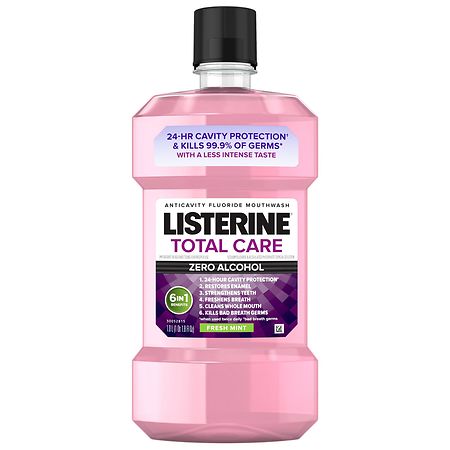


Listerine Total Care Alcohol-Free Mild Mouthwash/Mouth Rinse Mild Mint 1 L
Summary
This mouthwash is alcohol-free, which helps avoid the drying effects associated with alcohol-based rinses. However, it contains fluoride, which can be toxic in excess, and other synthetic ingredients that may raise concerns for some users. While it lacks some of the most harmful chemicals found in other oral care products, the presence of fluoride and synthetic additives prevents it from achieving a higher score.
At a glance
Key ingredients 8
WaterNeutral
Water is the primary solvent in many liquid products, providing a base for other ingredients. It helps to dissolve and distribute active ingredients evenly. In oral care, it aids in rinsing and hydrating the mouth.
Risks
There are no significant risks associated with water in this context.
Benefits
Water helps to hydrate the mouth and dissolve other ingredients for effective distribution.
SorbitolNeutral
Sorbitol is a sugar alcohol used as a sweetener and humectant in oral care products. It helps to retain moisture and improve the taste of the product. While not inherently harmful, it does not provide significant oral health benefits.
Risks
Excessive consumption of sorbitol can cause digestive issues, but this is not a concern in mouthwash.
Benefits
Sorbitol helps to keep the mouthwash moist and palatable without contributing to tooth decay.
Propylene Glycol
Propylene glycol is a synthetic compound used to maintain moisture and consistency in products. It is derived from petroleum and can act as a solvent for other ingredients. In oral care, it is considered a potential irritant.
Risks
Propylene glycol can cause irritation to the skin and mucous membranes, and may have toxic effects on the central nervous system and kidneys with prolonged exposure.
Benefits
It helps to maintain the moisture and texture of the mouthwash, ensuring a smooth application.
Sodium Lauryl Sulfate
Sodium lauryl sulfate (SLS) is a surfactant used to create foam and enhance cleaning. However, it is a harsh chemical known to irritate the mucous membranes in the mouth. It is directly linked to mouth ulcers and can damage oral epithelial tissue.
Risks
SLS is a strong irritant that can cause mouth ulcers and damage to the oral tissues.
Benefits
It provides foaming action that can help in the mechanical removal of debris, but this benefit is outweighed by its risks.
Poloxamer 407Neutral
Poloxamer 407 is a nonionic surfactant used to improve the solubility and stability of formulations. It helps to disperse and emulsify ingredients in the mouthwash. While generally considered safe, it does not offer direct oral health benefits.
Risks
There are no significant risks associated with Poloxamer 407 in the concentrations used in oral care products.
Benefits
It aids in the even distribution of ingredients, enhancing the overall effectiveness of the mouthwash.
FlavorNeutral
Flavoring agents are added to improve the taste and user experience of oral care products. They can include natural or synthetic compounds to provide a pleasant taste. The specific composition is often proprietary and not disclosed.
Risks
Potential risks depend on the specific compounds used, which are not disclosed.
Benefits
Flavoring makes the product more palatable, encouraging regular use.
Sodium BenzoateNeutral
Sodium benzoate is a preservative used to prevent microbial growth in products. It is effective in maintaining product stability and safety over time. While generally recognized as safe, it does not contribute to oral health.
Risks
In rare cases, sodium benzoate can cause allergic reactions or irritation.
Benefits
It helps to preserve the product, ensuring it remains safe and effective during its shelf life.
Phosphoric AcidNeutral
Phosphoric acid is used to adjust the pH of products, ensuring stability and effectiveness. It can help to maintain the desired acidity level in mouthwash. While not harmful in small amounts, it does not provide direct oral health benefits.
Risks
Excessive exposure to phosphoric acid can erode enamel, but this is unlikely in the concentrations used in mouthwash.
Benefits
It helps to stabilize the pH of the mouthwash, contributing to its overall effectiveness.
Processing
Ultra-Processed Foods
Get the full breakdown in the Scout app
Scan any product to see lab results, healthy alternatives, and your personalized analysis.
Download on theApp Store