
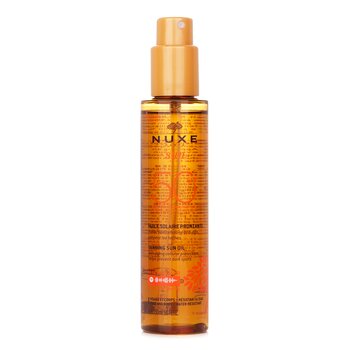
NuxeSun Tanning Sun Oil High Protection SPF50 (For Face & Body) 150ml/5oz
Analysis updated July 2026 · How Scout scores
At a glance
Summary
This tanning sun oil contains a mix of natural oils like coconut and rice bran oil, which are beneficial for skin hydration. However, the presence of synthetic fragrance and chemical UV filters such as bis-ethylhexyloxyphenol methoxyphenyl triazine and diethylamino hydroxybenzoyl hexyl benzoate raises concerns about potential skin irritation and endocrine disruption. The inclusion of parfum/fragrance also detracts from the product's overall safety profile.
Key ingredients 9
ORYZA SATIVA (RICE) BRAN OILVery Good
Rice bran oil is rich in antioxidants, vitamins, and essential fatty acids, making it beneficial for skin health. It helps to moisturize and protect the skin barrier. It is well-tolerated by most skin types.
Risks
Generally considered safe with low risk of irritation.
Benefits
Provides antioxidant protection and helps to nourish and moisturize the skin.
COCOS NUCIFERA (COCONUT) OILVery Good
Coconut oil is a natural emollient known for its moisturizing properties. It is rich in fatty acids that help to nourish and protect the skin. It is widely used in skincare for its hydrating and soothing benefits.
Risks
May cause breakouts in acne-prone skin due to its comedogenic nature.
Benefits
Deeply moisturizes and nourishes the skin, providing a protective barrier.
CITRUS AURANTIUM PEEL OILGood
This natural oil is derived from the peel of bitter orange and is known for its aromatic properties. It can have astringent and toning effects on the skin. However, it may increase photosensitivity.
Risks
Potential to increase skin's sensitivity to sunlight, leading to sunburn.
Benefits
Offers natural fragrance and may help in toning and refreshing the skin.
COCO-CAPRYLATE/CAPRATEGood
This is an emollient derived from coconut oil and glycerin, known for its ability to provide a smooth and silky feel to the skin. It is lightweight and non-greasy, making it suitable for various skin types. It is generally considered safe and non-irritating.
Risks
Minimal risk of irritation, generally considered safe for most skin types.
Benefits
Enhances skin feel and provides moisturizing benefits without a greasy residue.
BIS-ETHYLHEXYLOXYPHENOL METHOXYPHENYL TRIAZINENeutral
This is a chemical sunscreen agent that provides broad-spectrum UV protection. It is stable under sunlight and does not degrade easily. However, it is a synthetic compound and may not be suitable for those seeking natural ingredients.
Risks
There is a potential for skin irritation in sensitive individuals.
Benefits
It offers effective protection against both UVA and UVB rays.
CITRONELLOLNeutral
Citronellol is a fragrance component derived from plants such as rose and geranium. It is used to impart a pleasant scent to products. However, it can be an allergen for some people.
Risks
May cause allergic reactions or skin irritation in sensitive individuals.
Benefits
Provides a natural floral fragrance to cosmetic products.
C12-15 ALKYL BENZOATENeutral
This ingredient is used as an emollient and texture enhancer in cosmetic formulations. It helps to improve the spreadability of products. It is generally considered safe for use in cosmetics.
Risks
Low risk of irritation or sensitization.
Benefits
Improves product texture and enhances skin feel.
DIETHYLAMINO HYDROXYBENZOYL HEXYL BENZOATENeutral
This is a chemical sunscreen agent that provides UVA protection. It is photostable and does not degrade easily in sunlight. However, as a synthetic compound, it may not be preferred by those seeking natural alternatives.
Risks
Potential for skin irritation in sensitive individuals.
Benefits
Offers effective UVA protection and is stable under sunlight.
PARFUM/FRAGRANCEVery Bad
Fragrance is used to impart scent to products but can be a mixture of various chemicals. It is a common cause of allergic reactions and skin irritation. The exact composition is often undisclosed, leading to concerns about potential allergens.
Risks
High risk of allergic reactions and skin irritation, especially in sensitive individuals.
Benefits
Provides a pleasant scent to the product.
Get the full breakdown in the Scout appTake Scout shopping
Scan any product to see lab results, healthy alternatives, and your personalized analysis.
Download on theApp Store GET IT ONGoogle Play