
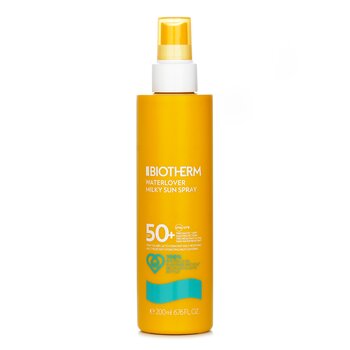

BiothermWaterlover Milky Sun Spray SPF50 200ml/6.76oz
Analysis updated July 2026 · How Scout scores
At a glance
Summary
This sunscreen contains chemical UV filters like ethylhexyl salicylate and bis-ethylhexyloxyphenol methoxyphenyl triazine, which are effective but can be concerning due to potential endocrine disruption. The presence of propylene glycol, a common synthetic ingredient, further impacts the score negatively. However, the absence of parabens, synthetic fragrances, and formaldehyde releasers is a positive aspect, balancing the overall assessment.
Key ingredients 6
BIS-ETHYLHEXYLOXYPHENOL METHOXYPHENYL TRIAZINEGood
This ingredient is a broad-spectrum UV filter that provides excellent protection against both UVA and UVB rays. It is photostable, meaning it does not degrade easily in sunlight. It is often used in combination with other sunscreen agents to enhance overall sun protection.
Risks
There are minimal risks associated with this ingredient, though some individuals may experience mild irritation.
Benefits
It offers strong and stable protection against a wide range of UV radiation.
ETHYLHEXYL SALICYLATENeutral
Ethylhexyl salicylate is a chemical sunscreen agent that absorbs UVB radiation. It is commonly used in sunscreens to protect the skin from sunburn. However, it does not provide broad-spectrum protection on its own.
Risks
There are concerns about its potential to cause skin irritation in sensitive individuals.
Benefits
It helps in preventing sunburn by absorbing UVB rays.
BUTYL METHOXYDIBENZOYLMETHANENeutral
Also known as Avobenzone, this ingredient is a commonly used UVA filter in sunscreens. It provides effective protection against long-wave UVA rays, which are responsible for skin aging. However, it is not very photostable and can degrade in sunlight.
Risks
It can cause skin irritation and may degrade other ingredients in the formulation.
Benefits
It offers protection against UVA rays, which are linked to skin aging and cancer.
DIISOPROPYL SEBACATENeutral
Diisopropyl sebacate is an emollient that helps to improve the texture and spreadability of cosmetic products. It is used to provide a lightweight, non-greasy feel. It is generally considered safe for use in cosmetics.
Risks
There are minimal risks, though it may cause mild irritation in sensitive skin.
Benefits
It enhances the sensory feel of products, making them more pleasant to apply.
DICAPRYLYL ETHERNeutral
Dicaprylyl ether is used as an emollient and solvent in cosmetic formulations. It provides a silky, smooth feel and helps to improve the spreadability of products. It is considered safe for use in cosmetics.
Risks
There are minimal risks associated with this ingredient.
Benefits
It contributes to a smooth application and enhances the sensory properties of the product.
PROPYLENE GLYCOLBad
Propylene glycol is a common humectant used to retain moisture in cosmetic products. However, it can cause skin irritation and allergic reactions in some individuals. It is often criticized for its potential to cause irritation, especially in sensitive skin.
Risks
It may cause skin irritation and allergic reactions, particularly in sensitive individuals.
Benefits
It helps to maintain moisture levels in the skin, preventing dryness.
Get the full breakdown in the Scout appTake Scout shopping
Scan any product to see lab results, healthy alternatives, and your personalized analysis.
Download on theApp Store GET IT ONGoogle Play