
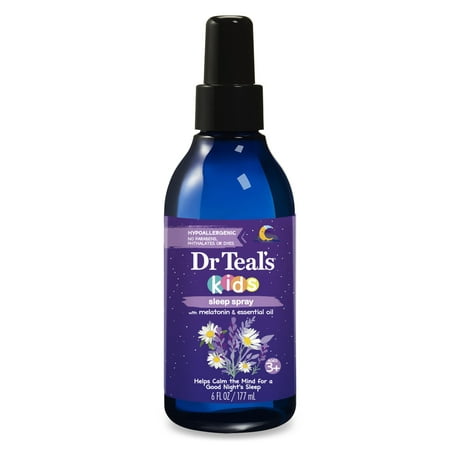

Dr Teal s Kids Sleep Spray Hypoallergenic with Melatonin & Essential Oil Blend 6 fl oz
Analysis updated August 2026 · How Scout scores
At a glance
Summary
This product contains beneficial ingredients like glycerin, melatonin, and chamomile flower oil, which provide hydration, antioxidant benefits, and soothing properties. However, the presence of fragrance and phenoxyethanol, which can cause skin irritation and allergic reactions, lowers its safety profile. The inclusion of PEG-40 hydrogenated castor oil and polysorbate-20 indicates a moderate level of processing, which further impacts the overall rating.
Key ingredients 13
Anthemis Nobilis (Chamomile) Flower OilVery Good
Chamomile oil is known for its soothing and anti-inflammatory properties. It can help calm irritated skin and reduce redness. It is a natural ingredient with a long history of use in skincare.
Risks
Rare cases of allergic reactions in sensitive individuals.
Benefits
Provides soothing and calming effects on the skin.
GlycerinGood
Glycerin is a humectant that attracts moisture to the skin, making it a beneficial ingredient in skincare. It helps to maintain skin hydration and improve barrier function. It is well-tolerated by most skin types.
Risks
Generally considered safe with minimal risk of irritation.
Benefits
Enhances skin hydration and improves moisture retention.
MelatoninGood
Melatonin is known for its antioxidant properties and potential to improve skin repair. It may help in reducing oxidative stress and promoting skin health. Its use in topical products is still being researched.
Risks
Limited research on topical application; potential for unknown effects.
Benefits
May provide antioxidant benefits and support skin repair.
Water (Aqua, Eau)Neutral
Water is a common solvent used in cosmetic formulations. It helps dissolve other ingredients and provides a base for the product. It does not have any direct benefits or risks in this context.
Risks
There are no significant risks associated with water in cosmetic products.
Benefits
Water helps in the dispersion of other ingredients and provides hydration.
PEG-40 Hydrogenated Castor OilNeutral
PEG-40 Hydrogenated Castor Oil is used as an emulsifier and surfactant in cosmetics. It helps to mix oil and water-based ingredients. There are concerns about contamination with ethylene oxide and 1,4-dioxane during production.
Risks
Potential contamination with harmful byproducts like 1,4-dioxane.
Benefits
Improves texture and stability of the product by emulsifying ingredients.
Polysorbate-20Neutral
Polysorbate-20 is a surfactant and emulsifier used in cosmetics to stabilize formulations. It is generally considered safe but can be contaminated with ethylene oxide and 1,4-dioxane.
Risks
Possible contamination with 1,4-dioxane, a potential carcinogen.
Benefits
Helps to blend ingredients and improve product consistency.
Benzoic AcidNeutral
Benzoic Acid is used as a preservative in cosmetics to inhibit microbial growth. It is effective at low concentrations and generally safe for use. However, it can cause irritation in sensitive skin.
Risks
Potential skin irritation, especially in sensitive individuals.
Benefits
Helps maintain product integrity by preventing microbial contamination.
Glycereth-2 CocoateNeutral
Glycereth-2 Cocoate is an emollient and surfactant derived from coconut oil. It helps to soften and smooth the skin. It is generally considered safe for use in cosmetics.
Risks
Minimal risk of irritation; generally well-tolerated.
Benefits
Improves skin texture and provides a softening effect.
EthylhexylglycerinNeutral
Ethylhexylglycerin is used as a skin conditioning agent and preservative enhancer. It is generally considered safe and helps to improve the efficacy of other preservatives. It has a low risk of irritation.
Risks
Low risk of skin irritation.
Benefits
Enhances the effectiveness of preservatives and conditions the skin.
DisodiumNeutral
Disodium is likely a part of a larger compound such as Disodium EDTA, used as a chelating agent. It helps to stabilize formulations by binding metal ions. It is generally considered safe in cosmetics.
Risks
Minimal risk; generally safe for use in cosmetics.
Benefits
Stabilizes formulations and enhances product stability.
Potassium SorbateBad
Synthetic preservative — flagged in daily-use products.
Risks
Possible mild skin irritation in sensitive individuals.
Benefits
Extends the shelf life of the product by preventing microbial growth.
PhenoxyethanolBad
Phenoxyethanol is a preservative used to prevent bacterial growth in cosmetics. It can cause skin irritation and allergic reactions in some individuals. There are concerns about its potential neurotoxicity at high concentrations.
Risks
Potential skin irritation and allergic reactions; concerns about neurotoxicity.
Benefits
Effective preservative that extends product shelf life.
Fragrance (Parfum)Very Bad
Fragrance is often a mixture of various chemicals that can cause skin irritation or allergic reactions. It is a common allergen and can be problematic for sensitive skin. The exact composition is usually undisclosed, which can be concerning for consumers.
Risks
Potential skin irritation and allergic reactions, especially in sensitive individuals.
Benefits
Provides a pleasant scent to the product, enhancing user experience.
Processing
Processed Foods
Get the full breakdown in the Scout appTake Scout shopping
Scan any product to see lab results, healthy alternatives, and your personalized analysis.
Download on theApp Store GET IT ONGoogle Play