
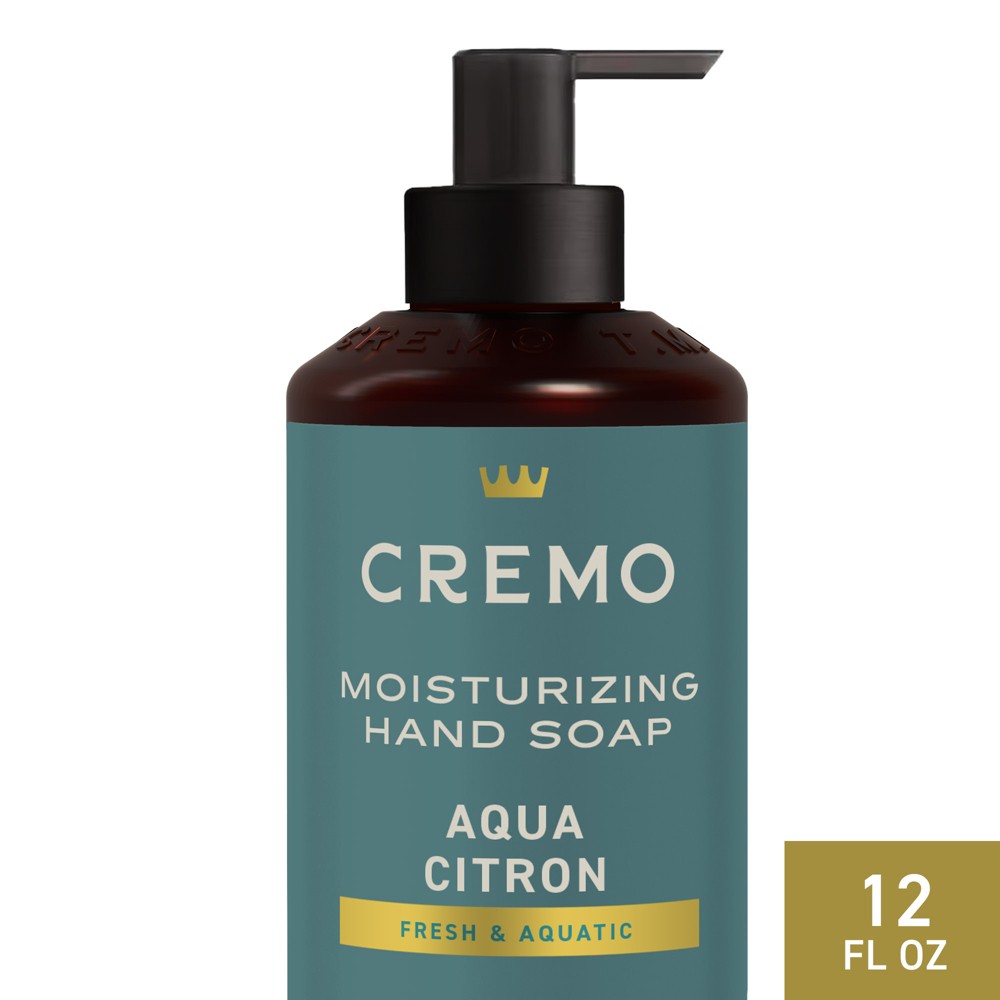

Cremo Hand Soap - Aqua Citron - 12 fl oz: Gel, Pump Bottle
Analysis updated June 2026 · How Scout scores
At a glance
Summary
This hand soap contains beneficial ingredients like glycerin, hyaluronic acid, and aloe, which provide hydration and soothing properties. However, the presence of sodium laureth sulfate and sodium C14-16 olefin sulfonate, both of which can be harsh on the skin, along with synthetic fragrance, which can cause irritation, lowers its overall safety profile. The product's formulation includes both beneficial and potentially irritating components, resulting in a mixed assessment.
Key ingredients 9
ALOEVery Good
Aloe is a natural botanical extract known for its soothing and moisturizing properties. It is often used to calm irritated skin and provide hydration. Aloe is rich in vitamins and antioxidants, making it beneficial for skin health.
Risks
Aloe is generally safe, but some individuals may experience allergic reactions.
Benefits
It soothes and hydrates the skin, reducing inflammation and irritation.
GLYCERINGood
Glycerin is a humectant that attracts moisture to the skin, helping to keep it hydrated. It is a natural compound found in lipids and is widely used in skincare for its moisturizing properties. It is non-irritating and suitable for all skin types.
Risks
There are minimal risks associated with glycerin, though overuse can lead to a sticky feeling on the skin.
Benefits
It helps to maintain skin hydration and improve skin barrier function.
HYALURONIC ACIDGood
Hyaluronic Acid is a powerful humectant that can hold up to 1000 times its weight in water, making it excellent for skin hydration. It is naturally found in the skin and helps to maintain moisture levels. It is suitable for all skin types and is non-irritating.
Risks
There are minimal risks associated with hyaluronic acid, though it may cause slight irritation in very sensitive skin.
Benefits
It significantly improves skin hydration and plumpness, reducing the appearance of fine lines.
WATERNeutral
Water is a common solvent used in cosmetic formulations to dissolve other ingredients. It acts as a base for the formulation, allowing other ingredients to mix and perform effectively. It is generally considered safe and non-irritating.
Risks
There are no significant risks associated with water in cosmetic products.
Benefits
Water helps to hydrate the skin and is essential for the formulation of most cosmetic products.
COCAMIDOPROPYL BETAINENeutral
Cocamidopropyl Betaine is a mild surfactant derived from coconut oil, used to enhance the foaming and cleansing properties of products. It is generally considered safe and less irritating than harsher surfactants. It helps to stabilize foam and improve the texture of the product.
Risks
Some individuals may experience allergic reactions or skin irritation.
Benefits
It provides gentle cleansing and helps to condition the skin.
DIMETHYL LAURAMIDE/MYRISTAMIDENeutral
Dimethyl Lauramide/Myristamide are used as emulsifiers and surfactants in cosmetic formulations. They help to stabilize products and improve texture. They are generally considered safe for use in cosmetics.
Risks
There is a low risk of skin irritation with these compounds.
Benefits
They enhance the texture and stability of cosmetic products.
SODIUM LAURETH SULFATEBad
Sodium Laureth Sulfate is a surfactant used for its cleansing and foaming properties. It is milder than Sodium Lauryl Sulfate but can still strip natural oils from the skin. There is a risk of contamination with 1,4-dioxane, a potential carcinogen, during its production.
Risks
It can cause skin irritation and dryness, and there is a contamination risk with 1,4-dioxane.
Benefits
It effectively cleanses the skin by removing dirt and oil.
SODIUM C14-16 OLEFIN SULFONATEBad
Sodium C14-16 Olefin Sulfonate is a surfactant used for its strong cleansing and foaming abilities. It can be harsh on the skin, potentially leading to dryness and irritation. It is often used as an alternative to sulfates in sulfate-free products.
Risks
It may cause skin irritation and dryness, especially in sensitive individuals.
Benefits
It effectively removes oils and dirt from the skin.
FRAGRANCEVery Bad
Fragrance is used to impart a pleasant scent to cosmetic products. However, it is a common cause of allergic reactions and skin irritation. The specific components of fragrance are often undisclosed, making it difficult to assess safety.
Risks
It can cause skin irritation, allergic reactions, and sensitivity.
Benefits
It provides a pleasant scent to the product, enhancing user experience.
Get the full breakdown in the Scout appTake Scout shopping
Scan any product to see lab results, healthy alternatives, and your personalized analysis.
Download on theApp Store GET IT ONGoogle Play