
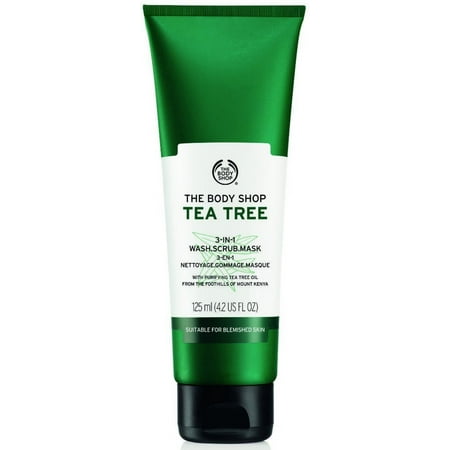
The Body Shop Tea Tree 3-in-1 Wash.Scrub.Mask, Made with Tea Tree Oil 4.2 oz
Analysis updated August 2026 · How Scout scores
At a glance
Summary
This product contains beneficial ingredients like tea tree oil and salicylic acid, which are known for their antimicrobial and exfoliating properties. However, the presence of sodium laureth sulfate and denatured alcohol can be irritating and drying to the skin, and phenoxyethanol is a preservative that may cause irritation in some individuals. The combination of these factors results in a mixed assessment of ingredient safety.
Key ingredients 30
Melaleuca Alternifolia Leaf Oil/Tea Tree Leaf OilVery Good
Tea Tree Oil is known for its antimicrobial and anti-inflammatory properties. It helps to reduce acne and soothe irritated skin.
Risks
May cause irritation in sensitive skin if used in high concentrations.
Benefits
Effective in treating acne and reducing inflammation.
KaolinGood
Kaolin is a natural clay known for its gentle exfoliating properties. It helps to absorb excess oil and impurities from the skin.
Risks
Overuse may lead to dryness in sensitive skin types.
Benefits
Helps to cleanse and purify the skin by removing excess oil and dirt.
GlycerinGood
Glycerin is a humectant that attracts moisture to the skin. It helps to maintain skin hydration and improve barrier function.
Risks
Generally considered safe with minimal risk of irritation.
Benefits
Enhances skin hydration and smoothness, making it a beneficial ingredient for dry skin.
PropanediolGood
Propanediol is a glycol that acts as a solvent and skin-conditioning agent. It enhances the absorption of other ingredients.
Risks
Rarely, it may cause irritation in very sensitive skin.
Benefits
Improves the texture and feel of the product, enhancing skin hydration.
Decyl GlucosideGood
Decyl Glucoside is a mild, non-ionic surfactant derived from glucose. It is gentle on the skin and suitable for sensitive skin types.
Risks
Generally considered safe with minimal risk of irritation.
Benefits
Provides gentle cleansing without disrupting the skin barrier.
Hydrogenated Jojoba WaxGood
Hydrogenated Jojoba Wax is a natural emollient that helps to moisturize and protect the skin. It is derived from jojoba oil.
Risks
Generally considered safe with no significant risks.
Benefits
Provides moisture and improves skin texture.
Salicylic AcidGood
Salicylic Acid is a beta hydroxy acid (BHA) known for its exfoliating and acne-fighting properties. It helps to unclog pores and reduce acne.
Risks
May cause dryness and irritation if used excessively.
Benefits
Effective in treating acne and improving skin texture.
Calophyllum Inophyllum Seed OilGood
Also known as Tamanu Oil, it is known for its healing and anti-inflammatory properties. It helps to soothe and repair damaged skin.
Risks
Generally considered safe with no significant risks.
Benefits
Promotes skin healing and reduces inflammation.
Leptospermum Petersonii OilGood
Also known as Lemon Tea Tree Oil, it has antimicrobial and anti-inflammatory properties. It helps to cleanse and soothe the skin.
Risks
May cause irritation in sensitive skin if used in high concentrations.
Benefits
Effective in reducing acne and soothing irritated skin.
TocopherolGood
Tocopherol, also known as Vitamin E, is an antioxidant that helps to protect the skin from free radical damage. It also provides moisturizing benefits.
Risks
Generally considered safe with no significant risks.
Benefits
Protects the skin from oxidative stress and improves hydration.
CI 77499/Iron OxidesGood
Beneficial ingredient — whole-food or functional value in this product class.
Risks
Generally considered safe with no significant risks.
Benefits
Provides color and coverage to the product.
Aqua/Water/EauNeutral
Water is a universal solvent used to dissolve other ingredients. It is essential for the formulation but does not provide direct benefits or risks.
Benefits
Acts as a base for the product, allowing other ingredients to be evenly distributed.
Magnesium Aluminum SilicateNeutral
This ingredient is used as a thickening agent and stabilizer in formulations. It helps to improve the texture and consistency of the product.
Risks
Generally considered safe with no significant risks.
Benefits
Contributes to the stability and texture of the product.
PerliteNeutral
Perlite is a natural mineral used for its exfoliating properties. It helps to remove dead skin cells and improve skin texture.
Risks
May cause mild irritation if used excessively.
Benefits
Provides gentle exfoliation, improving skin smoothness.
Xanthan GumNeutral
Xanthan Gum is a natural thickener and stabilizer. It helps to maintain the consistency of the product.
Risks
Generally safe with no significant risks.
Benefits
Improves the texture and stability of the formulation.
Cocamidopropyl BetaineNeutral
Cocamidopropyl Betaine is a mild surfactant derived from coconut oil. It helps to cleanse the skin by removing dirt and oil.
Risks
May cause irritation in some individuals with sensitive skin.
Benefits
Provides gentle cleansing without stripping the skin's natural oils.
PEG-7 Glyceryl CocoateNeutral
This ingredient is an emollient and surfactant that helps to condition the skin. It is derived from coconut oil and glycerin.
Risks
Potential contamination with ethylene oxide and 1,4-dioxane.
Benefits
Improves skin feel and provides mild cleansing properties.
Sodium ChlorideNeutral
Sodium Chloride is used as a thickening agent and to adjust the viscosity of the product. It is commonly known as table salt.
Risks
Generally considered safe with no significant risks.
Benefits
Helps to improve the texture and consistency of the formulation.
Citric AcidNeutral
Citric Acid is used to adjust the pH of the product. It can also provide mild exfoliation and antioxidant benefits.
Risks
May cause irritation in sensitive skin if used in high concentrations.
Benefits
Helps to maintain the stability and effectiveness of the product.
MentholNeutral
Menthol provides a cooling sensation and can help to soothe irritated skin. It is often used for its refreshing properties.
Risks
May cause irritation in sensitive skin if used in high concentrations.
Benefits
Provides a cooling and soothing effect on the skin.
EthylhexylglycerinNeutral
Ethylhexylglycerin is used as a skin-conditioning agent and preservative enhancer. It helps to improve the efficacy of other preservatives.
Risks
Generally considered safe with no significant risks.
Benefits
Enhances the preservation and conditioning of the skin.
Trisodium Ethylenediamine DisuccinateNeutral
This ingredient is a chelating agent that helps to stabilize the product by binding metal ions. It improves the efficacy of preservatives.
Risks
Generally considered safe with no significant risks.
Benefits
Enhances product stability and preservation.
Tetrasodium PyrophosphateNeutral
Tetrasodium Pyrophosphate is used as a buffering agent and chelating agent. It helps to stabilize the product and improve its texture.
Risks
Generally considered safe with no significant risks.
Benefits
Contributes to the stability and texture of the formulation.
CI 77891/Titanium DioxideNeutral
Titanium Dioxide is used as a pigment and UV filter. It helps to provide coverage and protection from UV radiation.
Risks
Inhalation of nanoparticles may pose health risks, but generally safe in topical applications.
Benefits
Provides sun protection and improves product opacity.
Sodium Laureth SulfateBad
Sodium Laureth Sulfate is a surfactant that can be irritating to the skin. It poses a risk of contamination with 1,4-dioxane, a potential carcinogen.
Risks
Can cause skin irritation and dryness, especially in sensitive individuals.
Benefits
Effective at removing dirt and oil from the skin.
PhenoxyethanolBad
Phenoxyethanol is a preservative used to prevent microbial growth. It can cause irritation and allergic reactions in some individuals.
Risks
Potential for skin irritation and allergic reactions.
Benefits
Effective at preserving the product and extending its shelf life.
Sodium BenzoateBad
Synthetic preservative that can form benzene in the presence of vitamin C.
Risks
May cause irritation in sensitive individuals.
Benefits
Effective at preserving the product and extending its shelf life.
CitralBad
Processed additive flagged under Scout's ingredient doctrine.
Risks
May cause irritation or allergic reactions in sensitive individuals.
Benefits
Provides a pleasant fragrance to the product.
Phosphoric AcidBad
Processed additive flagged under Scout's ingredient doctrine.
Risks
Generally considered safe with no significant risks.
Benefits
Helps to maintain the desired pH level of the product.
Alcohol DenatVery Bad
Denatured alcohol is used as a solvent and astringent. It can be drying and irritating to the skin, especially in high concentrations.
Risks
May cause dryness and irritation, particularly in sensitive skin.
Benefits
Helps to dissolve other ingredients and provides a quick-drying finish.
Get the full breakdown in the Scout appTake Scout shopping
Scan any product to see lab results, healthy alternatives, and your personalized analysis.
Download on theApp Store GET IT ONGoogle PlayAmazon pricing & content
Amazon price as of . Product prices and availability are accurate as of the date/time indicated and are subject to change. Any price and availability information displayed on Amazon.com at the time of purchase will apply to the purchase of this product.
CERTAIN CONTENT THAT APPEARS ON THIS SITE COMES FROM AMAZON. THIS CONTENT IS PROVIDED “AS IS” AND IS SUBJECT TO CHANGE OR REMOVAL AT ANY TIME.