
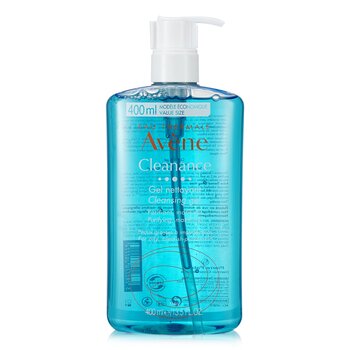
Eau Thermale Avene - Cleanance Cleansing Gel - Soap-Free Cleanser for Face and Body - For Blemish-Prone Skin - 13.5 fl.oz.
Analysis updated July 2026 · How Scout scores
At a glance
Summary
This cleansing gel contains some gentle surfactants like decyl glucoside and beneficial ingredients such as zinc gluconate, which can be soothing for blemish-prone skin. However, the presence of synthetic fragrance and PEG compounds, which can be irritating and have contamination concerns, lowers its overall safety profile. Additionally, the inclusion of artificial colors like Green 5 and Yellow 5 further impacts its rating negatively due to potential skin irritation and sensitivity issues.
Key ingredients 21
Avene Thermal Spring WaterGood
Avene Thermal Spring Water is known for its soothing and anti-irritating properties, making it beneficial for sensitive skin. It is often used to calm inflammation and reduce skin sensitivity. This ingredient is highly regarded for its ability to improve skin comfort and hydration.
Risks
There are no significant risks associated with this ingredient.
Benefits
It helps to soothe and calm irritated skin, providing a gentle base for the cleanser.
Decyl GlucosideGood
Decyl Glucoside is a non-ionic surfactant derived from glucose and coconut oil, known for its mildness and biodegradability. It is one of the gentlest surfactants available, making it suitable for sensitive skin. This ingredient is often used in formulations that aim to minimize irritation.
Risks
Generally considered safe with minimal risk of irritation.
Benefits
Provides gentle cleansing without stripping the skin's natural oils, making it ideal for sensitive skin.
Silybum Marianum Fruit ExtractGood
Silybum Marianum Fruit Extract, also known as milk thistle extract, is known for its antioxidant and anti-inflammatory properties. It helps to protect the skin from environmental damage and soothes irritation. This botanical ingredient is valued for its skin-calming benefits.
Risks
Generally considered safe with minimal risk of irritation.
Benefits
Provides antioxidant protection and soothes irritated skin.
Zinc GluconateGood
Zinc Gluconate is known for its anti-inflammatory and antimicrobial properties, making it beneficial for blemish-prone skin. It helps to reduce redness and irritation while supporting skin healing. This ingredient is valued for its ability to improve skin clarity and reduce breakouts.
Risks
Generally considered safe with minimal risk of irritation.
Benefits
Reduces inflammation and supports skin healing, beneficial for acne-prone skin.
Zinc Coceth SulfateNeutral
Zinc Coceth Sulfate is a surfactant derived from coconut oil and zinc, used for its cleansing and foaming properties. It is considered milder than traditional sulfates like SLS. While it effectively cleanses the skin, it is less likely to cause irritation.
Risks
Potential for mild irritation in very sensitive skin types.
Benefits
Provides effective cleansing with a reduced risk of irritation compared to harsher sulfates.
Lauryl BetaineNeutral
Lauryl Betaine is a mild surfactant used to enhance the foaming and cleansing properties of personal care products. It is often used in combination with other surfactants to reduce irritation. This ingredient is generally well-tolerated by most skin types.
Risks
May cause mild irritation in sensitive individuals.
Benefits
Helps to improve the texture and foaming ability of the cleanser, making it more pleasant to use.
Ceteareth-60 Myristyl GlycolNeutral
Ceteareth-60 Myristyl Glycol is an emulsifier and thickening agent used to stabilize formulations. It helps to blend oil and water components, ensuring a uniform product texture. While effective, it can sometimes be associated with contamination concerns if not properly purified.
Risks
Potential contamination with ethylene oxide or 1,4-dioxane if not properly purified.
Benefits
Stabilizes the formulation, ensuring a consistent texture and performance.
PEG-7 Glyceryl CocoateNeutral
PEG-7 Glyceryl Cocoate is an emollient and surfactant derived from coconut oil and glycerin. It is used to enhance the moisturizing properties of formulations. While generally safe, PEG compounds can sometimes be contaminated with impurities.
Risks
Potential contamination with ethylene oxide or 1,4-dioxane if not properly purified.
Benefits
Improves skin hydration and provides a smooth feel to the product.
Polysorbate 20Neutral
Polysorbate 20 is an emulsifier used to improve the texture and stability of cosmetic formulations. It helps to disperse oils and fragrances evenly throughout the product. While generally safe, it can sometimes be associated with contamination concerns if not properly purified.
Risks
Potential contamination with ethylene oxide or 1,4-dioxane if not properly purified.
Benefits
Enhances product stability and ensures even distribution of ingredients.
Citric AcidNeutral
Citric Acid is used to adjust the pH of cosmetic formulations, ensuring they are compatible with the skin's natural acidity. It can also act as a mild exfoliant, helping to remove dead skin cells. While generally safe, it can cause irritation in sensitive skin if used in high concentrations.
Risks
May cause irritation in sensitive skin if used in high concentrations.
Benefits
Helps to maintain the product's pH balance and can provide mild exfoliation.
Green 5Neutral
Green 5 is a synthetic dye used to impart color to cosmetic products. It is approved for use in personal care products but can cause allergic reactions in sensitive individuals. While it does not provide any skincare benefits, it is used for aesthetic purposes.
Risks
May cause allergic reactions in sensitive individuals.
Benefits
Adds color to the product, enhancing its visual appeal.
Isopropyl AlcoholNeutral
Isopropyl Alcohol is used as a solvent and astringent in cosmetic formulations. While it helps to dissolve other ingredients and provides a quick-drying finish, it can be very drying and irritating to the skin. Its use is often discouraged in skincare products due to its potential to disrupt the skin barrier.
Risks
Can cause dryness and irritation, potentially disrupting the skin barrier.
Benefits
Acts as a solvent and provides a quick-drying finish.
PEG-40 Hydrogenated Castor OilNeutral
PEG-40 Hydrogenated Castor Oil is an emulsifier and surfactant used to stabilize formulations and improve texture. It is derived from castor oil and is generally considered safe, though PEG compounds can sometimes be contaminated with impurities. It helps to blend oil and water components in the product.
Risks
Potential contamination with ethylene oxide or 1,4-dioxane if not properly purified.
Benefits
Stabilizes the formulation and improves texture.
PEG-6Neutral
PEG-6 is a polyethylene glycol compound used as a solvent and humectant in cosmetic formulations. It helps to retain moisture and improve the texture of products. While generally safe, PEG compounds can sometimes be contaminated with impurities.
Risks
Potential contamination with ethylene oxide or 1,4-dioxane if not properly purified.
Benefits
Helps to retain moisture and improve product texture.
PPG-26-Buteth-26Neutral
PPG-26-Buteth-26 is a synthetic polymer used as an emollient and surfactant in cosmetic formulations. It helps to improve the texture and spreadability of products. While generally considered safe, it does not provide significant skincare benefits.
Risks
Generally considered safe with minimal risk of irritation.
Benefits
Improves texture and spreadability of the product.
Sodium ChlorideNeutral
Sodium Chloride, or table salt, is used to adjust the viscosity of cosmetic formulations. It helps to thicken products and improve their texture. While generally safe, it can cause irritation in high concentrations.
Risks
May cause irritation in high concentrations.
Benefits
Improves product texture and viscosity.
Sodium HydroxideNeutral
Sodium Hydroxide is used to adjust the pH of cosmetic formulations, ensuring they are compatible with the skin. It is a strong base and must be used in small amounts to avoid irritation. While effective for pH adjustment, it does not provide direct skincare benefits.
Risks
Can cause irritation if used in high concentrations.
Benefits
Helps to maintain the product's pH balance.
Trisodium Ethylenediamine DisuccinateNeutral
Trisodium Ethylenediamine Disuccinate is a chelating agent used to improve the stability and efficacy of cosmetic formulations. It helps to bind metal ions, preventing them from affecting the product's performance. While generally safe, it does not provide direct skincare benefits.
Risks
Generally considered safe with minimal risk of irritation.
Benefits
Improves product stability and efficacy.
Sodium BenzoateBad
Synthetic preservative that can form benzene in the presence of vitamin C.
Risks
May cause mild irritation in sensitive individuals.
Benefits
Prevents microbial growth, extending the shelf life of the product.
FragranceVery Bad
Fragrance is added to personal care products to provide a pleasant scent, but it is a common cause of allergic reactions and skin irritation. It can contain a mixture of various chemicals, some of which may be sensitizing. Due to its potential to cause irritation, it is often considered a negative ingredient in skincare.
Risks
High potential for causing allergic reactions and skin irritation.
Benefits
Provides a pleasant scent to the product, enhancing user experience.
Yellow 5Very Bad
Heavily flagged ingredient class under Scout's doctrine.
Risks
May cause allergic reactions in sensitive individuals.
Benefits
Adds color to the product, enhancing its visual appeal.
Get the full breakdown in the Scout appTake Scout shopping
Scan any product to see lab results, healthy alternatives, and your personalized analysis.
Download on theApp Store GET IT ONGoogle PlayAmazon pricing & content
Amazon price as of . Product prices and availability are accurate as of the date/time indicated and are subject to change. Any price and availability information displayed on Amazon.com at the time of purchase will apply to the purchase of this product.
CERTAIN CONTENT THAT APPEARS ON THIS SITE COMES FROM AMAZON. THIS CONTENT IS PROVIDED “AS IS” AND IS SUBJECT TO CHANGE OR REMOVAL AT ANY TIME.