
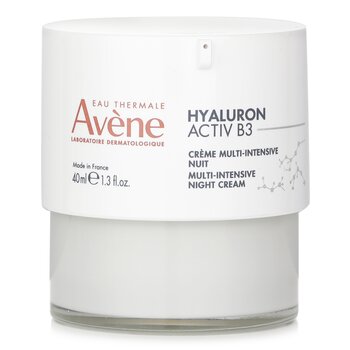

AveneHyaluron Activ B3 Multi-Intensive Night Cream (Exp. Date 31 July 2026) 40ml
Analysis updated September 2026 · How Scout scores
At a glance
Summary
This moisturizer contains a range of beneficial ingredients such as squalane, shea butter, and niacinamide, which are known for their moisturizing and skin-repairing properties. The presence of retinal and sodium hyaluronate further enhances its skin benefits by promoting cell turnover and hydration. However, the inclusion of fragrance may pose a risk of irritation, especially for sensitive skin, which slightly impacts its overall safety profile.
Key ingredients 10
SqualaneVery Good
Squalane is a highly effective emollient and natural antioxidant. It mimics the skin's natural oils, making it an excellent moisturizer. It is non-comedogenic and suitable for all skin types.
Risks
There are minimal risks, though it may cause mild irritation in rare cases.
Benefits
It hydrates and protects the skin, enhancing its elasticity and smoothness.
Butyrospermum Parkii (Shea) ButterVery Good
Shea Butter is a rich source of fatty acids and vitamins. It is known for its moisturizing and healing properties. It helps to soothe and nourish dry skin.
Risks
In rare cases, it may cause allergic reactions in individuals with nut allergies.
Benefits
It deeply moisturizes and conditions the skin, improving its texture and appearance.
RetinalVery Good
Retinal is a potent form of Vitamin A that promotes cell turnover. It helps to reduce the appearance of fine lines and wrinkles. It is effective in improving skin texture and tone.
Risks
It may cause irritation, redness, or peeling, especially in sensitive skin.
Benefits
It enhances skin radiance and reduces signs of aging, improving overall skin health.
Avene Thermal Spring Water (Avene Aqua)Good
Avene Thermal Spring Water is known for its soothing and anti-irritating properties. It is often used in skincare products to calm sensitive skin. Its mineral composition helps to restore the skin's natural barrier.
Risks
There are minimal risks associated with thermal spring water, though individual reactions can vary.
Benefits
It provides hydration and soothes irritated skin, making it beneficial for sensitive skin types.
Caprylic/Capric TriglycerideGood
Caprylic/Capric Triglyceride is derived from coconut oil and glycerin. It is used as an emollient and helps to improve the spreadability of products. It is lightweight and non-greasy, making it suitable for all skin types.
Risks
Rarely, it may cause irritation in very sensitive skin.
Benefits
It helps to moisturize and soften the skin without leaving a greasy residue.
GlycerinGood
Glycerin is a humectant that attracts moisture to the skin. It is widely used in skincare for its hydrating properties. It helps to maintain the skin's moisture balance.
Risks
Glycerin is generally safe, but in very high concentrations, it may cause irritation.
Benefits
It effectively hydrates the skin, improving its smoothness and suppleness.
Carthamus Tinctorius (Safflower) Seed OilGood
Safflower Seed Oil is rich in linoleic acid, which helps to maintain the skin's barrier. It is lightweight and non-greasy, making it suitable for oily and acne-prone skin. It helps to lock in moisture and improve skin texture.
Risks
It may cause irritation in individuals with sensitive skin.
Benefits
It hydrates and softens the skin, enhancing its overall health and appearance.
NiacinamideGood
Niacinamide is a form of Vitamin B3 that offers multiple skin benefits. It helps to improve skin elasticity, enhance barrier function, and even out skin tone. It is suitable for all skin types, including sensitive skin.
Risks
In rare cases, it may cause mild irritation or redness.
Benefits
It reduces inflammation, minimizes pores, and improves skin texture and tone.
Sodium HyaluronateGood
Sodium Hyaluronate is a salt form of Hyaluronic Acid, known for its ability to retain moisture. It penetrates the skin deeply, providing intense hydration. It helps to plump the skin and reduce the appearance of fine lines.
Risks
There are minimal risks, though it may cause irritation in very sensitive skin.
Benefits
It provides long-lasting hydration and improves skin elasticity and smoothness.
Fragrance (Parfum)Very Bad
Fragrance is often added to cosmetics for scent but can cause irritation and allergic reactions. It is a common sensitizer and can exacerbate skin conditions. It is considered a potential irritant, especially for sensitive skin.
Risks
It may cause allergic reactions, irritation, or exacerbate existing skin conditions.
Benefits
It provides a pleasant scent to the product, enhancing user experience.
Get the full breakdown in the Scout appTake Scout shopping
Scan any product to see lab results, healthy alternatives, and your personalized analysis.
Download on theApp Store GET IT ONGoogle Play