
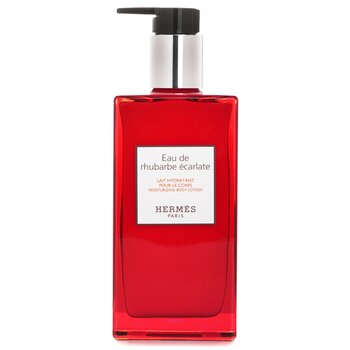

HermesEau De Rhubarbe Ecarlate Moisturizing Body Lotion 200ml
Summary
This body lotion contains a mix of natural and synthetic ingredients, which affects its overall safety profile. While it includes beneficial components like moisturizing agents, it also contains synthetic fragrance, which can be a skin irritant and is generally penalized in clean beauty assessments. The processing level indicates that it is not minimally processed, which further impacts its score.
At a glance
Key ingredients 7
Aqua (Water)
Aqua is used as a solvent in cosmetic formulations, providing a base for other ingredients. It helps in the distribution of the product on the skin. It is generally considered safe and non-irritating.
Risks
There are no significant risks associated with water in cosmetic products.
Benefits
Water hydrates the skin and helps in the absorption of other beneficial ingredients.
Coco-Caprylate/Caprate
Coco-Caprylate/Caprate is an emollient derived from coconut oil and caprylic acid, used to provide a smooth and silky feel to the skin. It is considered a natural alternative to silicones. It is generally well-tolerated and non-irritating.
Risks
There are minimal risks associated with this ingredient, though very sensitive skin might experience mild irritation.
Benefits
It helps to moisturize and soften the skin, improving the texture and feel of the product.
Glycerin
Glycerin is a humectant that attracts moisture to the skin, helping to maintain hydration. It is widely used in skincare for its moisturizing properties. It is considered safe and effective for most skin types.
Risks
In rare cases, glycerin can cause irritation if used in high concentrations.
Benefits
It enhances skin barrier function and provides long-lasting hydration.
Parfum (Fragrance)
Fragrance is added to cosmetics to provide a pleasant scent, enhancing the user experience. However, it is a common cause of allergic reactions and skin irritation. It is often criticized for its potential to cause sensitization.
Risks
Fragrance can cause allergic reactions and irritation, especially in sensitive individuals.
Benefits
It improves the sensory appeal of the product, making it more enjoyable to use.
Oleic/Linoleic/Linolenic Polyglycerides
These are emollients that help to moisturize and condition the skin, derived from natural fatty acids. They are used to improve the texture and spreadability of the product. They are generally considered safe and beneficial for skin health.
Risks
There are minimal risks associated with these ingredients, though they may cause mild irritation in very sensitive skin.
Benefits
They provide essential fatty acids that support skin barrier function and hydration.
Pentylene Glycol
Pentylene Glycol is a synthetic humectant and solvent that helps to retain moisture in the skin. It also acts as a preservative booster, enhancing the efficacy of other preservatives. It is generally considered safe for use in cosmetics.
Risks
In rare cases, it can cause irritation or allergic reactions in sensitive individuals.
Benefits
It improves skin hydration and enhances the stability and shelf-life of the product.
Olus Oil/Vegetable Oil
Olus Oil is a blend of natural vegetable oils used as an emollient to soften and smooth the skin. It is a natural alternative to synthetic oils and is well-tolerated by most skin types. It is considered safe and beneficial for skin health.
Risks
There are minimal risks, though it may cause mild irritation in very sensitive skin.
Benefits
It provides essential fatty acids and vitamins that nourish and protect the skin.
Processing
Processed Foods
Get the full breakdown in the Scout app
Scan any product to see lab results, healthy alternatives, and your personalized analysis.
Download on theApp Store