
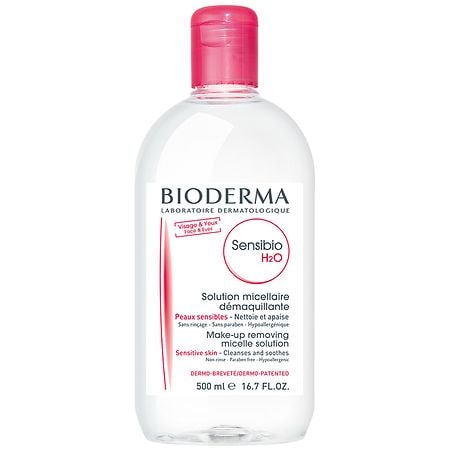

Bioderma Sensibio H2O Micellar Water Makeup Remover - 16.7 fl oz
Summary
Bioderma Sensibio H2O Micellar Water Makeup Remover is formulated with a relatively clean ingredient list, free from harsh surfactants like SLS and SLES, which are common irritants. However, it contains some synthetic ingredients that may not be as gentle or beneficial as natural alternatives, which slightly impacts its overall safety profile. The product is designed to be gentle on sensitive skin, but the presence of synthetic preservatives and potential allergens prevents it from achieving a top-tier rating.
At a glance
Key ingredients 10
AquaNeutral
Aqua, or water, is a common solvent used in cosmetic formulations. It serves as a base for dissolving other ingredients. It does not provide any direct benefits or risks.
Risks
There are no inherent risks associated with water in cosmetic formulations.
Benefits
Water acts as a solvent, helping to dissolve other ingredients and facilitate their application.
PEG-6 Caprylic/Capric GlyceridesNeutral
PEG-6 Caprylic/Capric Glycerides is an emulsifier and surfactant that helps to mix oil and water components. It is generally considered safe for use in cosmetics. However, it may be associated with contamination risks during manufacturing.
Risks
Potential contamination with ethylene oxide or 1,4-dioxane during production is a concern.
Benefits
It helps to stabilize formulations and improve the texture and application of the product.
FructooligosaccharidesGood
Fructooligosaccharides are prebiotics that can support skin health by promoting beneficial bacteria. They are considered safe and beneficial in cosmetic formulations. They help maintain the skin's natural microbiome.
Risks
There are minimal risks associated with the use of fructooligosaccharides in cosmetics.
Benefits
They support the skin's microbiome, potentially improving skin health and resilience.
MannitolNeutral
Mannitol is a sugar alcohol used as a humectant and moisturizer in cosmetics. It helps to retain moisture in the skin. It is generally considered safe for use in skincare products.
Risks
There are no significant risks associated with mannitol in cosmetic use.
Benefits
Mannitol helps to hydrate the skin by attracting and retaining moisture.
XylitolNeutral
Xylitol is a sugar alcohol that acts as a humectant and skin conditioning agent. It is safe for use in cosmetics and helps to maintain skin moisture. It is also known for its potential to improve skin barrier function.
Risks
There are no significant risks associated with xylitol in cosmetic use.
Benefits
Xylitol helps to hydrate the skin and may improve skin barrier function.
RhamnoseNeutral
Rhamnose is a sugar molecule used in cosmetics for its potential anti-aging properties. It is considered safe and may help to improve skin texture. It is often used for its potential to stimulate collagen production.
Risks
There are no significant risks associated with rhamnose in cosmetic use.
Benefits
Rhamnose may help to improve skin texture and support collagen production.
Cucumis Sativus (Cucumber) Fruit ExtractGood
Cucumber extract is known for its soothing and hydrating properties. It is a natural ingredient that can help to calm irritated skin. It is widely used in cosmetics for its refreshing and cooling effects.
Risks
There are minimal risks associated with cucumber extract in cosmetics.
Benefits
Cucumber extract soothes and hydrates the skin, providing a refreshing sensation.
Propylene GlycolBad
Propylene glycol is a synthetic humectant and solvent used in cosmetics. It can cause skin irritation in sensitive individuals. It is generally considered safe but may be problematic for those with sensitive skin.
Risks
Potential skin irritation, especially in sensitive individuals.
Benefits
Propylene glycol helps to retain moisture and improve the texture of cosmetic products.
Cetrimonium BromideNeutral
Cetrimonium bromide is a surfactant and preservative used in cosmetics. It helps to condition the skin and hair. It is generally considered safe for use in cosmetic formulations.
Risks
There are minimal risks associated with cetrimonium bromide in cosmetics.
Benefits
It conditions the skin and hair, improving texture and feel.
Disodium EDTANeutral
Disodium EDTA is a chelating agent used to improve the stability of cosmetic formulations. It binds to metal ions, preventing them from affecting the product's stability. It is considered safe for use in cosmetics.
Risks
There are minimal risks associated with disodium EDTA in cosmetics.
Benefits
It enhances the stability and shelf-life of cosmetic products by binding metal ions.
Processing
Processed Foods
Get the full breakdown in the Scout app
Scan any product to see lab results, healthy alternatives, and your personalized analysis.
Download on theApp Store