
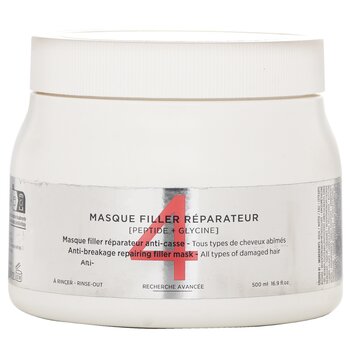


KerastasePremiere Anti Breakage Repairing Filler Mask (For All Types Of Damaged Hair) 500ml/16.9oz
Summary
This hair mask contains beneficial ingredients like Cetearyl Alcohol and Behentrimonium Methosulfate, which are known for their conditioning and emollient properties. However, the presence of potentially irritating ingredients such as Parfum, Sodium Hydroxide, and Phenoxyethanol, which can cause allergic reactions or irritation, affects its overall safety profile. The product's processing level and inclusion of synthetic additives further impact its rating, despite the presence of naturally derived beneficial components.
At a glance
Key ingredients 28
AquaNeutral
Aqua, or water, is used as a solvent in cosmetic formulations. It is typically purified to remove impurities and ensure safety. No significant interactions or processing concerns are noted.
See more about Aqua →Cetearyl AlcoholGood
Cetearyl Alcohol is a fatty alcohol used as an emollient and thickener. It is derived from natural sources like coconut oil and is considered safe for skin. It helps to soften and smooth the hair.
Benefits
Provides moisturizing properties and improves texture of hair products.
Behentrimonium MethosulfateGood
Behentrimonium Methosulfate is a mild conditioning agent derived from rapeseed oil. It is known for its detangling properties and is gentle on the skin. It enhances the manageability of hair without causing buildup.
Benefits
Improves hair texture and reduces static and frizz.
AmodimethiconeNeutral
Amodimethicone is a silicone-based compound used for conditioning and smoothing hair. It forms a protective layer on the hair shaft, enhancing shine. It is often used in small amounts to avoid buildup.
Risks
Potential for buildup on hair with excessive use.
Benefits
Improves shine and smoothness of hair.
Bis-Behenyl/Isostearyl/Phytosteryl Dimer Dilinoleyl Dimer DilinoleateNeutral
This complex ester is used as an emollient and thickening agent in hair care products. It is synthesized through chemical processes to enhance texture and moisture retention. It is generally considered safe for topical use.
Benefits
Enhances texture and provides moisture retention.
ParfumBad
Parfum, or fragrance, is used to impart scent to cosmetic products. It can be composed of numerous synthetic chemicals, some of which may cause allergic reactions. The exact composition is often undisclosed, leading to potential sensitivity issues.
Risks
May cause skin irritation or allergic reactions in sensitive individuals.
Behentrimonium ChlorideNeutral
Behentrimonium Chloride is a conditioning agent that helps detangle and soften hair. It is derived from natural oils and is effective in reducing static. It is generally safe for use in hair care products.
Benefits
Improves hair manageability and reduces static.
Lauryl LaurateNeutral
Lauryl Laurate is an ester used as an emollient and thickening agent. It is synthesized from lauric acid and alcohols, providing a smooth texture. It is considered safe for use in cosmetics.
Benefits
Contributes to the smooth texture of the product.
Caprylic/Capric TriglycerideGood
Caprylic/Capric Triglyceride is derived from coconut oil and glycerin, used as an emollient. It is known for its skin-replenishing properties and lightweight texture. It is highly stable and non-greasy.
Benefits
Provides moisturizing benefits and enhances product stability.
Butylene GlycolNeutral
Butylene Glycol is a solvent and conditioning agent used to improve texture and moisture retention. It is synthetically produced and widely used in cosmetics. It is generally considered safe for topical use.
Risks
May cause irritation in sensitive skin types.
Benefits
Enhances moisture retention and product texture.
Hydroxypropyl Starch PhosphateNeutral
Hydroxypropyl Starch Phosphate is a modified starch used as a thickener and stabilizer. It is derived from natural starches and is processed to improve stability. It is considered safe for use in cosmetics.
Benefits
Improves product stability and texture.
Aminopropyl DimethiconeNeutral
Aminopropyl Dimethicone is a silicone-based conditioning agent that enhances hair smoothness. It is chemically modified to improve adherence to hair. It is effective in reducing frizz and enhancing shine.
Risks
Potential for buildup on hair with excessive use.
Benefits
Improves hair smoothness and shine.
Sodium HydroxideBad
Sodium Hydroxide is used to adjust the pH of cosmetic formulations. It is a strong alkaline compound that can be irritating in high concentrations. It is carefully controlled in formulations to ensure safety.
Risks
Can cause skin irritation or burns if not properly neutralized.
PhenoxyethanolBad
Phenoxyethanol is a synthetic preservative used to prevent microbial growth. It is effective in low concentrations but can cause irritation in some individuals. It is often used as an alternative to parabens.
Risks
May cause skin irritation or allergic reactions in sensitive individuals.
IsododecaneNeutral
Isododecane is a hydrocarbon used as a solvent and emollient in cosmetics. It provides a lightweight, non-greasy feel and enhances spreadability. It is considered safe for use in topical applications.
Benefits
Improves product spreadability and texture.
Hydrogenated Castor Oil/Sebacic Acid CopolymerNeutral
This copolymer is used as a film-forming agent and emollient. It is derived from castor oil and sebacic acid, providing a smooth texture. It is generally considered safe for use in cosmetics.
Benefits
Enhances texture and provides film-forming properties.
LimoneneBad
Limonene is a fragrance component derived from citrus oils. It is used for its pleasant scent but can oxidize and cause skin irritation. It is often included in small amounts to minimize risk.
Risks
May cause skin irritation or allergic reactions in sensitive individuals.
Isopropyl AlcoholBad
Isopropyl Alcohol is used as a solvent and antiseptic in cosmetics. It can be drying to the skin and hair with frequent use. It is included in formulations to enhance product stability.
Risks
Can cause dryness and irritation with prolonged use.
PVPNeutral
PVP, or Polyvinylpyrrolidone, is a synthetic polymer used as a film-former and binder. It provides hold and texture in hair products. It is considered safe for use in cosmetics.
Benefits
Provides hold and texture to hair products.
Trideceth-6Neutral
Trideceth-6 is an ethoxylated alcohol used as an emulsifier and surfactant. It helps to blend oil and water components in formulations. It is generally considered safe for use in cosmetics.
Benefits
Enhances emulsification and stability of formulations.
Hydrolyzed Vegetable Protein Pg-Propyl SilanetriolGood
This ingredient is a protein-silicone complex used to strengthen and protect hair. It is derived from vegetable proteins and enhances hair resilience. It is effective in reducing breakage and improving hair texture.
Benefits
Strengthens hair and reduces breakage.
GlycineGood
Glycine is an amino acid used for its conditioning properties in hair care. It is naturally occurring and supports protein structure in hair. It helps to improve hair strength and elasticity.
Benefits
Improves hair strength and elasticity.
Citric AcidNeutral
Citric Acid is used to adjust the pH of cosmetic formulations. It is naturally derived from citrus fruits and is used in small amounts. It helps to maintain product stability and effectiveness.
Benefits
Helps maintain product stability and pH balance.
Cetrimonium ChlorideNeutral
Cetrimonium Chloride is a conditioning agent that helps to detangle and soften hair. It is a quaternary ammonium compound used in small amounts. It is effective in reducing static and improving hair manageability.
Benefits
Improves hair manageability and reduces static.
CitralBad
Citral is a fragrance component derived from citrus oils. It is used for its lemon scent but can cause skin irritation in sensitive individuals. It is often included in small amounts to minimize risk.
Risks
May cause skin irritation or allergic reactions in sensitive individuals.
Sodium BenzoateNeutral
Sodium Benzoate is a preservative used to prevent microbial growth in cosmetics. It is effective in low concentrations and is generally recognized as safe. It is often used in combination with other preservatives.
Benefits
Prevents microbial growth and extends product shelf life.
Potassium SorbateNeutral
Potassium Sorbate is a preservative used to inhibit mold and yeast growth. It is synthetically produced and widely used in cosmetics. It is considered safe for use in low concentrations.
Benefits
Inhibits mold and yeast growth, extending product shelf life.
TocopherolGood
Tocopherol, or Vitamin E, is an antioxidant used to protect the product from oxidation. It is derived from natural sources and supports skin health. It helps to maintain the stability and effectiveness of the product.
Benefits
Provides antioxidant benefits and supports skin health.
Processing
Processed Foods
Get the full breakdown in the Scout app
Scan any product to see lab results, healthy alternatives, and your personalized analysis.
Download on theApp Store