
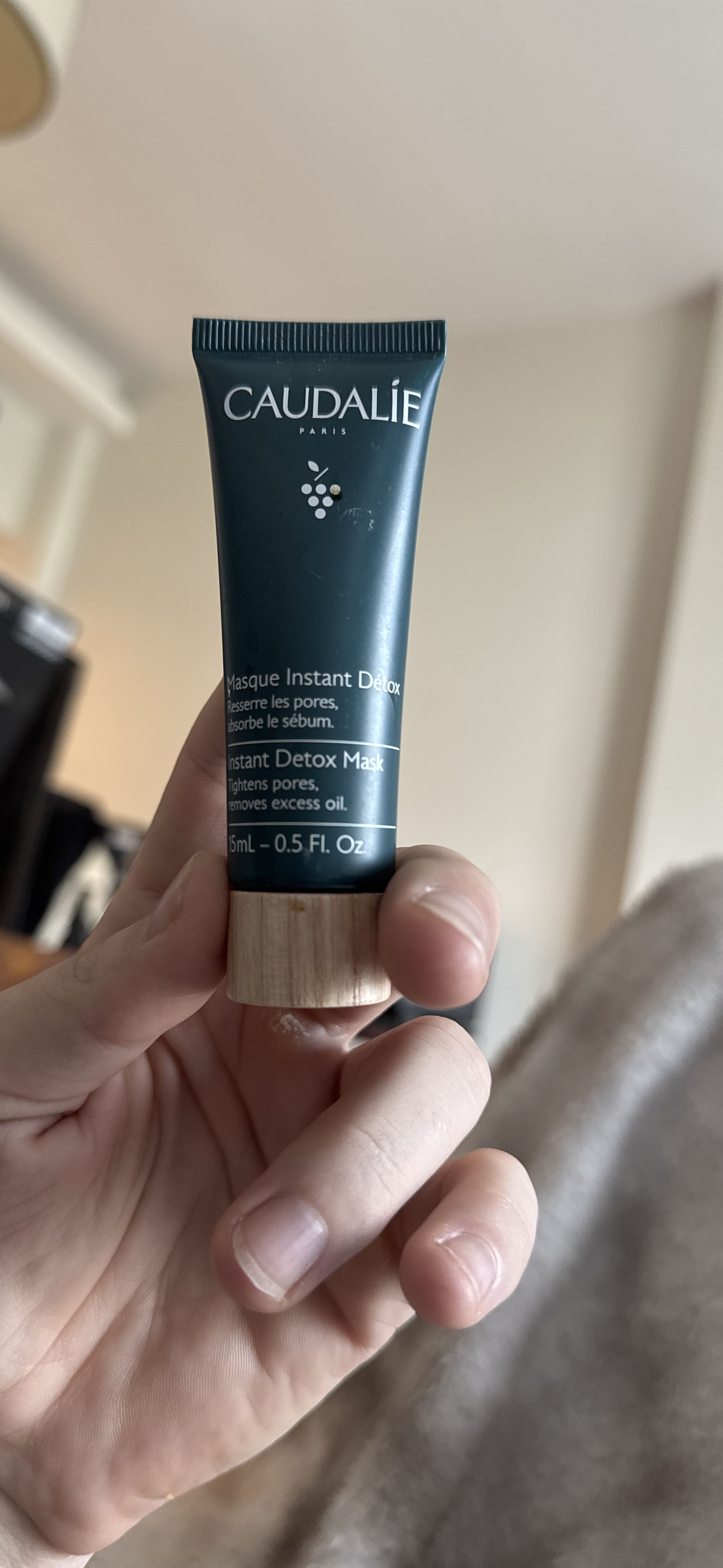
Caudalie Instant Detox Mask Masque Size 25ml Rrp £ 16
Summary
The product contains mostly safe ingredients like kaolin and bentonite, which are natural and beneficial for skin care. However, the presence of alcohol and benzyl alcohol, which can be drying or irritating to some skin types, slightly lowers the score. The product is moderately processed, which also impacts its overall rating.
At a glance
Key ingredients 9
Aqua
Aqua, or water, is a common solvent used in cosmetics to dissolve other ingredients. It helps in forming emulsions by combining with oils. It is generally considered safe and non-irritating.
Risks
There are no significant risks associated with water in cosmetics.
Benefits
Water is essential for hydration and helps in the application of the product.
Kaolin
Kaolin is a natural clay that is used for its absorbent properties. It helps to draw out impurities and excess oil from the skin. It is generally well-tolerated and non-irritating.
Risks
Overuse can lead to dryness as it absorbs oils from the skin.
Benefits
Kaolin can help to cleanse and purify the skin, making it beneficial for oily and acne-prone skin.
Bentonite
Bentonite is a type of clay that swells when mixed with water, making it effective at absorbing toxins and impurities. It is often used in detoxifying masks. It is generally safe for most skin types.
Risks
Like other clays, it can cause dryness if used excessively.
Benefits
Bentonite can help to detoxify the skin and improve its texture.
Glycerin
Glycerin is a humectant that attracts moisture to the skin, helping to keep it hydrated. It is a common ingredient in skincare products due to its moisturizing properties. It is generally considered safe and non-irritating.
Risks
There are minimal risks, though it can be sticky in high concentrations.
Benefits
Glycerin helps to maintain skin hydration and improve skin barrier function.
Acacia Senegal Gum
Acacia Senegal Gum is a natural gum derived from the Acacia tree, used as a thickening agent. It helps to stabilize emulsions and improve the texture of cosmetic products. It is generally considered safe and non-irritating.
Risks
There are minimal risks associated with its use in cosmetics.
Benefits
It provides a natural alternative to synthetic thickeners and stabilizers.
Xanthan Gum
Xanthan Gum is a polysaccharide used as a thickening and stabilizing agent in cosmetics. It helps to improve the texture and consistency of products. It is generally considered safe and non-irritating.
Risks
There are minimal risks, though it can cause slight irritation in very sensitive skin.
Benefits
Xanthan Gum helps to stabilize formulations and improve product application.
Benzyl Alcohol
Benzyl Alcohol is used as a preservative and solvent in cosmetics. It helps to prevent microbial growth and extend the shelf life of products. It is generally safe in low concentrations but can be irritating to sensitive skin.
Risks
It can cause skin irritation and allergic reactions in sensitive individuals.
Benefits
Benzyl Alcohol helps to preserve the product and prevent spoilage.
Alcohol
Alcohol is used in cosmetics as a solvent and to enhance the penetration of other ingredients. It can also act as a preservative. However, it can be drying and irritating to the skin.
Risks
Alcohol can strip the skin of its natural oils, leading to dryness and irritation.
Benefits
It helps to dissolve other ingredients and improve product absorption.
Sodium
Sodium in cosmetics can refer to various sodium compounds used for different purposes, such as pH adjustment or as a thickener. It is generally safe in the concentrations used in cosmetics. However, without specific context, its role is unclear.
Risks
There are minimal risks associated with sodium compounds in cosmetics.
Benefits
Sodium compounds can help to stabilize formulations and improve product performance.
Processing
Processed Foods
Get the full breakdown in the Scout app
Scan any product to see lab results, healthy alternatives, and your personalized analysis.
Download on theApp Store