
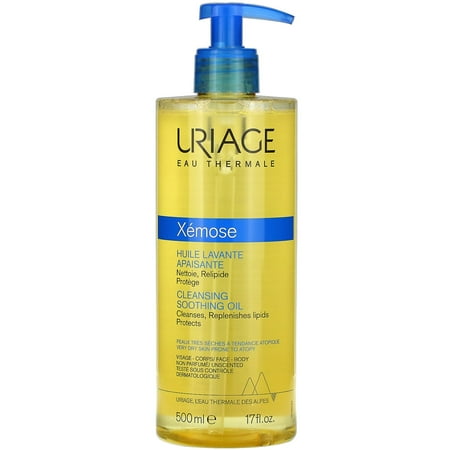

Uriage Xemose, Cleansing Soothing Oil, Unscented, 17 fl oz (500 ml)
Analysis updated August 2026 · How Scout scores
At a glance
Summary
This cleansing oil contains beneficial ingredients like glycerin, shea butter, and coconut-derived emollients, which are known for their moisturizing and skin-soothing properties. However, the presence of paraffinum liquidum, a petroleum-derived mineral oil, raises concerns due to its potential to clog pores and its non-renewable nature. Additionally, the inclusion of PEG compounds suggests a moderate level of processing, which impacts the overall safety and environmental profile of the product.
Key ingredients 10
Butyrospermum Parkii ButterVery Good
Butyrospermum Parkii Butter, or shea butter, is a natural fat extracted from the nuts of the shea tree. It is highly moisturizing and contains vitamins A and E, which are beneficial for skin health. It is well-known for its anti-inflammatory and healing properties.
Risks
There are minimal risks, though individuals with nut allergies should exercise caution.
Benefits
Shea butter deeply moisturizes the skin and can help soothe and repair dry, damaged skin.
GlycerinGood
Glycerin is a humectant that attracts moisture to the skin, making it an excellent hydrating agent. It is widely used in skincare for its ability to improve skin barrier function and smoothness. It is generally well-tolerated and non-irritating.
Risks
There are minimal risks associated with glycerin, though in rare cases it may cause irritation if used in high concentrations.
Benefits
Glycerin helps to maintain skin hydration and improve skin texture, making it beneficial for dry skin.
Sodium CocoamphoacetateGood
Sodium Cocoamphoacetate is a mild surfactant derived from coconut oil. It is used to cleanse the skin without stripping natural oils. It is considered gentle and suitable for sensitive skin.
Risks
There are minimal risks, though it may cause irritation in very sensitive individuals.
Benefits
It provides gentle cleansing and is less likely to irritate the skin compared to harsher surfactants.
CocoglyceridesGood
Cocoglycerides are derived from coconut oil and glycerin, used as emollients to soften and smooth the skin. They are generally well-tolerated and provide a lightweight feel. They are considered safe and beneficial for skin hydration.
Risks
There are minimal risks associated with cocoglycerides.
Benefits
They help to improve skin texture and provide a moisturizing effect.
Caprylic/Capric TriglycerideGood
Caprylic/Capric Triglyceride is derived from coconut oil and glycerin, used as an emollient and skin-replenishing ingredient. It is lightweight and non-greasy, making it suitable for all skin types. It is considered safe and beneficial for maintaining skin hydration.
Risks
There are minimal risks associated with this ingredient.
Benefits
It helps to moisturize and soften the skin without leaving a greasy residue.
AquaNeutral
Aqua, or water, is a common solvent used in cosmetic formulations. It serves as a base for many products, helping to dissolve other ingredients. It is generally considered safe and non-irritating.
Risks
There are no significant risks associated with water in cosmetic formulations.
Benefits
Water helps to hydrate the skin and is essential for the formulation of many skincare products.
Hydrogenated Starch HydrolysateNeutral
Hydrogenated Starch Hydrolysate is a sugar alcohol used as a humectant and skin conditioning agent. It helps to retain moisture in the skin. It is generally considered safe for use in cosmetics.
Risks
There are no significant risks associated with this ingredient in cosmetic formulations.
Benefits
It helps to keep the skin hydrated and can improve the texture of skincare products.
PEG-7 Glyceryl CocoateNeutral
PEG-7 Glyceryl Cocoate is an emulsifier and surfactant derived from coconut oil and glycerin. It helps to stabilize formulations and improve texture. It is generally considered safe, though PEG compounds can sometimes be contaminated with impurities.
Risks
There is a potential risk of contamination with 1,4-dioxane, a byproduct of ethoxylation.
Benefits
It helps to improve the texture and stability of cosmetic formulations.
Ceteareth-60 Myristyl GlycolNeutral
Ceteareth-60 Myristyl Glycol is an emulsifier used to blend oil and water components in formulations. It helps to create a smooth texture in products. It is generally considered safe, though there are concerns about potential contamination with ethylene oxide.
Risks
There is a potential risk of contamination with ethylene oxide, a known carcinogen.
Benefits
It helps to stabilize formulations and improve product texture.
Paraffinum LiquidumBad
Paraffinum Liquidum, also known as mineral oil, is used as an emollient to lock in moisture. However, it is a petroleum-derived product and can be occlusive, potentially clogging pores. It is often criticized for being a non-renewable resource.
Risks
It may cause breakouts in acne-prone skin due to its occlusive nature.
Benefits
It effectively prevents moisture loss and can soothe dry, irritated skin.
Get the full breakdown in the Scout appTake Scout shopping
Scan any product to see lab results, healthy alternatives, and your personalized analysis.
Download on theApp Store GET IT ONGoogle Play