
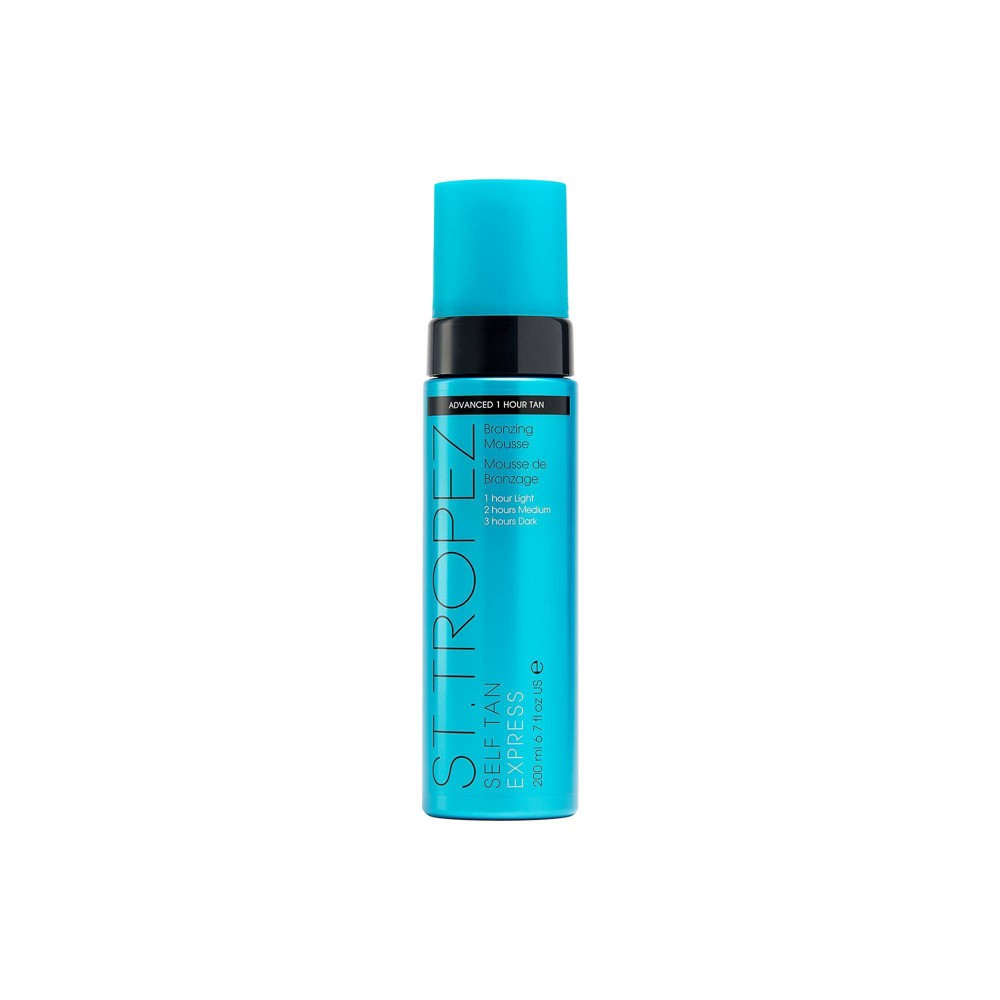

St. Tropez Self Tan Express Bronzing Mousse - 6.7 fl oz - Ulta Beauty: Hypoallergenic, Paraben-Free, Sulfate-Free, Vegan
Summary
This self-tanning mousse contains beneficial ingredients like dihydroxyacetone and aloe vera, which provide tanning and moisturizing benefits with minimal processing. However, the presence of synthetic compounds such as propylene glycol, phenoxyethanol, and various artificial dyes raises concerns about potential skin irritation and environmental impact. The inclusion of fragrance and other synthetic additives further contributes to a moderate processing level, impacting the overall score.
At a glance
Key ingredients 23
AquaNeutral
Aqua, or water, is used as a solvent in many cosmetic products. It is generally considered neutral as it does not provide direct benefits or risks. The quality of water can vary, but no specific quality indicators are provided here.
See more about Aqua →DihydroxyacetoneGood
Dihydroxyacetone is the active ingredient in self-tanning products, providing a temporary tan by reacting with the skin's surface. It is generally considered safe for topical use with minimal processing involved. It is a sugar-derived compound, which is a positive aspect compared to synthetic alternatives.
Risks
May cause skin irritation in sensitive individuals.
Benefits
Provides a natural-looking tan without exposure to harmful UV rays.
CaramelNeutral
Caramel is used as a colorant in cosmetic products. It is produced by heating sugar, which is a natural process. While it adds color, it does not provide significant health benefits or risks.
See more about Caramel →Propylene GlycolBad
Propylene glycol is a synthetic compound used as a humectant in cosmetics. It is derived from petroleum, which raises concerns about its environmental impact. It can cause skin irritation in some individuals, especially with prolonged exposure.
Risks
Potential skin irritant and may cause allergic reactions in sensitive individuals.
Benefits
Helps retain moisture in the skin, improving texture and hydration.
EthoxydiglycolNeutral
Ethoxydiglycol is a solvent used to improve the texture and absorption of cosmetic products. It is a synthetic compound with no significant health benefits. Its processing involves ethoxylation, which can introduce impurities.
Risks
May cause mild skin irritation in sensitive individuals.
Benefits
Improves the spreadability and absorption of the product.
GlycerinGood
Glycerin is a natural humectant that attracts moisture to the skin. It is derived from plant oils or synthesized, with minimal processing involved. It is widely recognized for its moisturizing properties and skin barrier support.
Benefits
Helps maintain skin hydration and improves skin barrier function.
PPG-5-Ceteth-20Bad
PPG-5-Ceteth-20 is a synthetic surfactant used to stabilize emulsions in cosmetics. It is derived from petrochemicals, which raises environmental concerns. It may contain impurities from the ethoxylation process.
Risks
Potential skin irritant and may contain trace impurities.
Benefits
Improves the texture and stability of the product.
Decyl GlucosideGood
Decyl glucoside is a mild, non-ionic surfactant derived from glucose and coconut oil. It is considered environmentally friendly and biodegradable. It is gentle on the skin, making it suitable for sensitive skin types.
Benefits
Provides gentle cleansing without stripping natural oils from the skin.
PhenoxyethanolBad
Phenoxyethanol is a synthetic preservative used to prevent microbial growth in cosmetics. It is effective but can cause skin irritation in some individuals. Concerns exist about its potential neurotoxicity with prolonged exposure.
Risks
May cause skin irritation and potential neurotoxic effects with prolonged use.
Benefits
Extends the shelf life of the product by preventing microbial contamination.
MelaninNeutral
Melanin is a natural pigment used to enhance the color of cosmetic products. It is derived from natural sources, but its inclusion in cosmetics does not provide significant health benefits. It is primarily used for aesthetic purposes.
Benefits
Enhances the color and appearance of the product.
ParfumBad
Parfum, or fragrance, is used to add scent to cosmetic products. It is a complex mixture of chemicals, some of which can cause allergic reactions or skin irritation. The lack of transparency in its composition raises concerns about potential allergens.
Risks
Potential allergen and skin irritant, especially for sensitive individuals.
Benefits
Enhances the sensory experience of the product.
HydroxyethylcelluloseNeutral
Hydroxyethylcellulose is a thickening agent used to improve the texture of cosmetic products. It is derived from cellulose, a natural polymer, and is considered safe for use. It does not provide significant health benefits or risks.
Benefits
Improves the viscosity and application of the product.
Dimethyl IsosorbideNeutral
Dimethyl isosorbide is a solvent used to enhance the delivery of active ingredients in cosmetics. It is a synthetic compound with no significant health benefits. It is generally considered safe for topical use.
Benefits
Improves the penetration and efficacy of active ingredients.
Sodium MetabisulfiteBad
Sodium metabisulfite is a preservative and antioxidant used in cosmetics. It can cause allergic reactions and skin irritation in sensitive individuals. It is a synthetic compound with potential respiratory concerns when inhaled.
Risks
Potential allergen and respiratory irritant, especially in sensitive individuals.
Benefits
Prevents oxidation and extends the shelf life of the product.
EthylhexylglycerinNeutral
Ethylhexylglycerin is a conditioning agent and preservative enhancer in cosmetics. It is a synthetic compound with minimal processing involved. It is generally considered safe for use with no significant health benefits.
Benefits
Enhances the efficacy of preservatives and conditions the skin.
LinaloolBad
Linalool is a fragrance component used to add scent to cosmetic products. It is a naturally occurring terpene alcohol found in many flowers and spice plants. It can cause allergic reactions and skin irritation in sensitive individuals.
Risks
Potential allergen and skin irritant, especially for sensitive individuals.
Benefits
Contributes to the fragrance profile of the product.
Aloe Barbadensis Leaf JuiceVery Good
Aloe barbadensis leaf juice is a natural extract known for its soothing and moisturizing properties. It is derived from the aloe vera plant with minimal processing involved. It is widely used for its skin-healing and anti-inflammatory benefits.
Benefits
Provides soothing, moisturizing, and anti-inflammatory benefits to the skin.
Alpha-Isomethyl IononeBad
Alpha-isomethyl ionone is a fragrance ingredient used to impart scent to cosmetic products. It is a synthetic compound that can cause allergic reactions in sensitive individuals. Its inclusion in cosmetics is primarily for aesthetic purposes.
Risks
Potential allergen and skin irritant, especially for sensitive individuals.
Benefits
Enhances the fragrance profile of the product.
Potassium SorbateNeutral
Potassium sorbate is a preservative used to inhibit the growth of mold and yeast in cosmetics. It is a synthetic compound that is generally recognized as safe for use. It does not provide significant health benefits.
Risks
May cause mild skin irritation in sensitive individuals.
Benefits
Prevents microbial growth and extends the shelf life of the product.
Citric AcidNeutral
Citric acid is used to adjust the pH of cosmetic products. It is derived from citrus fruits and is considered safe for use. It does not provide significant health benefits but helps maintain product stability.
Benefits
Helps maintain the stability and effectiveness of the product.
CI 14700Bad
CI 14700, also known as Red 4, is a synthetic dye used to impart color to cosmetic products. It is derived from petroleum and can cause allergic reactions in sensitive individuals. Concerns exist about its safety with prolonged exposure.
Risks
Potential allergen and may cause skin irritation in sensitive individuals.
Benefits
Provides vibrant color to the product.
CI 19140Bad
CI 19140, also known as Yellow 5, is a synthetic dye used to add color to cosmetic products. It is derived from petroleum and has been associated with allergic reactions. Its safety is often debated, especially in sensitive individuals.
Risks
Potential allergen and may cause skin irritation in sensitive individuals.
Benefits
Provides bright yellow color to the product.
CI 42090Bad
CI 42090, also known as Blue 1, is a synthetic dye used to color cosmetic products. It is derived from petroleum and can cause allergic reactions in some individuals. Concerns exist about its safety with prolonged exposure.
Risks
Potential allergen and may cause skin irritation in sensitive individuals.
Benefits
Provides vibrant blue color to the product.
Processing
Processed Foods
Get the full breakdown in the Scout app
Scan any product to see lab results, healthy alternatives, and your personalized analysis.
Download on theApp Store